Become an Electrician Without Math Skills
When people think of becoming an electrician, a skilled tradesperson who installs, maintains, and repairs electrical systems in homes and buildings. Also known as wireman, it's a job built on hands-on work, not classroom math. Many assume you need advanced math—algebra, calculus, trigonometry—to even apply. But that’s not true. Real electricians use basic arithmetic: adding, subtracting, multiplying, dividing. They measure wire lengths, calculate circuit loads, and follow code charts. You don’t solve equations—you follow rules, use tools, and trust your eyes and hands.
The electrical code, a set of safety and installation standards used by electricians across India and globally is your real guidebook. It tells you exactly how much wire to use, what breaker size to pick, where to place outlets. You don’t need to derive these rules—you learn them step by step. vocational training, short-term, job-focused programs that teach practical skills for immediate employment in India gives you exactly this: clear, repeatable steps. You’ll learn how to strip wire, connect terminals, read blueprints, and test circuits. No theory overload. Just what works on the job.
Many electricians in India start without a strong math background. They learn on the job, with mentors, through apprenticeships, or with structured trade courses, focused programs that train people for skilled manual jobs like plumbing, welding, or electrical work. The math you need? You’ll use a calculator. You’ll use a tape measure. You’ll use a chart. You’ll copy what the manual says. That’s it. The real skills? Attention to detail, problem-solving under pressure, safety awareness, and the ability to follow instructions precisely. These are the things that get you hired. Not your ability to solve quadratic equations.
What matters more than math is your willingness to show up, learn from mistakes, and keep improving. Electricians don’t get paid for knowing formulas—they get paid for fixing broken systems safely and on time. If you can understand a wiring diagram, use a multimeter, and follow a checklist, you’re already ahead of 80% of people who think they’re disqualified. And in India, where demand for skilled electricians is growing fast, your hands and attitude matter more than your school grades.
You’ll find real stories in the posts below—people who started with zero math confidence, took a short course, got certified, and now earn good money fixing homes, shops, and factories. Some are women. Some are young. Some are switching careers after years in other jobs. None of them were math geniuses. But all of them learned the right skills, at the right pace, and built a career that works.
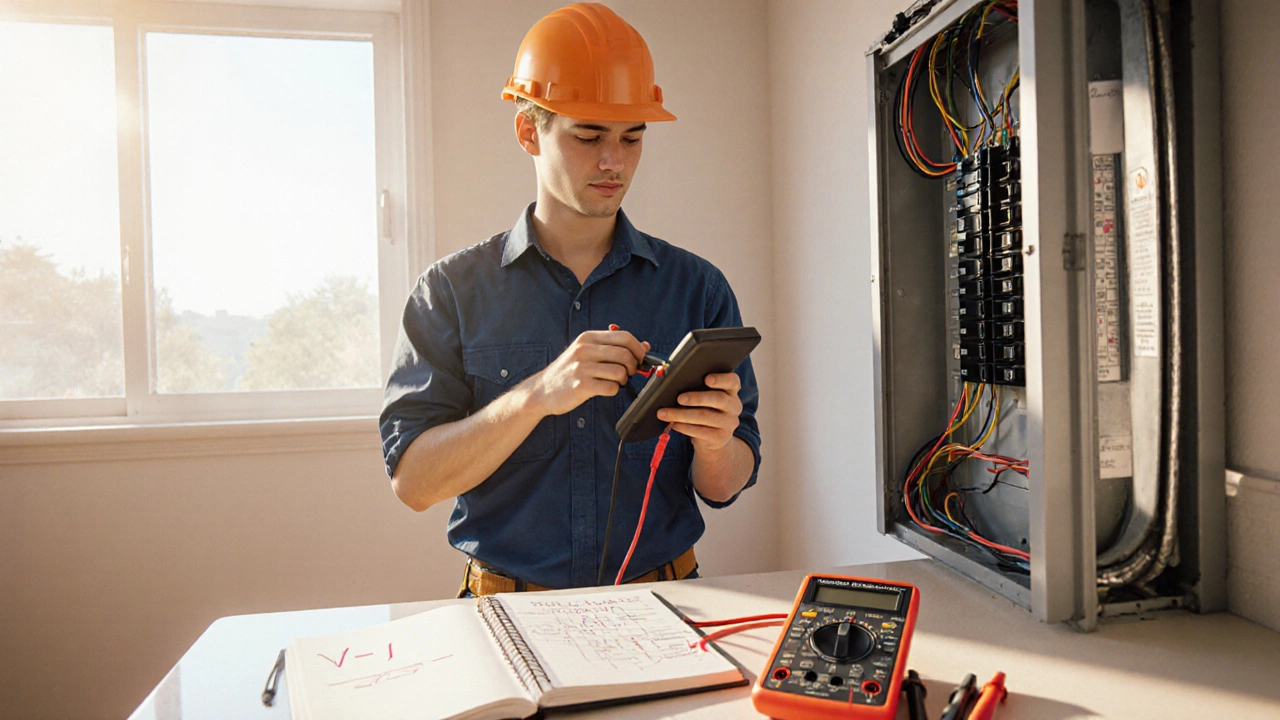
Can I Still Be an Electrician if I'm Bad at Math?
You don't need to be good at math to become an electrician-just careful. Learn what math you actually use on the job, how tools help, and how apprenticeships teach you what you need to pass.
Details +