Electrician Apprenticeship: How to Start, Earn, and Grow in India
When you hear electrician apprenticeship, a hands-on training program where you learn electrical work while earning a wage. Also known as electrical trade apprenticeship, it’s one of the most direct paths into a stable, well-paid career without needing a four-year degree. In India, this isn’t just about fixing wires—it’s about building a future. You’ll learn how to read blueprints, install circuits safely, follow national electrical codes, and troubleshoot real problems on the job. Unlike classroom-only courses, an apprenticeship lets you earn while you learn, with real tools in your hands from day one.
Most electrician apprenticeships pair you with a licensed professional who guides you through residential, commercial, or industrial projects. You’ll pick up core electrician skills, practical abilities like wiring, panel installation, and safety compliance. Also known as electrical trade skills, they’re what employers actually look for. These aren’t theoretical—you’ll use multimeters, conduit benders, and circuit testers until they feel like extensions of your hands. And it’s not just about technical know-how. Problem-solving, time management, and clear communication with clients or contractors matter just as much. Many of these skills are covered in detail in posts like What Skills Are Required to Work as an Electrician in 2025, which breaks down exactly what you need to know to get hired.
Let’s talk money. An electrician in India doesn’t start at the top, but the climb is fast. Entry-level apprentices often earn between ₹8,000 and ₹15,000 a month, and that jumps significantly after certification. By year three, many make ₹25,000–₹40,000 monthly. In cities like Delhi, Mumbai, or Bangalore, skilled electricians with experience can earn even more, especially if they specialize in solar installations, automation, or industrial systems. The How Much Do Electricians Make an Hour in Tennessee? post might sound far off, but the structure is the same: experience + certification + specialization = higher pay. You don’t need to go abroad to build a good income—India’s infrastructure boom means demand is rising everywhere.
And you don’t need to be a genius to start. If you’re comfortable with basic math, have steady hands, and don’t mind getting dirty, you’re already ahead of most. Many apprentices come from small towns, didn’t finish college, or switched from low-paying jobs. What they had was grit—and the right training. Government schemes and private institutes now offer subsidized or even free apprenticeship slots in partnership with local contractors. Posts like Earn While You Learn: How to Get Paid for Government Vocational Training show you exactly how to find these opportunities without paying upfront fees.
What you’ll find below are real, practical guides written by people who’ve been through this. Whether you’re wondering how long an apprenticeship lasts, what exams you’ll face, how to land your first job, or how to move from apprentice to master electrician—we’ve got posts that cut through the noise. No fluff. No hype. Just what works for Indian learners today.
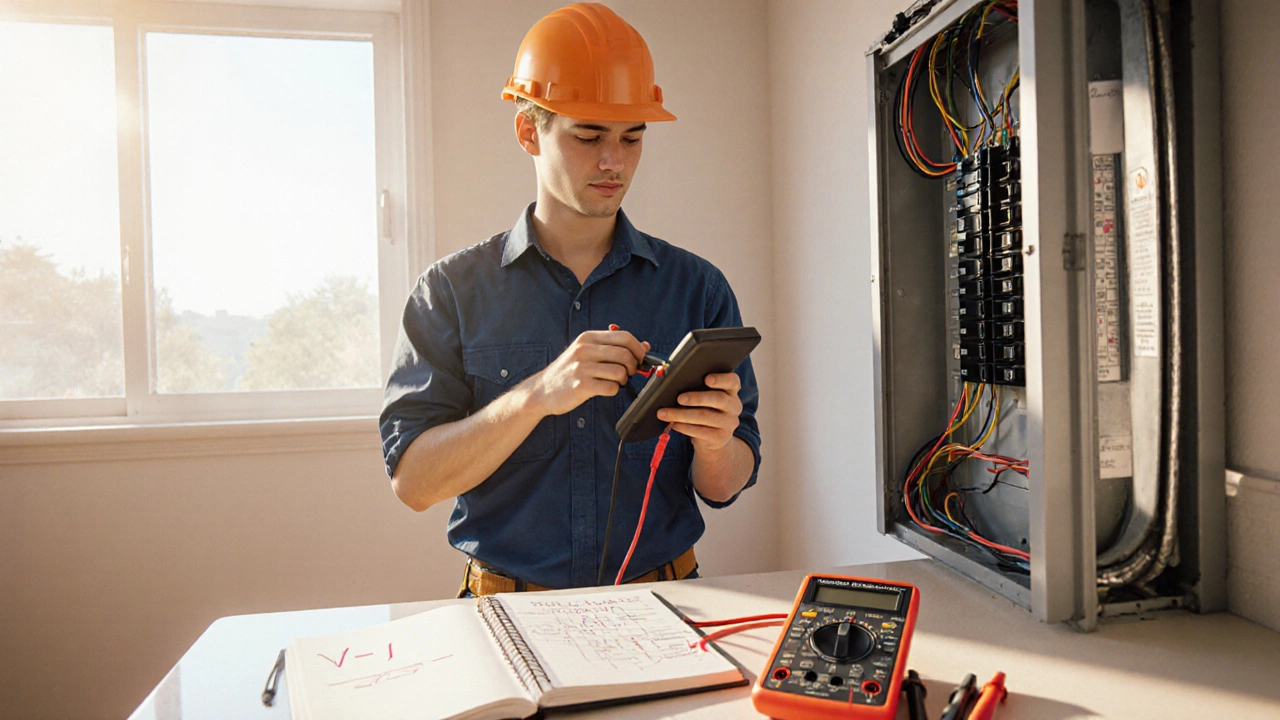
Can I Still Be an Electrician if I'm Bad at Math?
You don't need to be good at math to become an electrician-just careful. Learn what math you actually use on the job, how tools help, and how apprenticeships teach you what you need to pass.
Details +