Urban English India: Learn Practical English for City Life and Jobs
When you hear Urban English India, the version of English spoken in Indian cities by students, professionals, and service workers who need it to get ahead. Also known as Indian Urban English, it’s not British, not American—it’s a living, practical mix shaped by local needs, workplaces, and daily conversations. This isn’t the English you learn in school with perfect grammar and long essays. This is the English you use when you’re ordering food at a café in Bangalore, explaining a problem to a client in Hyderabad, or walking into a call center interview in Pune. It’s fast, flexible, and full of local flavor—and it’s what actually gets results.
People in Indian cities don’t wait for perfect English. They use what works. You’ll hear phrases like "I am having a doubt" or "Please do the needful"—not because they’re textbook correct, but because they’re understood. B1 English India, a practical intermediate level where you can handle daily conversations and simple work tasks is the real target. You don’t need to sound like a BBC anchor. You need to be clear, confident, and capable. That’s why so many people in cities are taking short courses to build real communication skills, not just vocabulary lists. And it’s working. Jobs in tech support, retail, hospitality, and even sales now ask for communication ability, not degrees. You can get hired with good Urban English India—even without a diploma.
What makes Urban English India different from British or American English? Pronunciation, rhythm, and word choices. You might say "I am going to the market" instead of "I’m heading to the store." You might drop articles like "the" or "a" because the meaning stays clear. That’s not wrong—it’s adaptation. And it’s why British English India, the version most commonly taught in Indian schools and used in formal documents still matters, but only as a foundation. The real goal is to move from textbook English to street-smart English. You need to understand both. In a job interview, you’ll use more formal structures. On the job, you’ll switch to the faster, simpler version. That’s the skill most people miss.
There’s a myth that you need years to speak good English. But look at the data: people in cities are reaching B1 level in under three months with daily practice—listening to podcasts during commutes, repeating phrases from YouTube videos, talking to coworkers even if they make mistakes. The key isn’t perfection. It’s consistency. You don’t need to memorize grammar rules. You need to hear the patterns, mimic them, and use them. That’s what the posts below show: real stories from people who learned English not in classrooms, but in markets, call centers, and co-working spaces. They didn’t wait for the perfect course. They started where they were. And you can too.
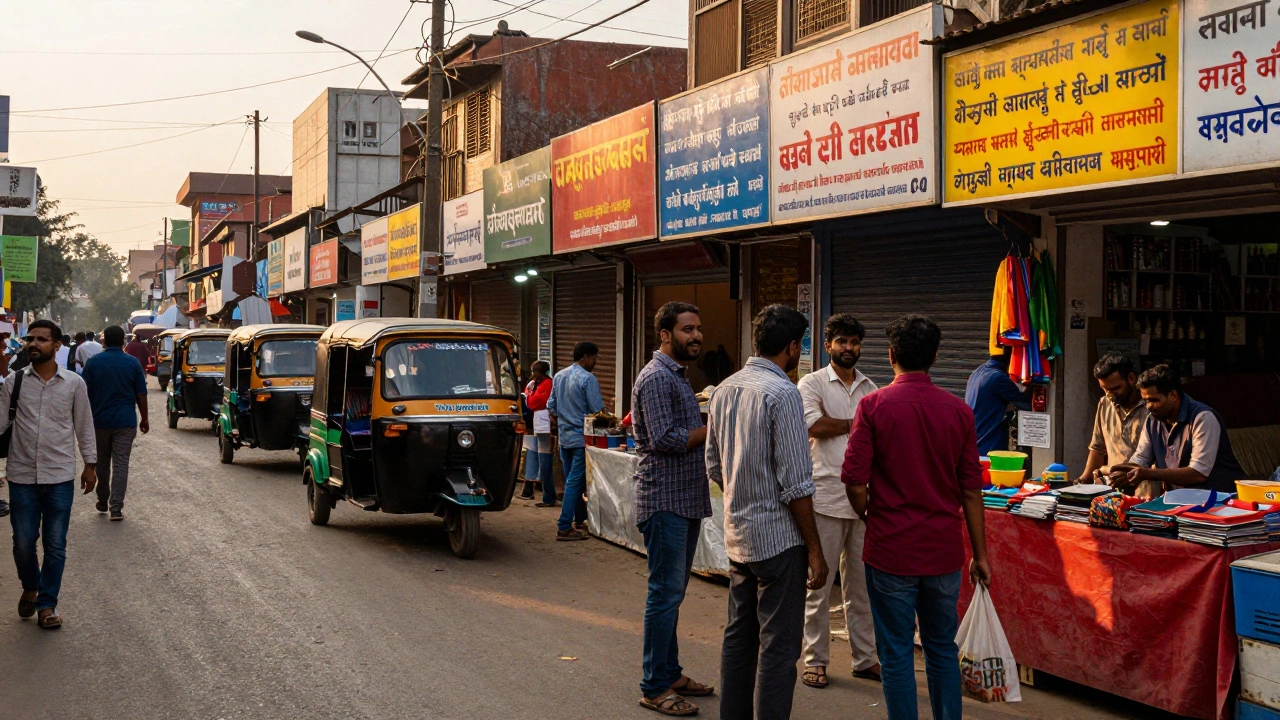
Which City in India Speaks the Most English? Top English-Speaking Cities Explained
Hyderabad and Bangalore lead India in English usage, offering the best environments for learning and practicing English daily. Discover why these cities outshine Delhi, Mumbai, and others for real fluency.
Details +