Trade Earnings Calculator
Calculate Your Potential Earnings
See how much you could earn in a trade career based on your experience and specialty.
Your Potential Earnings
Starting salaries for women in these trades typically range from $45,000 to $60,000. With experience and certifications, most can earn $70,000-$90,000 annually.
These figures are based on industry averages from the article. Actual earnings may vary based on location, employer, and market conditions.
When you think of a trade job, you might picture someone in a hard hat welding steel or fixing pipes in a basement. But here’s the truth: trades aren’t just for men anymore. More women than ever are stepping into skilled trades-not because they have to, but because they want to. And for good reason. These jobs pay well, offer stability, don’t require years of student debt, and give you real control over your career.
Why Trades Are a Smart Choice for Women
Let’s cut through the noise. A college degree isn’t the only path to a good life. In fact, many women are finding that trade careers give them more freedom, higher pay, and faster entry into the workforce. The average electrician in the U.S. earns over $60,000 a year. With experience and overtime, that number climbs past $80,000. Plumbers, HVAC technicians, and welders make similar amounts. And you don’t need a four-year degree to get there.
Women in trades also report higher job satisfaction. Why? Because you see the results of your work. You install a light fixture and the house lights up. You fix a broken furnace and a family stays warm. There’s no hiding behind spreadsheets or Zoom calls. Your skill matters. Your hands matter.
Plus, there’s a real shortage. The U.S. Bureau of Labor Statistics predicts over 3 million job openings in skilled trades by 2030. Companies are actively recruiting women because they’re underrepresented. That means more apprenticeships, more mentorship programs, and better support than ever before.
Top 5 Trades for Women to Learn in 2025
Not all trades are the same. Some are easier to break into. Some have more flexible hours. Some offer more remote or hybrid options. Here are the five best trades for women right now-based on pay, demand, work environment, and support systems.
1. Electrician
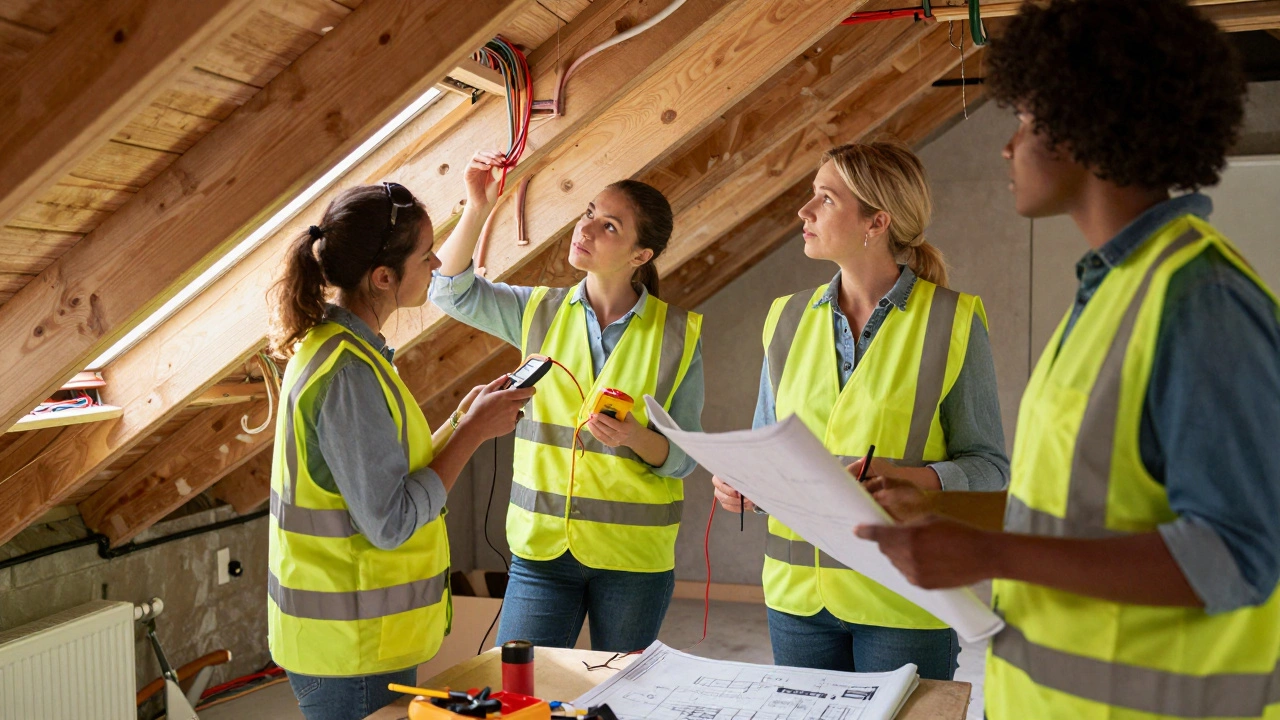
Becoming an electrician means working with wiring, circuits, and power systems in homes, offices, and factories. You’ll start as an apprentice, learning under a licensed electrician. After 4 to 5 years, you’ll take your licensing exam. The training costs under $5,000 in most cases, often covered by the employer.
Women electricians are in high demand. Companies like IBEW (International Brotherhood of Electrical Workers) have active women-in-trades programs. Many apprenticeships now offer childcare support, flexible scheduling, and mentorship circles. You’ll work indoors and out, with a mix of office work and hands-on tasks. No two days are the same.
2. HVAC Technician
Heating, ventilation, and air conditioning systems are everywhere. And they break. A lot. That’s where HVAC technicians come in. You’ll install, repair, and maintain systems in homes and commercial buildings. The job is clean, mostly indoor, and rarely requires heavy lifting.
Training takes 6 months to 2 years, depending on the program. Many community colleges offer evening and weekend classes. You’ll learn about refrigerants, electrical controls, and energy efficiency. The median salary is $52,000, but with certifications in commercial systems or smart thermostats, you can hit $70,000+.
Women in HVAC often say the best part is the problem-solving. Every system is like a puzzle. And customers are grateful. No one complains when the heat comes back on.
3. Plumber
Plumbing isn’t just about clogged sinks. It’s about water systems, gas lines, sewage, and building codes. You’ll work in new construction, renovations, and emergency calls. The work is physical, but tools and equipment have gotten lighter and smarter over the years.
Apprenticeships last 4 to 5 years. Many programs now include women-only cohorts to build confidence and reduce isolation. You’ll learn to read blueprints, use pipe cutters, and install water heaters. The average salary is $58,000. With experience, you can start your own business-something 30% of female plumbers do within 10 years.
4. Welder
Welding might sound intimidating, but modern welding uses lightweight gear, automated tools, and precise techniques. You’ll join metal parts in manufacturing, shipbuilding, pipelines, or even art installations. Many women find welding satisfying because it’s creative and technical at the same time.
Certification programs take 6 to 18 months. You’ll learn MIG, TIG, and stick welding. The pay starts at $45,000 and jumps to $75,000+ with specialized certifications like underwater welding or pipeline welding. Companies like Boeing, General Motors, and the U.S. Navy actively hire women welders.
Work environments vary. Some welders work in factories with set hours. Others travel for projects. You can choose your pace.
5. Solar Panel Installer
This is one of the fastest-growing trades in America. As clean energy takes off, so does the need for installers. You’ll mount panels on roofs, connect them to electrical systems, and ensure they meet safety codes. The work is outdoors, but it’s not backbreaking. Most systems are lightweight and lifted with tools.
Training takes 3 to 6 months. Many states offer free or low-cost programs through green energy initiatives. You’ll learn electrical basics, roof safety, and how to use monitoring software. The median salary is $50,000. With experience, you can move into project management or sales roles. Some women even start their own solar companies.
What About Safety and Respect?
You’ve probably heard stories-some true, some exaggerated-about women facing hostility in male-dominated trades. It’s real. But it’s changing fast.
Organizations like Women in Trades (WIT), National Association of Women in Construction (NAWIC), and the U.S. Department of Labor’s Women in Apprenticeship and Nontraditional Occupations (WANTO) program are pushing for better policies. Many unions now have zero-tolerance rules for harassment. Companies are training supervisors on inclusion. And women are forming networks to support each other.
If you walk into a job site and feel unsafe, you have rights. You can report it. You can walk out. And you’re not alone. There are thousands of women who’ve done this before you-and they’re ready to help.
How to Get Started
Here’s how to begin, step by step:
- Choose one trade that excites you. Don’t pick five. Pick one.
- Search for local apprenticeships or community college programs. Use keywords like “women in electrician apprenticeship [your city].”
- Visit a job site or shadow someone. Many programs let you do a day of observation for free.
- Apply for financial aid. Most trade programs qualify for Pell Grants, state grants, or employer-sponsored training.
- Start small. Take a 10-week intro course. See if you like it before committing.
You don’t need to be strong. You need to be willing to learn. You don’t need to be the loudest person in the room. You just need to show up, ask questions, and do the work.
Real Stories, Real Results
Jamila, 29, was a retail manager. She hated the hours. She took a 6-month electrician prep course at her local community college. Now she’s in her second year of an apprenticeship. She makes $28 an hour. Her mom says she’s proud-not because it’s a "man’s job," but because Jamila chose her own path.
Maya, 34, was a single mom working two jobs. She signed up for a free HVAC training program through a nonprofit. Two years later, she owns her own HVAC business. She hires other women. She’s on track to hit $100,000 in revenue this year.
These aren’t outliers. They’re examples. And they’re growing.

What’s Holding Women Back?
Sometimes, it’s not lack of ability. It’s lack of exposure. Many girls grow up never seeing a female plumber on TV or hearing about a woman who wired a skyscraper. That changes when you start talking about it.
Another barrier? Misconceptions. "It’s too dirty." "It’s too hard." "No one will hire me." But those are stories from 20 years ago. Today, tools are ergonomic. Safety gear fits women’s bodies. Employers are desperate for talent.
The real question isn’t "Can women do this?" It’s "Why aren’t more women trying?"
Final Thought: You Don’t Need Permission
You don’t need someone to tell you it’s okay to learn a trade. You don’t need a degree to prove your worth. You don’t need to fit a stereotype to succeed.
If you’re curious about working with your hands, solving real problems, and earning a solid income without drowning in debt-then a trade is waiting for you. Pick one. Start small. Stay consistent. And don’t let anyone tell you it’s not for you.
The tools are ready. The jobs are open. And you? You’re more capable than you think.
Can women really make good money in trades?
Yes. The average starting salary for a female electrician or HVAC technician is $45,000 to $50,000. With experience, certifications, and overtime, many earn $70,000 to $90,000. Some start their own businesses and make six figures. Pay is based on skill and experience-not gender.
Do I need to be physically strong to do a trade?
Not like you think. Trades today use power tools, lifts, and ergonomic equipment. You don’t need to be a bodybuilder. You need to be willing to learn proper technique, use safety gear, and pace yourself. Many women who start in trades are surprised by how little brute strength they actually need.
Are there programs for women with no experience?
Yes. Community colleges, nonprofits, and unions offer free or low-cost prep courses. Programs like Tradeswomen Inc., Women in Skilled Trades, and local workforce development centers help women with no background get into apprenticeships. Many include childcare support, transportation help, and mentorship.
How long does it take to become licensed?
Most trades require 4 to 5 years of on-the-job training plus classroom hours to qualify for a license. Some, like solar installation or HVAC, can be certified in under 2 years. The key is finding a program that combines hands-on work with official training.
Can I do a trade and still have a family?
Absolutely. Many women in trades work full-time and raise families. Flexible scheduling, union contracts, and remote administrative roles (like job estimating or project coordination) make it possible. Some women even work part-time while their kids are young, then ramp up later. The trade industry is becoming more family-friendly every year.
If you’re ready to explore, start by calling your local community college or union hall. Ask: "Do you have a women-in-trades program?" The answer might surprise you.
Leave a comments