Locksmith Starter Kit Cost Estimator
Select Your Equipment Needs
Choose the quality level for your essential tools. Prices are estimates in GBP.
Estimated Startup Cost
You’ve got a broken key stuck in the door, or maybe you just lost the only spare. You call a professional, and within twenty minutes, they’re standing there with a machine that whirs to life, spitting out a perfect copy without ever seeing the original metal blade. It looks like magic, but it’s actually precision engineering. If you are looking into locksmith training, understanding this process is fundamental. But here is the real question: can any locksmith do this, or is it a specialized skill reserved for the experts?
The short answer is yes. In the UK, and indeed globally, making a key directly from a lock-often called "keying by impression" or using a decoder-is a standard procedure for qualified professionals. However, doing it requires specific tools, knowledge of mechanical tolerances, and an understanding of security laws. For someone entering the trade, mastering this technique separates the amateurs from the pros.
How Do They Actually Do It?
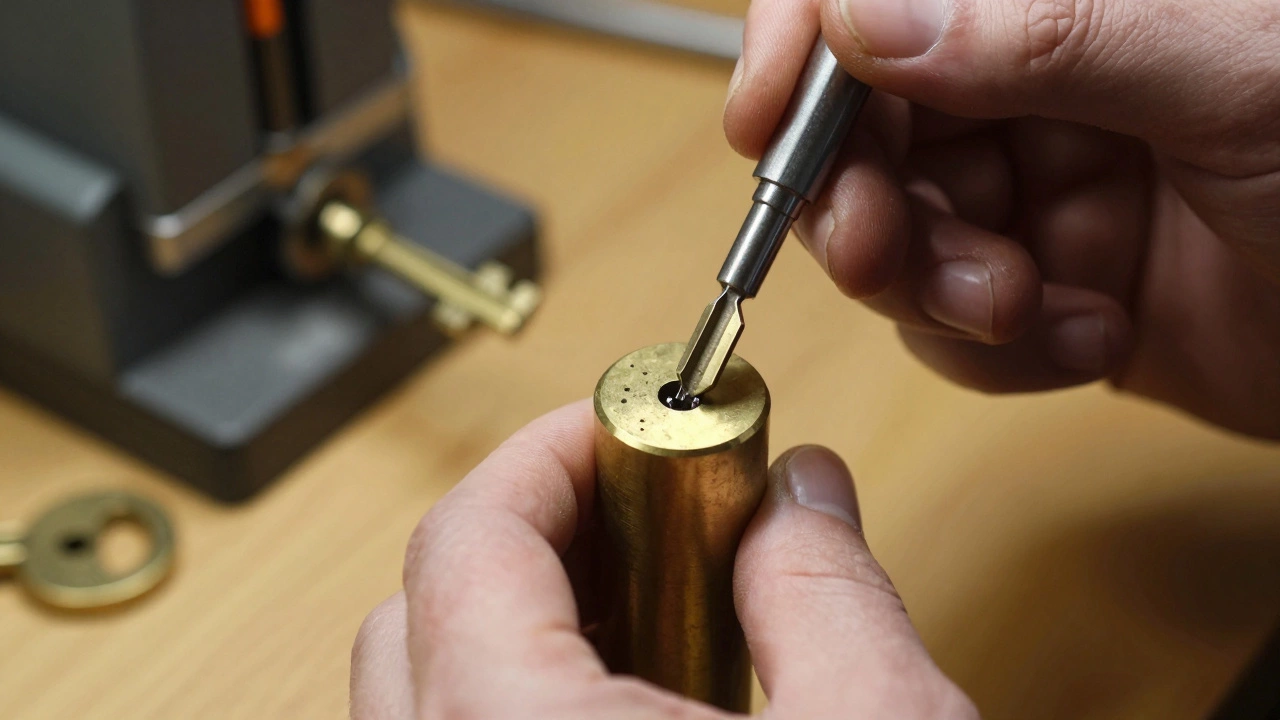
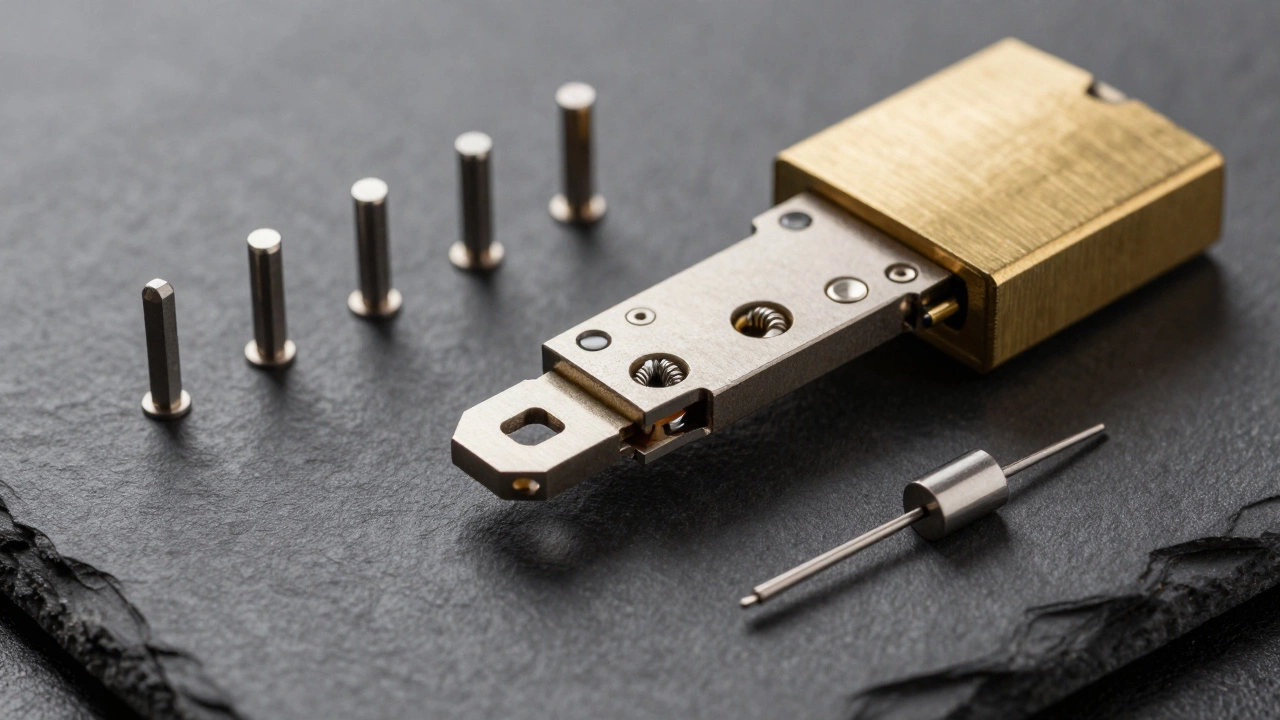
When a locksmith makes a key from a lock, they aren't guessing. They are decoding the internal geometry of the cylinder. Most residential locks in the UK use pin tumbler mechanisms. Inside the cylinder, there are small pins stacked vertically. Each pin has a specific height. When the correct key is inserted, its cuts align these pins perfectly at the shear line, allowing the plug (the part that turns) to rotate.
To make a key without the original, a locksmith uses one of two primary methods:
- Decoding Tools: These are thin, flexible wires or probes inserted into the keyway. The locksmith pushes them against the bottom of the pins and feels the resistance. By measuring the depth where each pin sits, they determine the cut depth for each position on the blank key.
- Impressioning: This involves inserting a blank key into the lock and gently turning it. The pins leave tiny marks (impressions) on the soft brass or nickel-silver of the blank. The locksmith files away material at those marked spots until the key turns freely.
Once the depths are known, the locksmith uses a key cutting machine. They place a blank key in the clamp, align the guide wheel over the measured depths, and cut the grooves. It takes seconds once the code is known.
The Legal Landscape in the UK
If you are studying for a career in this field, you need to know the rules. The UK has strict regulations regarding locksmiths, primarily driven by the Consumer Protection from Unfair Trading Regulations 2008 and local council licensing schemes. While there is no single national license required to practice locksmithing, many cities like London, Manchester, and Birmingham require traders to be licensed.
More importantly, the Criminal Law Act 1977 makes it an offense to possess articles for use in fraud or burglary. This means carrying lock picks or decoding tools can be scrutinized if you cannot prove you are a legitimate tradesperson. Proper training provides not just technical skills but also the legal documentation and insurance necessary to operate safely. Without proper accreditation, attempting to decode a lock could lead to serious legal trouble if perceived as unauthorized entry.
Essential Skills for Key Cutting and Decoding
Making a key from a lock isn’t just about pushing a button. It requires a tactile sensitivity that comes with practice. Here are the core competencies you’ll develop during your training:
- Tactile Feedback: Learning to feel the difference between a pin hitting the shear line and a driver pin binding. This "feel" is crucial for impressioning.
- Keyway Identification: Recognizing different profiles (like Yale, Dimo, or Mul-T-Lock) instantly. Using the wrong blank will ruin the lock and waste time.
- Precision Filing: If you are impressioning, you must file slowly. Removing too much metal at once means starting over. Patience is a skill here.
- Machine Calibration: Key cutting machines drift over time. Knowing how to calibrate your machine ensures every cut is accurate to within millimeters.
In India, where vocational training is rapidly expanding, students often start with basic key duplication before moving to decoding. The transition teaches you the anatomy of a lock inside out.
Tools of the Trade
You don’t need a million-dollar lab to start. A basic setup for learning key-by-lock techniques includes:
| Tool Name | Function | Estimated Cost (GBP) |
|---|---|---|
| Key Cutting Machine | Cuts blanks based on master keys or codes | £300 - £800 |
| Decoder Set | Measures pin depths inside the cylinder | £50 - £150 |
| Impressioning Files | Small half-round files for shaping blanks | £20 |
| Blank Keys Assortment | Various profiles for different lock brands | £100+ |
| Practice Cylinders | Used locks for safe experimentation | £5 - £10 each |
Notice that practice cylinders are cheap. Buy used ones from scrap yards or online marketplaces. Breaking a £500 lock while learning is a costly mistake. Start with old, discarded hardware.
Why Training Matters More Than DIY
You might find YouTube videos showing how to pick a lock or cut a key with a drill. These are entertaining but dangerous if applied professionally. A trained locksmith knows when not to decode a lock. For instance, high-security locks like Mul-T-Lock or Abloy have rotating pins or magnetic elements that standard decoders cannot read. Attempting to force these can destroy the mechanism, requiring a full replacement rather than a simple key cut.
Furthermore, modern locks often include sidebars or wafer tumblers alongside pins. Understanding these complex interactions requires structured education. In vocational courses, instructors teach you to identify lock types visually and audibly. You learn to listen for the "click" of a pin setting versus the grind of a binding wire.
From Student to Professional: The Path Forward
If you are considering this career, look for programs that offer hands-on experience with both traditional pin tumbler locks and modern electronic systems. The industry is shifting toward smart locks, but the mechanical foundation remains vital. Many smart locks still have mechanical override keys that need cutting.
Joining a recognized trade association, such as the Master Locksmiths Association (MLA) in the UK, adds credibility. It signals to clients that you adhere to ethical standards and have verified competence. For those in other regions, similar bodies exist, providing a network for mentorship and continued learning.
Remember, the ability to make a key from a lock is just one tool in your kit. It represents the intersection of patience, physics, and law. Master it, and you solve problems that others see as impossible.
Can a locksmith make a key from a lock without removing it?
Yes, in most cases. Locksmiths can use decoding tools or impressioning techniques through the keyhole while the lock remains installed in the door. This is common for emergency services when the original key is lost. However, some high-security locks may require removal for precise coding.
Is it illegal to learn how to decode locks in the UK?
No, learning the skill is not illegal. However, possessing lock-picking tools or decoding devices in public can be construed as intent to commit burglary under the Criminal Law Act 1977 unless you can prove you are a legitimate locksmith or student. Always carry identification and proof of training or employment.
How long does it take to become proficient in key cutting?
Basic key duplication can be learned in a few days. Proficiency in decoding and impressioning typically takes several months of dedicated practice. Vocational courses often range from 6 weeks to 6 months, depending on whether they include apprenticeship hours.
What is the difference between decoding and impressioning?
Decoding involves measuring the physical depth of the pins inside the lock using probes. Impressioning involves inserting a blank key, turning it to create marks from the pins, and filing those marks down. Decoding is faster for experienced pros; impressioning is more versatile for unique or damaged locks.
Do I need a license to work as a locksmith in the UK?
There is no national license, but many local councils require a trader's license. Additionally, membership in organizations like the MLA is highly recommended for insurance and client trust. Always check local regulations in your specific city or borough.
Leave a comments