
Electrician Apprenticeship Earnings Estimator
Quick Summary of Apprenticeship Pay
- Paid Training: Yes, apprentices are paid employees from day one.
- Progressive Raises: Your hourly rate increases as you hit specific milestones (e.g., every 1,000 hours).
- Employer-Paid Schooling: In many cases, the employer or union covers the cost of your technical courses.
- Starting Rates: Usually starts at a percentage of a journey-level worker's pay.
How the Pay Scale Actually Works
You won't start at the top. Nobody expects a first-year apprentice to know how to wire a commercial distribution panel. Because of that, your starting wage is typically a fraction of what a licensed Journeyman Electrician makes. A common rule of thumb in the industry is a percentage-based scale.
For example, a first-year apprentice might start at 40% to 50% of the full journeyman rate. As you prove your competence and complete your required classroom hours, that percentage climbs. By your fourth or fifth year, you might be making 80% to 90% of the full rate. This creates a natural incentive to stay in the program and keep learning. If you're working under a Union like the IBEW, these scales are strictly negotiated and transparent. You know exactly what you'll be making in year three before you even start year one.
| Apprentice Year | % of Journeyman Rate | Primary Focus | Expected Responsibility |
|---|---|---|---|
| Year 1 | 40% - 50% | Basics & Safety | Material handling, cleaning, basic routing |
| Year 2 | 60% - 65% | Installation | Pulling wire, installing boxes, basic circuits |
| Year 3 | 70% - 80% | Complex Systems | Bending conduit, reading blueprints |
| Year 4+ | 85% - 95% | Fine Tuning | Troubleshooting, panel wiring, leading small tasks |
Union vs. Non-Union Pay: What's the Difference?
Where you sign up determines not just your pay, but how your benefits are handled. If you go the union route, you're often dealing with a collective bargaining agreement. This means the pay is standardized across the region. You get a predictable raise, and often, the union handles your health insurance and pension contributions separately from your hourly check.
Non-union, or "open shop," apprenticeships are more flexible. Pay is negotiated between you and the employer. Some small residential contractors might offer a lower starting wage but provide more one-on-one mentorship. Conversely, some high-end commercial firms pay very competitively to attract the best talent. The risk with non-union paths is that raises aren't always guaranteed unless you've specifically agreed upon a schedule in your contract.
Who Pays for the Schooling?
This is the part that surprises most people. In a electrician apprenticeship, the "school" part-the technical training-is often handled in one of three ways. First, the employer may pay for your tuition entirely as a benefit of employment. Second, the union may run its own training center (like the JATC), where the cost is covered by the union fund.
In some cases, you might be expected to pay for your own textbooks or specific tools, but the actual classroom instruction is rarely a cost the apprentice bears alone. In some jurisdictions, there are government grants or tax credits that subsidize the training of new tradespeople, meaning the company gets a tax break for hiring you. This is why they're willing to pay you to learn; you're a valuable investment in their future workforce.
The Hidden Costs: Tools and Gear
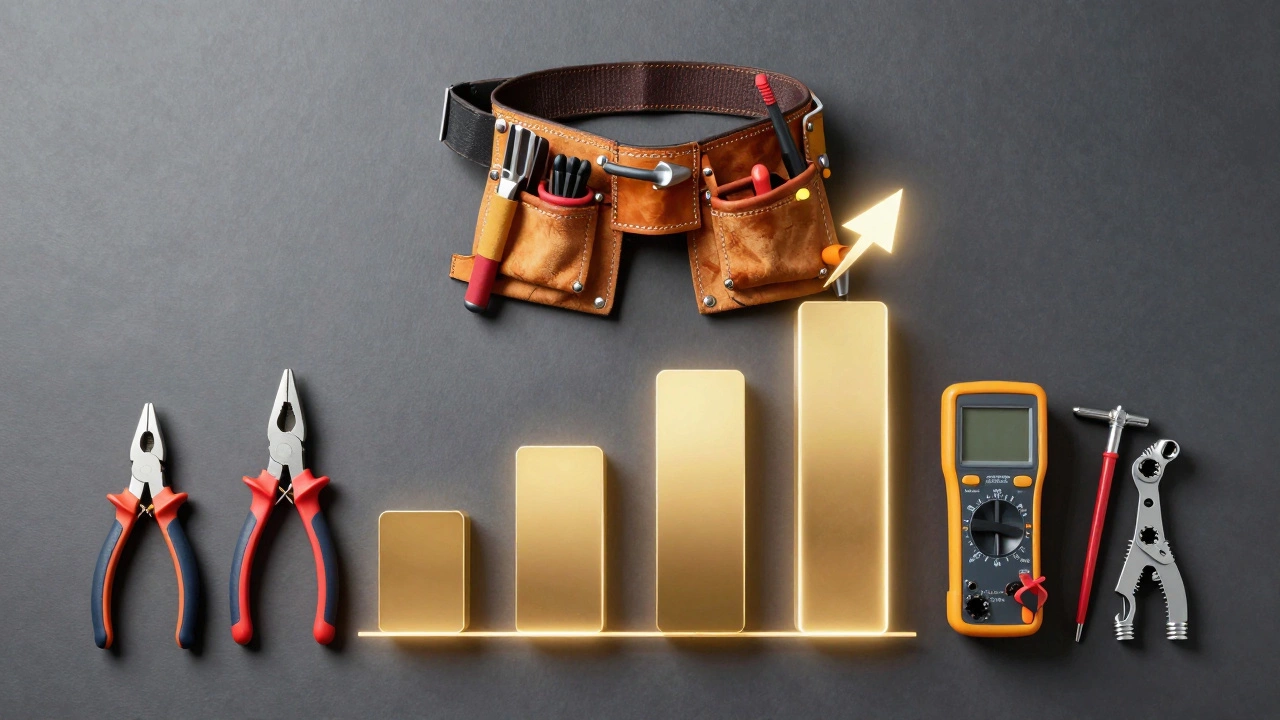
While you're getting a paycheck, it's important to realize that the first few months might feel like a wash. Why? Because of the tool list. Every master electrician will give you a list of required gear: linesman pliers, wire strippers, a multimeter, a cordless drill, and a sturdy tool belt. Depending on whether you buy entry-level or professional-grade equipment, this can cost anywhere from $500 to $2,000 in your first year.
Pro tip: Don't go out and buy the most expensive brand-name kit on day one. Most experienced electricians will tell you to buy the basics and upgrade as you go. Many companies also offer a tool allowance or a payroll deduction plan where they buy the tools for you and take a small amount out of your check each week until they're paid off.
Calculating Your Real Earnings
To figure out if an offer is fair, don't just look at the hourly rate. Look at the "total package." A job paying $18/hour with full health benefits and a pension contribution is often worth more than a job paying $22/hour where you have to pay for your own insurance. Also, consider the overtime. Electrical work is notorious for "crunch time." If you're working 50-60 hours a week at time-and-a-half for those extra hours, your take-home pay jumps significantly.
One thing to watch for is the "training wage" loophole. Some unscrupulous employers might try to keep you at a low apprentice rate for years without moving you toward your license. A legitimate apprenticeship has a clear timeline. If you've been doing journeyman-level work for two years but are still being paid 50% of the rate, it's time to have a serious conversation with your boss or look for a new contractor.
How to Maximize Your Pay as a Newbie
The fastest way to get a raise-even between the scheduled bumps-is to become the person the foreman doesn't have to tell twice. In the trades, reliability is more valuable than raw talent. If you show up 15 minutes early, have your tools ready, and anticipate what the master electrician needs before they ask for it, you become indispensable.
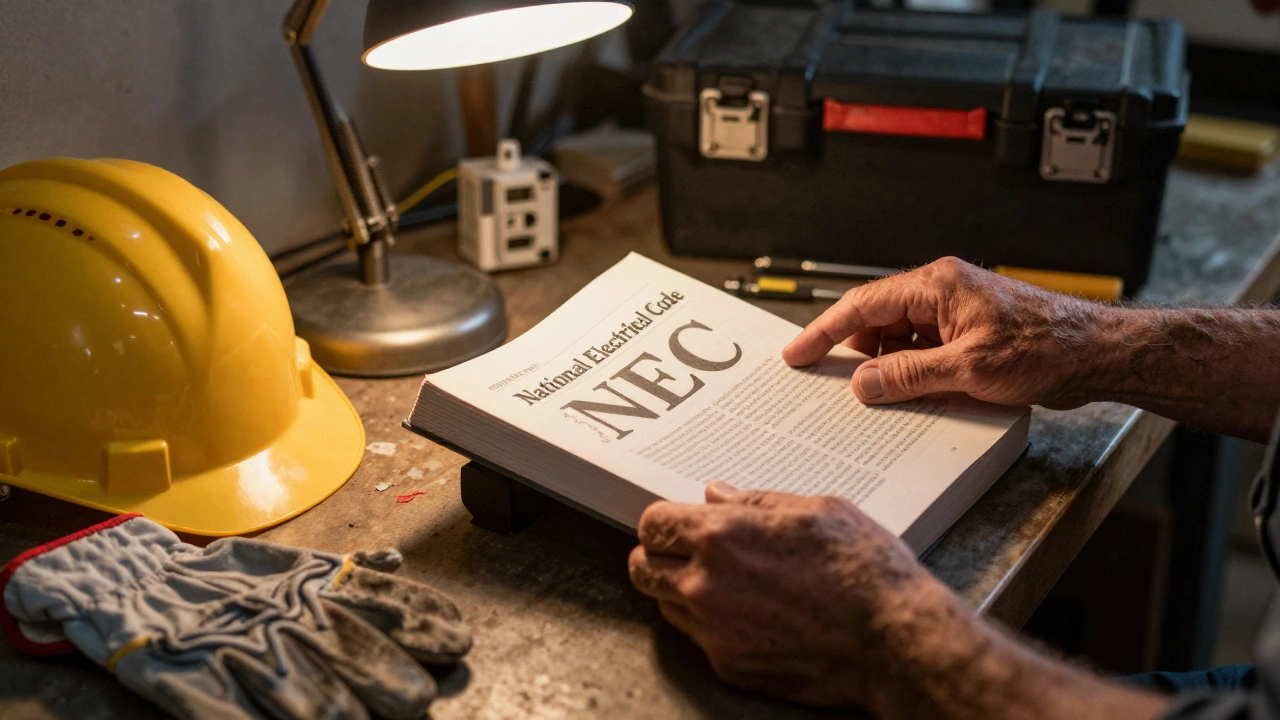
Additionally, spend your free time studying the National Electrical Code (NEC). Being the person who can actually find the correct code requirement in the book while on a job site makes you a massive asset. Knowledge is the only thing that allows you to negotiate for a higher rate in a non-union environment.
Do I have to pay any money to start an apprenticeship?
Generally, no. You should not have to pay a fee just to be "placed" in an apprenticeship. However, you will likely need to invest in your own basic hand tools and safety gear (like steel-toed boots), which are typically the responsibility of the worker.
Will I make enough to live on during the first year?
It depends on your local cost of living. In many regions, the starting apprentice wage is close to entry-level retail or fast-food pay. While it may be tight at first, the rapid growth in pay over the next 4 years makes it a much better financial bet than most minimum-wage jobs.
What happens to my pay if I fail a class in trade school?
Your hourly pay on the job site usually isn't tied to your grades, but your progress toward your license is. If you fail your required schooling, you can't move up to the next "year" of the pay scale until you pass. Essentially, you'll be stuck at your current wage until you get the credit.
Do apprentices get paid for the time they spend in class?
This varies. Some employers pay you your hourly rate for classroom hours, while others only pay you for the time spent on the job site. Union programs often have a specific "schooling wage" or stipend that covers your time in the training center.
Can I negotiate my starting apprentice pay?
In a union, the pay is set and non-negotiable. In a non-union shop, you can negotiate if you have previous related experience (like construction or basic electrical knowledge). If you already have a certificate from a pre-apprenticeship program, use that as leverage to start at a slightly higher percentage.
Next Steps for Aspiring Electricians
If you're ready to start earning, your first move should be researching the local IBEW (International Brotherhood of Electrical Workers) chapter in your city to see if they are accepting applications. If you prefer a faster, more direct route, start browsing local electrical contractors and ask if they are looking for "helpers." Many apprenticeships start as a helper position where you get a feel for the work before the formal training agreement is signed.
Regardless of the path, keep a log of every hour you work. Whether it's in a notebook or an app, tracking your hours is the only way to ensure you're getting the raises you've earned. Don't leave your paycheck to the memory of a busy foreman.
Leave a comments