
Digital Marketing Beginner's Roadmap Quiz
Are you ready to start your journey? This interactive quiz covers the core pillars, common pitfalls, and practical steps outlined in the beginner's roadmap.
Loading question...
Quiz Completed!
0/5
Keep learning!
Your Next Steps
- ✅ Review Mistakes: Check the questions you missed above.
- ✅ Pick a Pillar: Choose one channel (SEO, Social, PPC, or Email).
- ✅ Start Small: Launch a personal project or volunteer today.
You’ve probably heard the hype. Everyone from your college roommate to that guy on LinkedIn is talking about digital marketing. It sounds lucrative, flexible, and exciting. But when you actually sit down to figure out where to start, it feels like drinking from a fire hose. There are acronyms everywhere-SEO, PPC, CTR, ROI-and every guru claims their specific method is the only way to get rich quick.
Here’s the truth: you don’t need to master everything at once. In fact, trying to do so is the fastest way to burn out. Learning how beginners learn digital marketing isn’t about memorizing textbooks; it’s about picking one channel, getting your hands dirty, and seeing what works. This guide cuts through the noise. We’ll map out exactly how to go from zero knowledge to landing your first client or job, without wasting months on theory that doesn’t apply in the real world.
The Core Pillars You Actually Need to Know
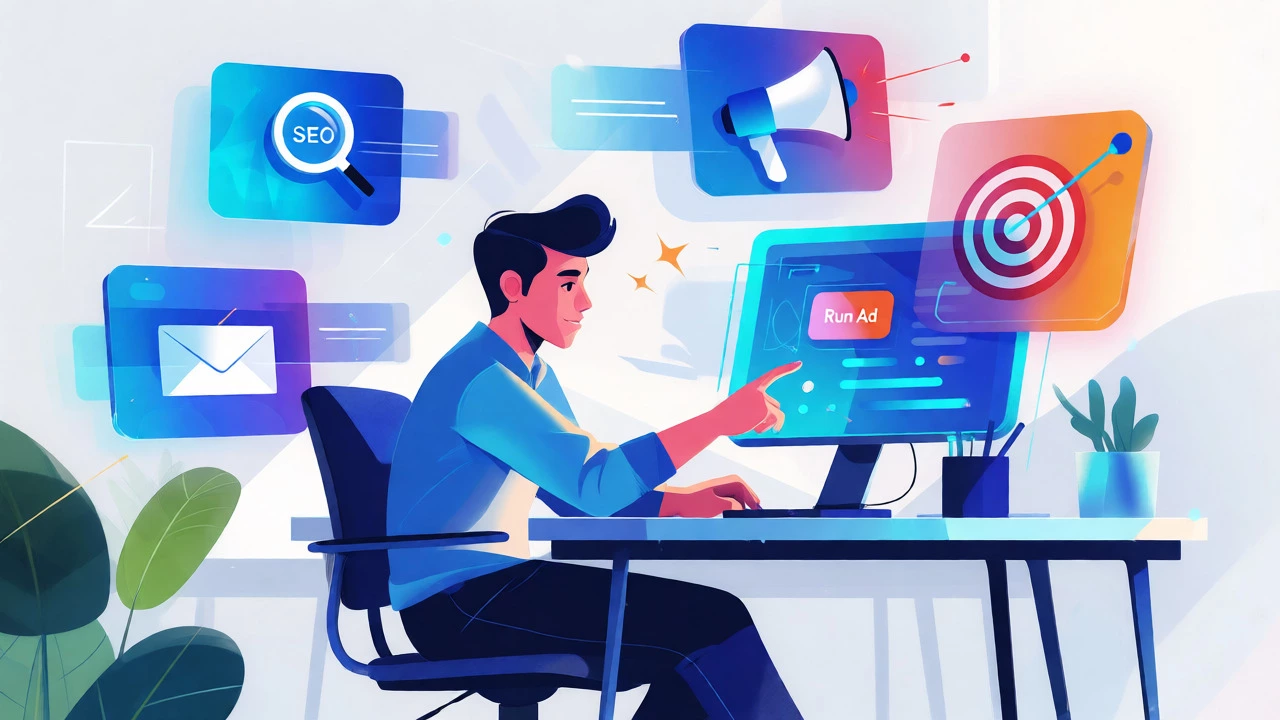
Before you buy another online digital marketing course, take a breath. The industry is vast, but for a beginner, it boils down to four main pillars. Think of these as different languages within the same country. You wouldn’t try to speak French, Mandarin, Spanish, and Arabic all at once. Pick one, get fluent, then branch out.
- Search Engine Optimization (SEO): Getting people to find you organically via Google.
- Social Media Marketing: Building communities and brand awareness on platforms like Instagram, TikTok, or LinkedIn.
- Paid Advertising (PPC): Buying clicks on search engines or social feeds.
- Email Marketing: Owning your audience by sending direct messages to their inboxes.
Most beginners make the mistake of jumping into Paid Ads because they want immediate results. But if you don’t understand SEO or content creation first, you’re just burning money on bad traffic. Start with organic channels. They teach you how customers think and behave before you pay to reach them.
Step 1: Build Your Foundation with Free Resources
You don’t need a $2,000 degree to start. Some of the best education is free, provided by the companies that own the platforms. If you want to learn Facebook ads, go to Meta Blueprint. Want to learn analytics? Google has its own certification programs. These resources are authoritative because they come directly from the source code of the ad platforms themselves.
Start with Google Digital Garage. It’s a free, comprehensive online training program that covers the fundamentals of digital marketing, including SEO, SEM, and social media. Upon completion, you get a certificate recognized by IAB Europe. It takes about 40 hours, which is a perfect weekend project commitment. Why does this matter? Because it gives you the vocabulary. When someone talks about "impression share" or "bounce rate," you won’t have to guess what they mean.
Pair this with practical experimentation. Create a dummy website or blog using WordPress. Install Google Analytics 4 (GA4) and Search Console. See how data flows. Seeing raw numbers is terrifying at first, but it demystifies the magic behind the metrics.
Step 2: Choose Your Niche and Specialize
Generalists struggle in digital marketing. Specialists get paid. Once you have the basic overview, pick one lane. Do you love writing? Go into Content Marketing and SEO. Are you visually oriented? Try Social Media Design and Management. Do you like numbers and logic? Dive into PPC and Data Analysis.
Let’s look at two common paths for beginners:
| Path | Key Skills Required | Time to First Result | Best For... |
|---|---|---|---|
| SEO & Content | Keyword research, writing, technical site health | 3-6 months | People who enjoy writing and long-term strategy |
| Social Media | Creativity, trend spotting, community engagement | Weeks to months | Visual thinkers and extroverts |
| Paid Ads (PPC) | Budget management, copywriting, data analysis | Days to weeks | Analytical minds comfortable with risk |
| Email Marketing | Copywriting, automation tools, list building | Months | Relationship builders and detail-oriented folks |
If you choose SEO, for example, stop reading about "link building strategies" and actually build links. Reach out to three small blogs in your niche. Offer to write a guest post. That single action teaches you more about outreach than ten hours of video lectures.
Step 3: Get Hands-On with Real Projects
Theory is safe. Practice is messy. To truly learn how beginners learn digital marketing, you must fail. And failing is cheap online. Here is a concrete plan to gain experience without needing a job:
- Start a Personal Brand: Launch a newsletter or a TikTok account documenting your learning journey. Treat it like a business. Set goals, track growth, and experiment with headlines.
- Volunteer for Non-Profits: Local charities often have terrible websites and non-existent social media presence. Offer to run their Instagram for three months. You get real-world constraints and a portfolio piece; they get help.
- Run a Micro-Campaign: Spend $50 on Facebook ads promoting your personal project. Target a very specific interest group. Analyze why some images got clicked and others didn’t.
This approach builds what hiring managers call "agency." They don’t care if you know the definition of CPC (Cost Per Click). They care if you can explain why your CPC dropped after you changed the audience targeting. That insight comes from doing, not studying.
Step 4: Master the Tools of the Trade
Digital marketers live in dashboards. You need to be comfortable navigating the interfaces of major platforms. Don’t just watch tutorials; log in and click around. Most tools offer free tiers or sandbox modes.
Familiarize yourself with these essential categories:
- Analytics: Google Analytics 4 is the industry standard for tracking user behavior. Learn to set up events and conversions.
- SEO Tools: Semrush or Ahrefs are powerful but expensive. For beginners, use Ubersuggest or the free version of Moz to check domain authority and keyword difficulty.
- Social Schedulers: Buffer or Hootsuite allow you to queue posts. Understanding scheduling helps you visualize consistency, which is key to algorithm favorability.
- Email Platforms: Mailchimp or ConvertKit. Learn how to segment an audience so you aren’t spamming everyone with irrelevant offers.
Pro tip: Don’t try to learn every tool. Pick one from each category. Mastery of one tool beats familiarity with ten.

Common Pitfalls That Trap Beginners
Many people quit digital marketing within six months. Not because it’s too hard, but because they fall into specific traps. Avoiding these will put you ahead of 80% of your peers.
Chasing Vanity Metrics: Likes and followers feel good, but they don’t pay bills. Focus on metrics tied to revenue: leads generated, sales closed, or email sign-ups. A post with 10 likes that generates 3 sales is better than a viral post with 10,000 likes and zero sales.
Ignoring Mobile Users: Over 60% of web traffic comes from mobile devices. If your landing page looks bad on an iPhone, you’re losing money. Always preview your work on a phone before publishing.
Trying to Be Everywhere: New marketers often launch a blog, a YouTube channel, a podcast, and an Instagram account simultaneously. This splits your attention thin. Pick one primary channel and one secondary support channel. Grow those before expanding.
Building a Portfolio That Gets You Hired
Once you’ve practiced, you need proof. Employers and clients want to see results. Since you might not have big-name clients yet, create case studies based on your personal projects or volunteer work.
A strong case study follows a simple structure:
- The Problem: What was the issue? (e.g., "Low engagement on Instagram")
- The Action: What did you do? (e.g., "Switched to Reels and posted daily at 6 PM")
- The Result: What happened? (e.g., "Engagement increased by 40% in 30 days")
Put this on a simple website or PDF. Use screenshots of your analytics dashboards. Visual evidence builds trust faster than any resume bullet point.
Continuous Learning in a Changing Landscape
Digital marketing changes fast. What worked in 2024 might be obsolete in 2026. Algorithms update, new platforms emerge, and consumer habits shift. Staying relevant requires a habit of continuous learning.
Subscribe to three high-quality newsletters. Examples include Morning Brew for general business context, Search Engine Land for SEO news, and HubSpot Blog for broader marketing tips. Read them during your commute. This keeps you plugged into current trends without overwhelming you.
Also, join communities. Reddit’s r/digitalmarketing or specialized Slack groups can provide peer feedback. Sometimes, asking "Why did my ad fail?" gets you better insights than a generic tutorial.
Do I need a degree to work in digital marketing?
No, you do not. While a degree in marketing or communications can help, most employers prioritize practical skills and a portfolio. Certifications from Google, HubSpot, or Meta, combined with real-world project results, are often more valuable than academic credentials in this field.
How much time does it take to become proficient?
If you dedicate 10-15 hours a week to learning and practicing, you can become job-ready in 3 to 6 months. Proficiency in a specific niche, like SEO or PPC, might take longer, but you can land junior roles or freelance gigs within that initial timeframe by showcasing your willingness to learn and your foundational certifications.
Which digital marketing skill is easiest to learn for beginners?
Social Media Marketing is generally considered the most accessible entry point because the barrier to entry is low-you likely already use these platforms daily. However, turning casual usage into strategic marketing requires learning about content calendars, engagement metrics, and platform-specific algorithms.
Can I learn digital marketing entirely online?
Yes, absolutely. The nature of the industry is digital, so all tools, courses, and certifications are available online. In fact, being comfortable working remotely and managing digital workflows is a core competency required for the job itself.
What is the biggest mistake beginners make?
The biggest mistake is passive consumption. Watching videos without applying the concepts to a real project means you haven't actually learned anything. You must create content, run ads, or analyze data to understand the nuances that theory alone cannot teach.
Leave a comments