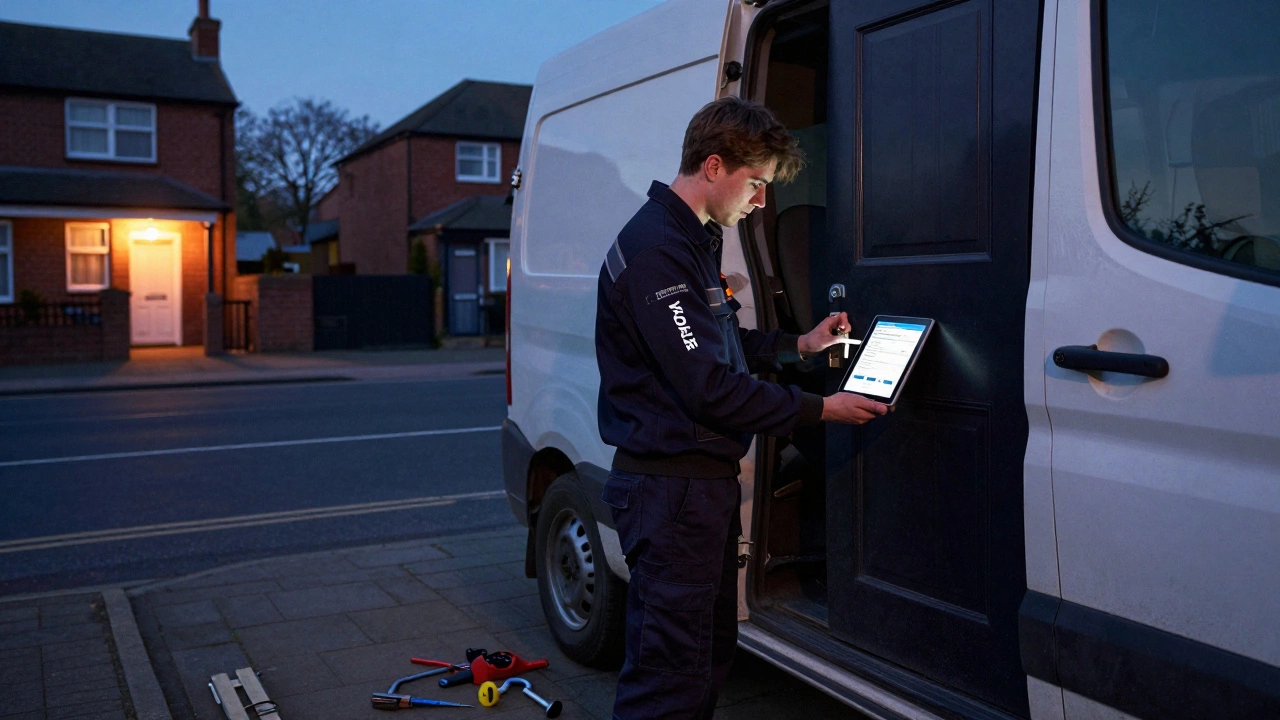
How much do locksmiths make in the UK? It’s not a one-size-fits-all answer. Some locksmiths pull in £30,000 a year. Others clear £60,000 or more - especially if they run their own business, work weekends, or handle emergency calls. The difference isn’t just experience. It’s strategy, location, and whether you’re fixing a door lock or installing a high-security safe system.
Starting out: What a new locksmith earns
If you’ve just finished training and landed your first job, expect to earn between £18,000 and £24,000 annually. That’s roughly £9 to £12 an hour. Most entry-level locksmiths work for established companies, not on their own. These jobs often come with basic tools, a van, and a steady stream of calls - but also strict pay scales.
One trainee in Manchester told me he worked 45 hours a week for £21,000 a year. He did lockouts, key cuts, and basic repairs. He didn’t get overtime. He didn’t get bonuses. He just got paid hourly. That’s typical for apprentices and junior technicians.
Mid-level locksmiths: The sweet spot
After three to five years, most locksmiths hit their stride. They’ve built a reputation. They know which locks fail in winter. They’ve learned how to charge for urgency. Their salary jumps to £28,000-£40,000. Some even start picking up commercial contracts - schools, offices, apartment blocks.
What changes? They stop just answering calls. They start managing them. They keep a schedule. They track repeat customers. They use apps to invoice on the spot. One locksmith in Birmingham told me he doubled his income by switching from pay-as-you-go to monthly service contracts with property managers. He now services 12 buildings. Each pays £150 a month. That’s £1,800 a month, just for checking locks.
Self-employed locksmiths: The real money
If you own your business, your earning potential opens up. The average self-employed locksmith in the UK makes £45,000-£65,000 a year. But that’s not the ceiling. Top earners hit £80,000+. How?
- They charge £80-£150 for emergency call-outs after 6 PM or on weekends.
- They install smart locks and alarm systems - not just keys.
- They partner with estate agents and letting agencies for recurring work.
- They offer 24/7 service and market themselves as the ‘go-to’ in their area.
A locksmith in Leeds started with a van and a toolkit. Five years later, he runs a team of four. He doesn’t open locks anymore. He handles sales, dispatch, and client contracts. His company does £250,000 in revenue annually. His take-home? Around £72,000.

Location matters - a lot
Locksmith pay isn’t the same in every city. London pays more - but so do the costs. A locksmith in central London might charge £120 for a night emergency. In rural Wales, the same job might go for £60. But rent, fuel, and insurance are cheaper there.
Here’s a rough breakdown by region (based on 2025 industry surveys):
| Region | Entry-Level (£) | Experienced (£) | Self-Employed (£) |
|---|---|---|---|
| London | 22,000 | 38,000 | 60,000-85,000 |
| South East | 21,000 | 36,000 | 55,000-75,000 |
| Midlands | 20,000 | 32,000 | 48,000-65,000 |
| North England | 19,000 | 30,000 | 45,000-60,000 |
| Scotland | 19,500 | 31,000 | 47,000-62,000 |
| Wales | 18,000 | 28,000 | 42,000-55,000 |
London isn’t always the best choice. The competition is fierce. The overhead is high. But if you can get on a list of approved locksmiths for major housing providers or police-backed schemes, you can lock in steady work.
What drives higher pay? Skills beyond the key
Locksmithing isn’t just about picking locks anymore. The real money is in security systems. Here’s what boosts your income:
- Smart locks: Installing and programming August, Yale, or Schlage smart locks adds £50-£120 per job.
- Commercial security: Setting up access control systems for offices can bring in £500-£2,000 per project.
- High-security locks: Installing EVVA, Mul-T-Lock, or Medeco systems requires certification - but pays £100+ per lock.
- Insurance-approved work: Many insurers only cover locks that meet BS3621 standards. Being certified to install them makes you the go-to for home insurance claims.
One locksmith in Bristol got certified in BS3621 and PAS 24 standards. Within a year, 70% of his jobs came from insurance companies. He didn’t have to chase customers. They came to him.
How to make more - even if you’re just starting
You don’t need to be a millionaire to earn well. Here’s what works:
- Get certified. The Master Locksmiths Association (MLA) and the British Locksmiths Institute (BLI) offer recognised training. It costs £500-£1,500, but it opens doors.
- Specialise. Don’t be the guy who does everything. Be the guy who does smart locks. Or the guy who fixes car locks fast. Specialisation = less competition.
- Work weekends. Emergency calls after 6 PM or on Sundays can double your hourly rate.
- Use Google My Business. Most people search for ‘emergency locksmith near me’. If you’re not showing up, you’re losing money.
- Build relationships. Give a free lock check to a local estate agent. They’ll send you tenants.

What most locksmiths get wrong
Many locksmiths think if they’re good with tools, they’ll make good money. That’s not true. The ones who struggle are the ones who:
- Undercharge because they’re afraid to say no.
- Don’t track expenses. Fuel, tools, insurance, phone bills - they eat into profits.
- Wait for work instead of marketing it.
- Ignore digital tools. Paper invoices and handwritten notes slow you down.
One locksmith in Sheffield admitted he worked 60 hours a week for £25,000 a year. He finally hired a VA to handle calls and bookings. He cut his hours to 40. His income went up to £42,000.
Is locksmithing worth it in 2026?
Yes - if you treat it like a business, not just a job. The demand isn’t going away. People lose keys. Burglars break in. Smart homes need setup. Old locks need replacing.
And unlike many trades, you don’t need a degree. You don’t need a huge upfront investment. A good toolkit costs £1,000-£2,000. A van? You can lease one for £200 a month. Training? A few weeks. Certification? A few hundred pounds.
The real cost isn’t money. It’s time. The first year is hard. The second year gets better. By year three, if you’ve built a system, you’re not just earning - you’re in control.
How much does a locksmith earn per hour in the UK?
Hourly rates vary widely. Entry-level locksmiths earn £9-£12 per hour. Experienced technicians make £18-£25. Self-employed locksmiths charge £40-£150 per hour, especially for emergencies or after-hours calls. Rates depend on location, skill, and whether you’re working for a company or your own business.
Do locksmiths make good money in the UK?
Yes - but only if they treat it like a business. The average locksmith earns between £30,000 and £50,000. Those who specialise, work weekends, or offer commercial services can earn £60,000-£80,000. Many top earners don’t even open locks anymore - they manage teams and contracts.
Is there high demand for locksmiths in the UK?
Absolutely. With rising home ownership, smart home installations, and security concerns, demand is steady and growing. Emergency calls never stop - people lose keys, get locked out, or need lock upgrades after break-ins. Many locksmiths struggle to keep up with demand, especially in urban areas.
What certifications do I need to be a locksmith in the UK?
There’s no legal requirement, but certification builds trust. The Master Locksmiths Association (MLA) and British Locksmiths Institute (BLI) offer recognised training. Certifications like BS3621 (for insurance-approved locks) and PAS 24 (for door security) are highly valued. Many insurers and property managers only hire certified locksmiths.
Can I become a locksmith without experience?
Yes. Many start as apprentices or take short courses (2-6 weeks). You don’t need prior experience. But you do need to learn the tools, codes, and safety standards. The hardest part isn’t the skill - it’s getting your first job. Start by offering free lock checks to landlords or letting agents to build your portfolio.
Next steps if you’re serious about locksmithing
Start by choosing a path:
- Want steady pay? Apply to a local locksmith company with a training program.
- Want to own your business? Take a certification course, buy a basic toolkit, and register as self-employed.
- Want to specialise? Focus on one area - smart locks, car keys, or commercial access systems.
Don’t wait for perfect conditions. The best time to start was last year. The second best time? Today. Locksmithing isn’t glamorous. But it’s reliable. And if you’re smart about how you build it, you can make a solid living - without a degree, without debt, and without waiting for someone else to give you a chance.
Leave a comments