
Digital Marketing Metrics Calculator
Enter Campaign Data
Why Metrics Matter
Digital marketing isn't about creativity—it's about numbers. Employers care about how your campaigns drive results. This calculator helps you understand what your metrics mean and how to improve your campaigns.
Results
Enter your campaign data to see metrics and insights
If you’re wondering how to become a digital marketer with no experience, you’re not alone. Thousands of people every year start from zero-no degree, no job history, no fancy tools-and build real careers in digital marketing. It’s not magic. It’s not luck. It’s a step-by-step process that anyone can follow, even if you’ve never run an ad or written a single email campaign.
Start by understanding what digital marketing actually is
Digital marketing isn’t just posting on Instagram or running Google Ads. It’s the full mix of online strategies businesses use to find customers: search engines, social media, email, content, paid ads, and data analysis. You don’t need to master all of it at once. Start with one channel. Most beginners find success with either social media marketing or email marketing because they’re low-cost and easy to practice.
Think of it like learning to cook. You wouldn’t try to make a five-course meal on day one. You start with scrambled eggs. In digital marketing, your scrambled eggs are writing a simple Facebook post or sending your first newsletter to five friends.
Learn the basics for free-no course required
You don’t need to spend $500 on a course to start. Google offers free certifications in Google Ads and Google Analytics that are respected by employers. Meta (Facebook’s parent company) has free training on Meta Business Suite and ad targeting. HubSpot Academy has free courses on inbound marketing, email campaigns, and lead generation. These aren’t fluff-they’re real tools used by companies like Shopify, Shopify, and Amazon.
Here’s what to do in your first week:
- Sign up for Google Skillshop and complete the Google Ads Search Certification.
- Finish the HubSpot Inbound Marketing Certification (takes about 4 hours).
- Set up a free Google Analytics 4 account and explore your own website’s traffic-even if it’s just your personal blog.
These aren’t just certificates. They’re proof you know how to use the tools companies actually pay for. Add them to your LinkedIn profile. You’ll be ahead of 80% of applicants who just say “I’m good with social media.”
Build a portfolio with fake projects
No experience? No problem. Make your own experience.
Create mock campaigns for imaginary businesses. Pick a local coffee shop, a fitness coach, or a handmade jewelry brand. Then, design:
- A Facebook ad set with targeting, budget, and copy
- A 3-email welcome sequence for new subscribers
- A simple blog post optimized for a keyword like “best vegan protein powder Toronto”
Use free tools: Canva for graphics, Mailchimp for email, Google Docs for copy. Don’t worry if it’s not perfect. The goal isn’t to get clients-it’s to prove you can think like a marketer. Put these on a free Google Site or Notion page. Call it your “Digital Marketing Portfolio.” When you apply for jobs, this is what gets you noticed-not your resume.
Volunteer for small businesses
Real experience beats fake projects every time.
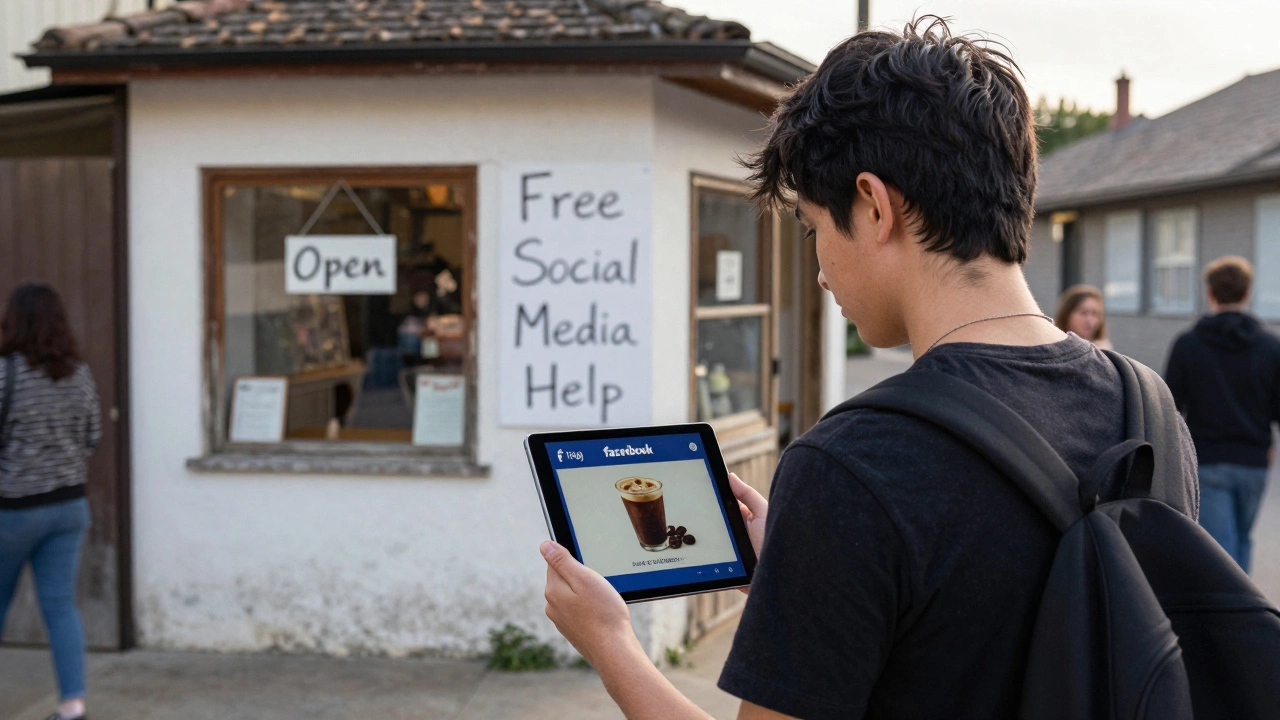
Find local businesses with weak online presence. A bakery with no Instagram. A plumber who still uses a paper phone book. A yoga studio with outdated website content. Reach out. Say: “I’m learning digital marketing. Can I help you run a free Facebook ad campaign for your spring sale? I’ll track results and send you a simple report.”
Most small business owners say yes. They’re overwhelmed. They don’t know how to post online. You give them value. In return, you get:
- A real campaign to show in your portfolio
- Testimonials you can use
- Real data: how many clicks, how many sales
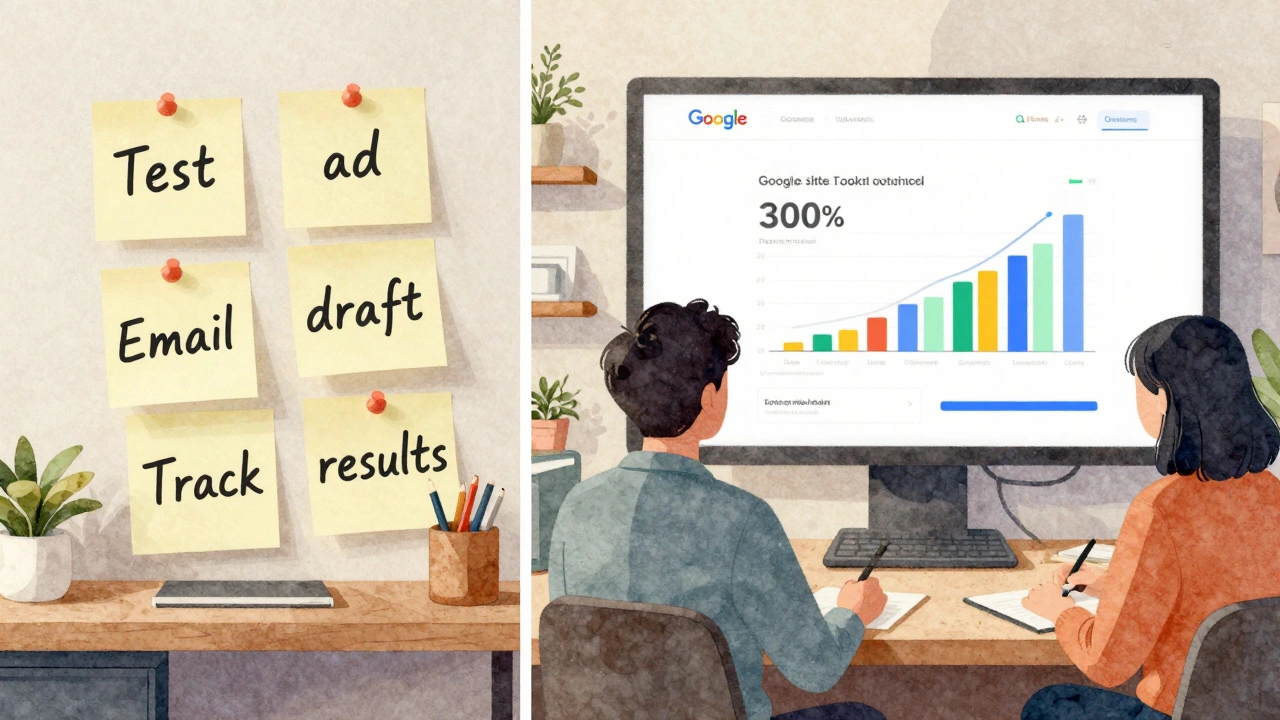
One person in Toronto landed their first job after helping a local bookstore increase Instagram followers by 300% in six weeks. They didn’t have a degree. They had screenshots of growth and a clear story.
Learn to speak the language of results
Digital marketing isn’t about creativity-it’s about numbers. Employers don’t care if your post “looked nice.” They care if it drove clicks, sign-ups, or sales.
Learn these five metrics:
- Click-through rate (CTR): How many people clicked your ad or link
- Conversion rate: How many clicked and then did what you wanted (bought, signed up, etc.)
- Cost per lead: How much you spent to get one contact
- Return on ad spend (ROAS): For every $1 spent, how much revenue did you make?
- Engagement rate: Likes, comments, shares divided by followers
Practice calculating these on your mock campaigns. If you can explain why a campaign failed because the CTR was 0.8% instead of 2%, you’re already thinking like a pro.
Apply for entry-level jobs-even if you don’t meet all the requirements
Job postings say “2+ years experience.” Ignore that. Most companies say that just to scare off applicants. The truth? Many entry-level digital marketing roles pay $40K-$55K in Canada and are filled by people with zero formal experience.
Look for titles like:
- Marketing Assistant
- Social Media Coordinator
- Content Intern
- Digital Marketing Trainee
When you apply, lead with your portfolio. Say: “I’ve run real campaigns for local businesses and improved engagement by 200% on average. Here’s how.” Attach your Google and HubSpot certificates. Mention your volunteer work. That’s more convincing than a degree.
Keep learning-and stay consistent
Digital marketing changes fast. What worked in 2023 might not work in 2026. TikTok ads are replacing some Facebook campaigns. AI tools now write ad copy. Google’s algorithm updates every few weeks.
Stay sharp by:
- Reading one industry blog daily (like Search Engine Journal or HubSpot Blog)
- Joining a free Slack or Discord group for marketers
- Watching one 10-minute YouTube tutorial per day (try “Ahrefs” or “Neil Patel”)
Consistency beats talent. One hour a day, five days a week, for six months will get you further than a three-month bootcamp with no practice.
It’s not about having the right background-it’s about having the right mindset
You don’t need a marketing degree. You don’t need to be tech-savvy. You don’t even need to like writing. What you need is curiosity and persistence.
People who succeed in digital marketing are the ones who ask: “Why did this work?” and “What if I tried this instead?” They’re not afraid to fail. They test, measure, and adjust.
Start small. Build something. Show it to someone. Get feedback. Do it again. Repeat.
The first digital marketer you know who got hired without experience? They started by sending five emails to local shops. That’s it. No fancy tools. No network. Just action.
Can I become a digital marketer without a degree?
Yes, absolutely. Most digital marketing jobs don’t require a degree. Employers care more about your portfolio, certifications, and real results than your diploma. Google and HubSpot certifications are often valued more than a business degree because they prove you can use actual tools.
How long does it take to get a job in digital marketing with no experience?
With focused effort, you can land an entry-level job in 3-6 months. That includes learning the basics, building a portfolio, doing volunteer work, and applying consistently. Some people get hired faster if they land a small project that leads to a referral.
What’s the easiest digital marketing skill to learn first?
Email marketing is the easiest to start with. You don’t need paid tools. You can use Mailchimp’s free plan. You can write your first email today. It teaches you how to write clearly, understand audience needs, and track results-all core skills for any digital marketer.
Do I need to know how to code?
No. You don’t need to write code to be a digital marketer. Tools like Canva, Google Analytics, Meta Ads Manager, and WordPress let you do everything without touching HTML or JavaScript. But knowing basic HTML can help if you ever edit website content-just a bonus, not a requirement.
Is digital marketing a good career in 2026?
Yes. Every business-from local dentists to global brands-needs digital marketing. AI is changing the tools, but not the need. Companies are hiring more marketers, not fewer. Entry-level roles are growing, especially in e-commerce, SaaS, and local services.
Leave a comments