Fashion Career Path Estimator
1. Choose Your Learning Path
Degree Program
Bachelor's (3-4 Years)
High Cost / High NetworkSelf-Taught
Online Courses & Practice
Low Cost / High Grit2. Customize Your Plan
Estimated Roadmap
Breakdown:
Ever stared at a rack of clothes and thought, "I could make that better"? That spark is where every fashion designer is a creative professional who designs clothing, accessories, and footwear, blending artistic vision with commercial viability career begins. But turning that impulse into a paycheck requires more than just good taste. It demands a specific set of hard skills, a robust network, and a strategic approach to learning.
If you are asking how to learn to be a fashion designer in 2026, you are likely standing at a crossroads between formal education and self-taught grit. The industry has shifted dramatically. Gone are the days when a degree alone guaranteed a job at a major house. Today, employers look for adaptability, technical proficiency in digital tools, and a unique point of view. Whether you are a complete beginner or someone looking to pivot from another field, this guide breaks down the realistic path from sketching ideas to launching a brand.
The Foundation: Do You Really Want This?
Before you spend thousands on tuition or hundreds of hours on tutorials, let’s get real about what the job actually involves. Fashion design is not just drawing pretty dresses. It is a mix of art, engineering, business, and psychology. You need to understand how fabric behaves under tension, how a zipper affects the silhouette, and whether your target customer will actually buy the piece.
Ask yourself these questions:
- Do I enjoy the tedious parts? Sewing hems by hand for six hours is part of the process.
- Am I resilient to criticism? Your work will be critiqued constantly.
- Do I care about trends, or do I want to create them?
If the answer is yes, you are ready to start building your skill stack. The core competencies you need fall into three buckets: creative visualization, technical construction, and business acumen.
Step 1: Master the Basics of Construction
You cannot design what you cannot build. Even if you plan to hire manufacturers later, understanding the anatomy of a garment is non-negotiable. Start with pattern making is the process of creating a template for cutting fabric pieces that will be sewn together to form a garment. This is the blueprint of fashion. Without it, your designs are just drawings.
Begin with basic sewing. Buy a reliable machine-brands like Singer is a historic American manufacturer of sewing machines, sergers, and embroidery machines or Janome is a Japanese company known for high-quality domestic and industrial sewing equipment are great entry points. Learn to sew a straight seam, insert a zipper, and finish edges properly. These fundamental techniques apply to everything from t-shirts to evening gowns.
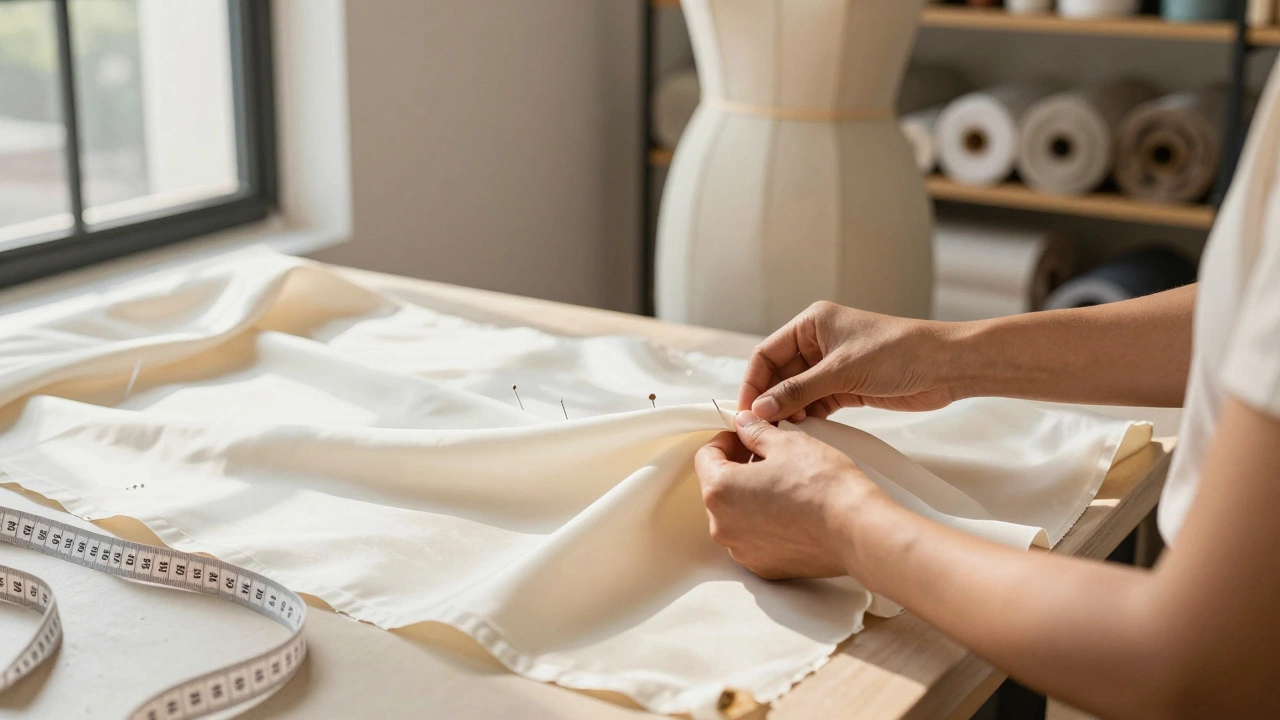
Next, dive into draping is a technique where fabric is pinned and shaped directly on a dress form to create a three-dimensional design. Draping teaches you how fabric interacts with the human body. It is intuitive and often leads to unexpected, beautiful shapes that flat pattern making might miss. Practice draping simple slip dresses first. Once you understand how gravity pulls silk versus denim, you gain control over volume and flow.
Step 2: Develop Your Visual Language
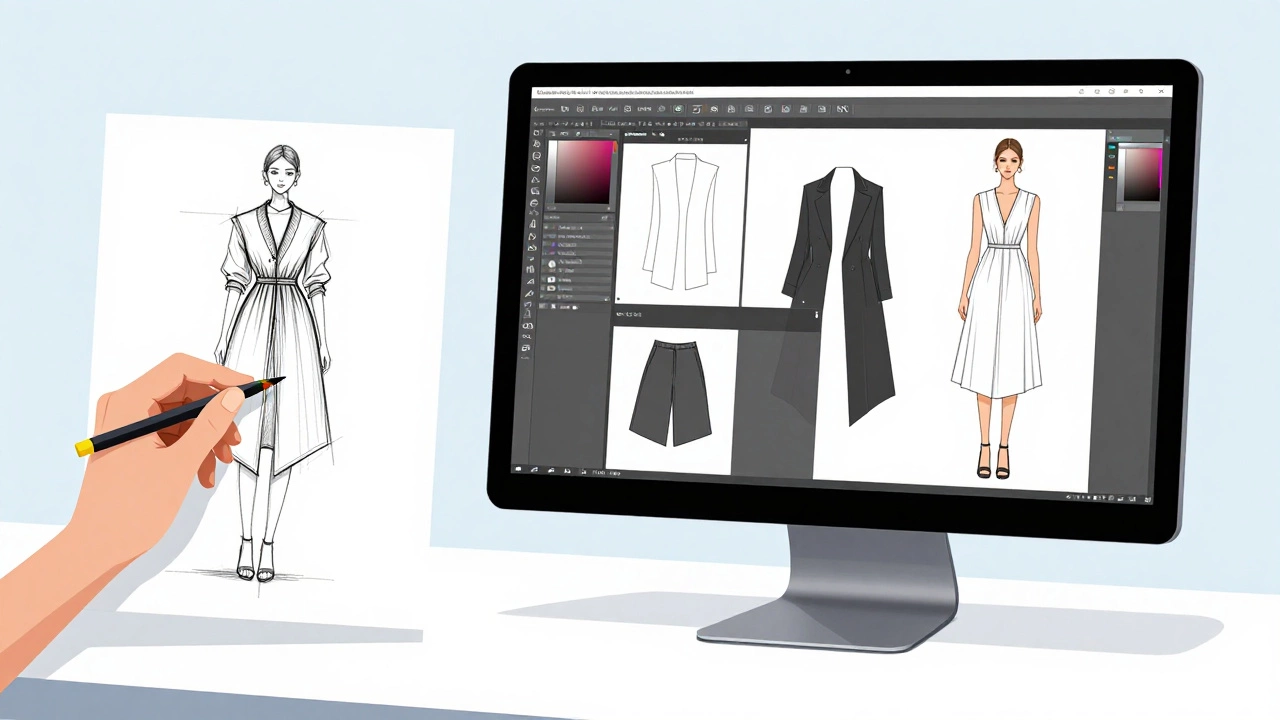
A fashion designer communicates through visuals. You need to translate ideas in your head into images others can understand. This starts with fashion illustration is the artistic representation of clothing designs, used to convey style, fit, and detail to clients or production teams. While digital tools are dominant now, learning to draw by hand improves your eye for proportion and detail.
However, the industry standard has moved to digital. You must become proficient in Adobe Illustrator is industry-standard vector graphics software used for creating technical flats, logos, and scalable design elements. Technical flats are detailed, two-dimensional drawings of garments that show seams, stitching, and construction details. Manufacturers rely on these, not artistic sketches, to produce your clothes. If you cannot produce clear technical flats, your designs may never leave the studio.
Additionally, familiarize yourself with CLO3D is a 3D fashion design software that allows designers to simulate fabric behavior and visualize garments on virtual models before physical production. In 2026, 3D sampling is no longer a novelty; it is a cost-saving necessity. Brands use CLO3D to reduce waste and speed up time-to-market. Learning this tool early gives you a significant edge over candidates who only know traditional methods.
Step 3: Understand Textiles and Materials
Fabric is the medium of fashion. Ignoring material science is a rookie mistake. You need to know the difference between warp and weft, how stretch affects fit, and which fabrics breathe versus those that trap heat. Study textile engineering is the branch of engineering concerned with the production and processing of fibers, yarns, fabrics, and their applications basics.
Visit local fabric stores. Touch everything. Buy small swatches of cotton, linen, wool, silk, polyester, and blends. Wash them. Drape them. See how they shrink, fade, or wrinkle. Knowledge of sustainable materials is also critical today. Consumers are increasingly demanding eco-friendly options. Learn about organic cotton, recycled polyester, and innovative bio-fabrics like mushroom leather. Understanding these materials helps you design responsibly and market effectively.
Step 4: Formal Education vs. Self-Taught Paths
So, do you need a degree? Not strictly, but it helps. Let’s compare the two main routes.
| Feature | Fashion Design Degree (Bachelor's) | Self-Taught / Certificate Courses |
|---|---|---|
| Cost | High ($20,000 - $50,000+) | Low to Medium ($500 - $5,000) |
| Time Commitment | 3-4 years full-time | Flexible, months to years |
| Networking | Strong alumni networks, internships | Requires proactive effort |
| Credibility | Recognized by large corporations | Portfolio-dependent |
| Skill Depth | Broad, theoretical + practical | Targeted, practical focus |
If you choose a degree, look for programs accredited by bodies like the National Association of Schools of Art and Design (NASAD) is an accrediting agency for college-level art and design programs in the United States. Top schools include Parsons, FIT, and Central Saint Martins, but there are many strong regional options. If you go the self-taught route, you must be disciplined. Use online platforms like Coursera, Skillshare, or specialized institutes like the London College of Fashion’s short courses. The key is consistency and building a tangible body of work.
Step 5: Build a Killer Portfolio
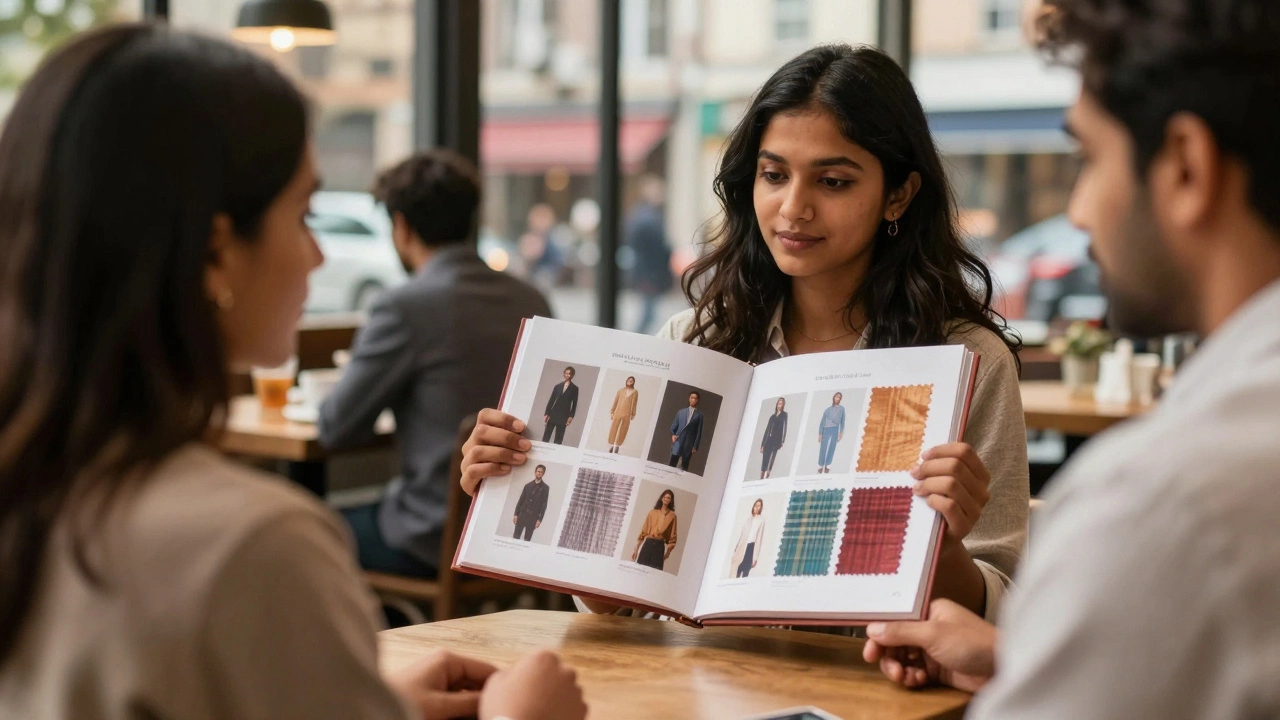
Your portfolio is your resume. It should tell a story about who you are as a designer. Do not just dump random sketches. Curate 8-12 strong projects. Each project should show your process: inspiration boards, sketches, fabric swatches, technical flats, and final photos of the garment.
Include diverse pieces. Show you can handle different silhouettes, fabrics, and styles. If you are interested in streetwear, show tailored jackets too. Versatility signals employability. Make sure your portfolio is available both digitally (a clean website) and physically (a printed book for interviews). Employers want to see the texture of your work, not just pixels on a screen.
Step 6: Gain Real-World Experience
Education gets you in the door; experience keeps you there. Seek internships, even unpaid ones initially, at design studios, manufacturing plants, or retail brands. Shadowing a senior designer teaches you about deadlines, client management, and production constraints. You will learn why a design was changed-not because it looked bad, but because it was too expensive to produce or impossible to manufacture at scale.
Consider starting small. Sell custom pieces on Etsy or at local markets. This teaches you pricing, customer service, and marketing. You will quickly realize that designing is only 30% of the job; the rest is logistics, sales, and promotion.
Common Pitfalls to Avoid
New designers often fall into traps that stall their progress. Here are the biggest ones:
- Ignoring Fit: A beautiful design that doesn’t fit well is useless. Invest time in fitting garments on real bodies, not just mannequins.
- Chasing Trends Blindly: Trends fade. Focus on timeless aesthetics with contemporary twists. Your unique voice matters more than copying last season’s hit.
- Neglecting Business Skills: You are running a business. Learn basic accounting, supply chain management, and digital marketing. Many talented designers fail because they cannot manage cash flow.
- Isolating Yourself: Fashion is collaborative. Network with photographers, stylists, and other designers. Collaboration opens doors that solo efforts cannot.
The Future of Fashion Design
As we move further into 2026, technology continues to reshape the industry. AI tools are assisting in trend forecasting and pattern optimization. Virtual reality is changing how shows are presented. Sustainability is no longer optional; it is regulatory in many regions. To stay relevant, keep learning. Attend webinars, read industry publications like WWD or Vogue Business, and experiment with new technologies. The best designers are lifelong students.
How long does it take to become a fashion designer?
It varies widely. A bachelor’s degree takes 3-4 years. Self-taught paths can take 1-3 years of intense study and practice. However, becoming *proficient* enough to land a junior role typically requires 2-5 years of combined education and internship experience. Mastery and leadership roles often take 10+ years.
Do I need to be good at drawing to be a fashion designer?
Not necessarily. While hand-sketching helps in brainstorming, most professional communication happens through technical flats created in Adobe Illustrator. If you struggle with freehand drawing, focus on mastering digital illustration tools. Clear communication of design details is more important than artistic flair.
What is the average salary for a fashion designer?
Salaries vary by location and experience. In North America, entry-level designers might earn $40,000-$50,000 annually. Mid-career designers can make $70,000-$90,000. Senior designers and creative directors at major brands can earn significantly more, often exceeding $150,000. Freelance income fluctuates based on client base and project volume.
Can I learn fashion design online?
Yes, many aspects can be learned online. Digital illustration, pattern making theory, and business strategy are well-suited for e-learning. However, hands-on skills like sewing, draping, and fabric manipulation benefit greatly from in-person instruction or intensive workshops. A hybrid approach is often most effective.
What software do fashion designers use in 2026?
The industry standard includes Adobe Illustrator for technical flats, Adobe Photoshop for mood boards and rendering, and CLO3D or Browzwear for 3D prototyping. Some designers also use CAD software like Lectra or Gerber for industrial pattern grading and marker making.
Leave a comments