Diploma Program Cost Calculator
Calculate Your Total Costs
Estimate the total expenses for your USA diploma program based on your chosen options.
Your Estimated Costs
Note: These estimates are based on average costs. Actual expenses may vary. Check with your school for specific figures.
Thousands of students from India and other countries choose to pursue a diploma in USA each year. But the process isn't simple. Many people confuse diploma programs with degrees or don't know where to start. This guide breaks down exactly what you need to do to get a diploma in the USA, from choosing the right program to landing your visa.
Key Takeaways
- In the USA, diplomas usually mean short-term vocational training, not bachelor's degrees.
- You'll need proof of English proficiency (TOEFL or IELTS) and a high school diploma.
- Only apply to schools with proper accreditation (like ACCSC or regional agencies).
- The F-1 visa process requires an I-20 form, SEVIS fee payment, and a visa interview.
- Community colleges often offer affordable diploma programs with transfer options.
What is a Diploma in the USA?
When people talk about getting a diploma in the USA, they're usually referring to Diploma Programs short-term vocational or technical training courses that typically last 6 to 12 months. These are different from associate degrees or bachelor's degrees. For example, a Vocational School a type of institution offering hands-on training for specific trades might offer diplomas in fields like cosmetology or HVAC repair. Unlike degrees, diplomas focus on practical skills for immediate job entry. They're ideal for students who want to enter the workforce quickly.
Eligibility Requirements for International Students
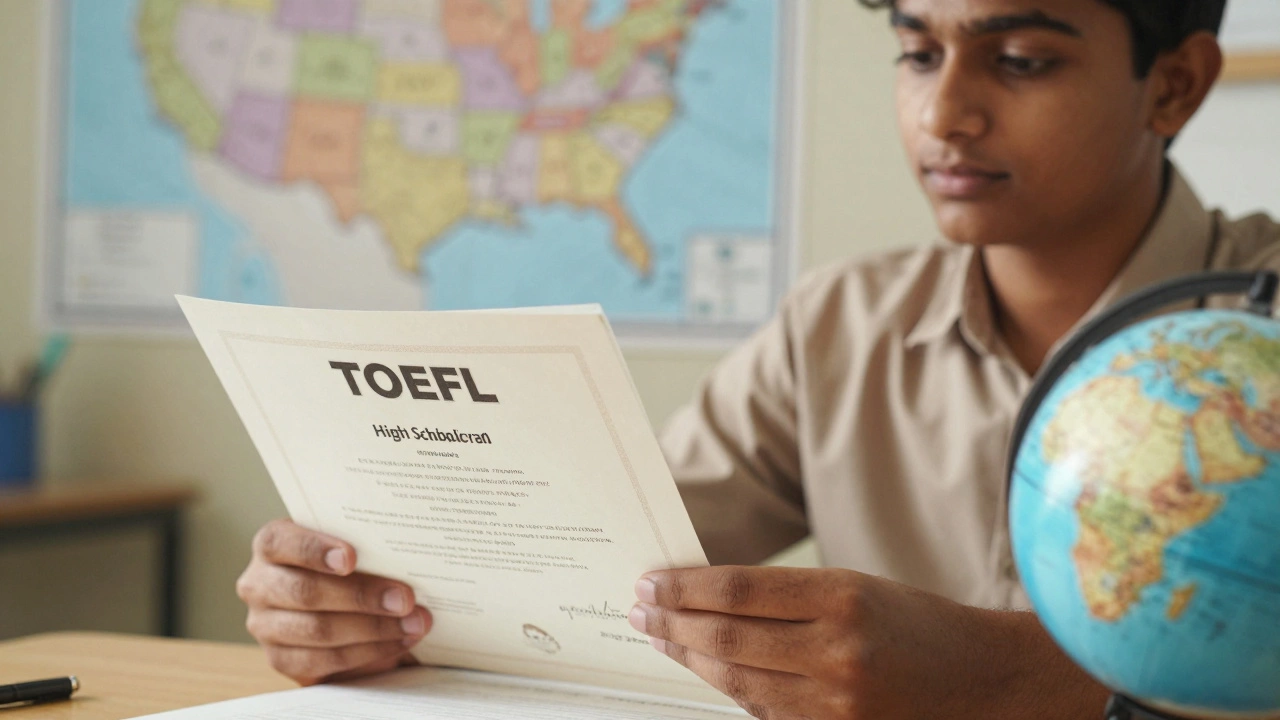
To apply for a diploma program in the USA, you must meet certain requirements. First, you need a high school diploma or equivalent from your home country. Schools will check your transcripts to ensure you've completed the necessary coursework. Next, you'll need to prove English proficiency. Most institutions require a TOEFL score of at least 61 or an IELTS score of 5.5. Some programs may have higher requirements.
You also need to show proof of financial support. This means showing you have enough money to cover tuition and living expenses for at least one year. Schools usually ask for bank statements or scholarship letters. Health insurance is mandatory for international students. You'll need to purchase coverage that meets the school's requirements.
Finding Accredited Schools
Not all schools are created equal. Choosing an accredited institution is critical. Accreditation ensures your diploma will be recognized by employers and other schools. In the USA, vocational schools are often accredited by the Accrediting Commission of Career Schools and Colleges (ACCSC) a national accrediting agency for career-focused institutions. Community colleges usually have regional accreditation from bodies like the North Central Association of Colleges and Schools (NCA) a regional accreditor for higher education institutions.
You can check a school's accreditation status on the U.S. Department of Education's database. Avoid schools that aren't accredited. Many unaccredited schools are scams that don't provide valid credentials.
Application Process Steps
Here's how to apply for a diploma program:
- Research programs: Look for schools offering your desired field. Use resources like the Department of Education's College Scorecard.
- Prepare documents: Gather your high school transcripts, passport copy, English test scores, and financial proof.
- Submit applications: Most schools have online portals. Pay the application fee (usually $50-$100).
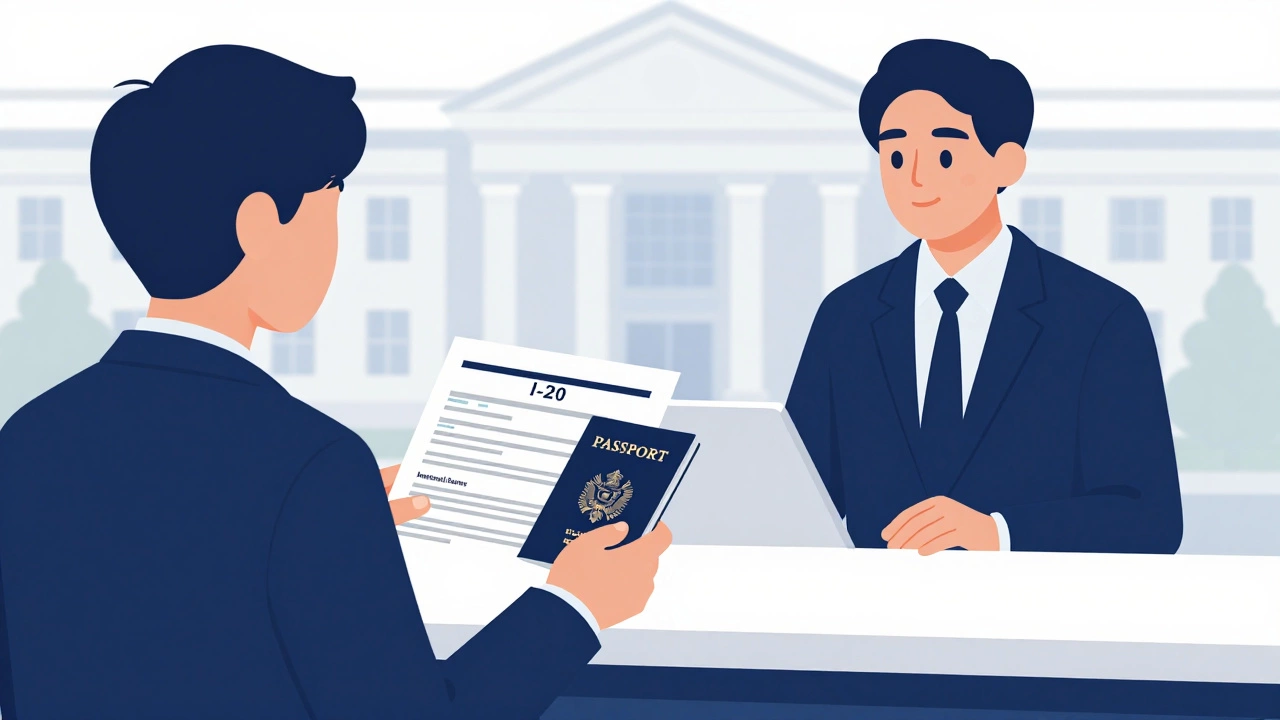
- Receive I-20 form: Once accepted, the school will send you Form I-20. This is needed for your visa application.
- Pay SEVIS fee: $350 online through the FMJ Fee website.
Getting Your Student Visa
After receiving your I-20, you need to apply for an F-1 student visa. Here's the process:
- Complete Form DS-160 online. Save the confirmation page.
- Pay the SEVIS fee ($350).
- Schedule a visa interview at the U.S. embassy. Wait times vary by country.
- Bring documents: passport, I-20, DS-160 confirmation, financial proof, and academic records.
- During the interview, be ready to explain why you chose the program and how it fits your career goals.
Many students get denied if they can't prove strong ties to their home country. Show evidence like family, property, or job offers waiting for you back home.
Managing Costs and Scholarships
Diploma program costs vary widely. Community colleges typically charge $10,000-$20,000 per year for international students. Private vocational schools may cost $5,000-$15,000 annually. Don't forget living expenses: $1,000-$2,000 per month depending on location.
Scholarships for international students are limited but available. Check if your school offers merit-based aid. Organizations like the Fulbright Program sometimes have grants for vocational training. Also, some trade associations provide scholarships for specific fields like nursing or automotive repair.
What Happens After Graduation?
After completing your diploma, you may be eligible for Optional Practical Training (OPT). This allows you to work in the USA for up to 12 months in your field of study. Some STEM-related diplomas qualify for 24-month extensions. However, OPT requires approval from your school's International Student Office.
Many diploma graduates find jobs in their field quickly. For example, HVAC technicians often earn $40,000-$60,000 annually. Cosmetologists can build client lists and open their own salons. Keep in mind that working in the USA after graduation usually requires sponsorship for a work visa.
Can I work while studying on a diploma program?
Yes, but with restrictions. On an F-1 visa, you can work on-campus for up to 20 hours per week during school terms. Off-campus work usually requires special authorization. Some diploma programs include internships as part of the curriculum, which count toward your practical training hours.
Do I need to take the TOEFL for a diploma program?
Most schools require proof of English proficiency. TOEFL or IELTS is standard, but some institutions accept other tests like PTE Academic. Community colleges sometimes offer English language courses before starting your diploma program if your scores are low.
How long does it take to get a diploma in the USA?
Most diploma programs last 6 to 12 months. However, some fields like nursing or automotive technology may require up to 18 months. Accelerated programs can be completed in as little as 4 months for certain trades.
Can I transfer credits from a diploma to a degree program?
Yes, but only if the diploma program is from an accredited institution and the credits align with the degree program. Community colleges often have articulation agreements with four-year universities. Always check with the receiving school before enrolling.
What happens if my visa application gets rejected?
If your visa is denied, you can reapply after addressing the reason for rejection. Common issues include insufficient financial proof or weak ties to your home country. Consider applying to a different school or program that might better suit your circumstances. Some students choose to study in countries with more lenient visa policies first.
Leave a comments