
Trading Cost & Profit Calculator
- Gross Profit: ₹0.00
- Total Costs: ₹0.00
- Net Profit: ₹0.00
Realistic Return on Investment
Breakdown of Hidden Costs
These are the estimated regulatory and brokerage fees applied to your trade based on current Indian market standards.
| Fee Component | Estimated Amount |
|---|---|
| Brokerage (Discount Broker) | ₹0.00 |
| SEBI Transaction Charge (0.0034%) | ₹0.00 |
| STT - Buy Side (0.1%) | ₹0.00 |
| STT - Sell Side (0.1%) | ₹0.00 |
| Stamp Duty (0.015%) | ₹0.00 |
| Exchange Transaction Fee (~0.00375%) | ₹0.00 |
| IGST on Charges (18%) | ₹0.00 |
Can you actually build a portfolio or make consistent income starting with just $500? The short answer is yes. The long answer involves understanding that $500 (roughly ₹41,000 at current exchange rates) is enough to open an account and buy shares, but it is not enough to live on or trade aggressively without risking total loss.
If you are looking at the Indian market specifically, this amount changes the game entirely compared to trading in US dollars. In India, you have access to fractional shares through mutual funds, penny stocks (which carry high risk), and highly liquid mid-cap stocks. However, many beginners mistake 'starting' for 'succeeding.' Starting means opening a Demat account and buying your first asset. Succeeding means having enough capital to absorb volatility while learning.
The Math Behind the $500 Entry Point
Before you transfer any money, you need to understand what $500 buys you in today’s market environment. If you are trading US stocks from India, $500 might only allow you to buy one or two shares of a major company like Microsoft or Apple, depending on their price fluctuations. This limits your diversification. You are putting all your eggs in one basket before you even learn how to cook.
In the Indian context, however, ₹41,000 gives you significantly more flexibility. You can buy:
- Shares of large-cap companies like HDFC Bank or Reliance Industries (though you might get fewer units).
- High volumes of lower-priced stocks, which allows for better position sizing practice.
- Index mutual funds or ETFs (Exchange Traded Funds) that track the Nifty 50 or Sensex, giving you instant diversification across the top 50 companies in India.
The key constraint isn't the ability to buy; it's the ability to manage risk. With a small account, a single bad trade can wipe out 10-20% of your capital. In a larger account, that same percentage is easier to psychologically handle. Your goal with $500 should be education and habit formation, not immediate wealth generation.
Hidden Costs That Eat Into Small Accounts
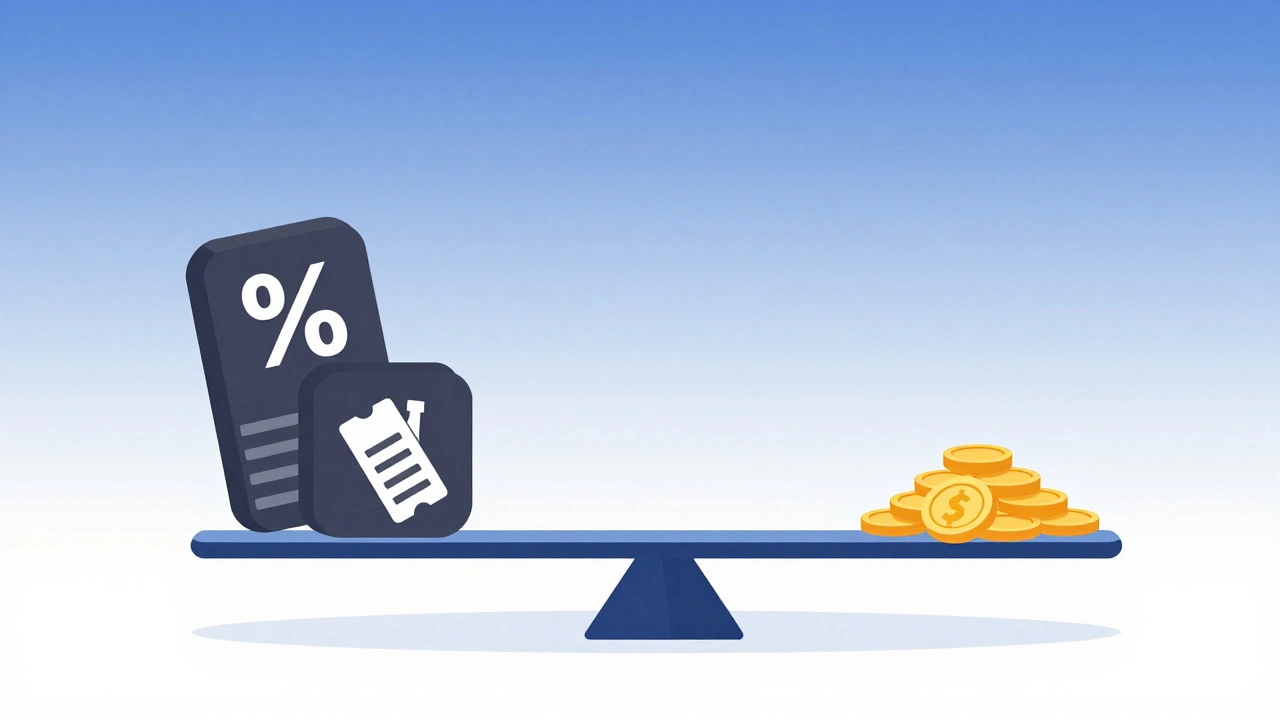
Many beginners focus solely on the entry price of a stock and ignore the friction costs. When you start with a small balance, these fees become a massive percentage of your potential profit. Let’s break down the typical costs involved in trading in India.
| Cost Type | Estimated Cost (INR) | Impact on $500 Account |
|---|---|---|
| Brokerage Fees | ₹0 - ₹20 per order (discount brokers) | Low if using zero-brokerage plans for delivery trades. |
| SEBI Transaction Charges | 0.0034% of turnover | Negligible for long-term holding, significant for day trading. |
| STT (Securities Transaction Tax) | 0.1% on sell side (equity delivery) | Fixed cost per transaction. |
| Stamp Duty | 0.015% on purchase value | Small but mandatory government fee. |
| Account Opening Fee | ₹0 - ₹500 (one-time) | Many apps like Zerodha, Groww, or Upstox offer free accounts now. |
If you try to day trade with $500, these costs will eat your profits alive. For example, if you buy and sell a stock worth ₹10,000 in a single day, the combined taxes and charges might come to ₹50-₹70. To make a net profit, your stock needs to move up by less than 1%, which is difficult to predict consistently. This is why swing trading (holding for days or weeks) or long-term investing is far superior for small accounts.
Strategy: How to Actually Use 0 Wisely
Since you cannot afford to lose much, your strategy must prioritize capital preservation. Here is a practical approach for someone starting with this specific budget.
- Choose a Discount Broker: Do not use full-service brokers that charge high monthly fees or per-trade commissions. Platforms like Zerodha, Angel One, or Upstox are standard choices in India. They offer direct market access with minimal overhead.
- Avoid Leverage Completely: F&O (Futures and Options) trading requires higher margins and carries extreme risk. With $500, one wrong move in options can lead to a 100% loss in minutes. Stick to cash equity (buying actual shares).
- Focus on Swing Trading: Instead of trying to catch tiny intraday moves, look for stocks that are trending. Buy when there is a breakout and hold for a few days to capture a larger move. This reduces the number of transactions and thus lowers your tax burden.
- Diversify via ETFs: Consider allocating 50% of your $500 into a Nifty 50 ETF. This ensures that even if your individual stock picks fail, half your money is growing with the broader market index.
This approach treats your $500 as tuition fees. You are paying to learn how orders execute, how stop-losses work, and how emotions affect decision-making. If you double your money in six months, that is great. But if you keep your capital intact while learning, you have succeeded.
The Psychological Trap of Small Accounts
There is a dangerous mindset that creeps in when you start with little money: "I have nothing to lose." This is false. You have time, energy, and future opportunity costs to lose. When traders feel they have "nothing to lose," they tend to take reckless risks. They might buy a volatile penny stock hoping it will triple overnight.
Statistically, 90% of retail traders lose money. Most of them do so because they treat trading like gambling rather than a business. With a $500 account, the temptation to gamble is higher because the stakes feel low. Resist this. Treat every rupee as if it were a thousand rupees. Develop discipline early. If you cannot manage $500 responsibly, you will certainly not manage $50,000 responsibly.
Also, be aware of the "house money" effect. If your $500 grows to $600, you might start taking bigger risks with the extra $100 because it feels like it doesn't belong to you. It does. Withdrawal of profits is a healthy habit to reinforce successful behavior.

Alternatives to Direct Stock Trading
If the stress of picking individual stocks seems too high for a small account, consider these alternatives that still fit within the $500 budget:
- SIP in Mutual Funds: Set up a Systematic Investment Plan (SIP) of ₹5,000 per month into a diversified equity fund. Over five years, the power of compounding will likely outperform most amateur traders.
- Direct Indexing Apps: Some fintech platforms allow you to replicate index portfolios with smaller amounts, though liquidity can be an issue.
- Crypto Micro-Investing: While highly volatile, some platforms allow fractional crypto investments. Note that regulatory clarity in India regarding crypto remains evolving, so proceed with caution and only invest what you can afford to lose entirely.
For most people, the best way to grow $500 is not to trade it actively, but to invest it passively and add to it regularly. Trading is a skill that takes years to master. Investing is a habit that takes minutes to start.
Common Mistakes to Avoid Right Now
As you prepare to deposit your funds, keep these pitfalls in mind:
- Chasing Tips: Never buy a stock because someone on Telegram or Twitter recommended it. By the time you hear about it, the smart money has already exited.
- Overtrading: Making too many trades increases your exposure to brokerage fees and taxes. Limit yourself to one or two trades per week initially.
- Igoring Stop-Losses: Always define your exit point before you enter a trade. If a stock drops 5%, sell it. Don’t hope it comes back. Hope is not a strategy.
- Emotional Reactions: Panic selling during a market dip is the fastest way to lock in losses. Have a plan for market downturns before they happen.
Starting with $500 is a valid entry point into the financial markets, especially in India where barriers to entry are low. However, success depends less on the amount of capital you start with and more on the discipline you apply to it. Use this initial capital to build a track record, not a bank account. Once you have proven you can generate consistent returns over six to twelve months, then consider adding more capital.
Can I really start trading with just $500 in India?
Yes, absolutely. With approximately ₹41,000, you can open a Demat account with discount brokers like Zerodha or Groww and buy shares of listed companies. Many brokers now offer free account opening, making the barrier to entry very low.
Is intraday trading safe with a small account?
Intraday trading is generally risky for small accounts due to high transaction costs and the need for precise timing. Taxes like STT and SEBI charges can eat into small profits quickly. Swing trading or long-term investing is often safer and more profitable for beginners with limited capital.
What are the best stocks to buy with $500?
Instead of picking individual stocks, consider buying ETFs (Exchange Traded Funds) that track the Nifty 50 or Sensex. This provides instant diversification. If you prefer individual stocks, look for stable large-cap companies with strong fundamentals, avoiding volatile penny stocks.
Do I need a lot of money to learn trading?
No. You can start learning with paper trading (simulated trading) where you use virtual money. Once you are comfortable, you can start with a small amount like $500 to experience real market emotions. The key is to view the initial capital as educational expense.
How much can I realistically earn from $500?
Realistic expectations are crucial. Professional traders aim for 1-2% return per month. On $500, that is $5-$10 per month. While this seems small, the goal is to build skills and consistency. Trying to double your money quickly usually leads to losing it entirely.
Leave a comments