Diploma vs. Degree Career Path Estimator
Diploma Path Fast Track
Time to Workforce: 3 Years
Total Education Cost: ₹0
Earnings by Year 4: ₹0
Degree Path Academic
Time to Workforce: 4 Years
Total Education Cost: ₹0
Earnings by Year 4: ₹0
💡 Strategic Insight:
Calculating the financial impact...
Quick Summary: Why Choose a Diploma?
- Faster entry into the job market (usually 2-3 years vs 4 years for a degree).
- Heavy focus on hands-on technical skills rather than abstract theory.
- Lower tuition costs compared to private engineering or medical colleges.
- Direct pathways to lateral entry into second-year degree programs.
- High demand in industrial sectors like manufacturing, healthcare, and IT.
The Practical Edge: Skill-First Learning
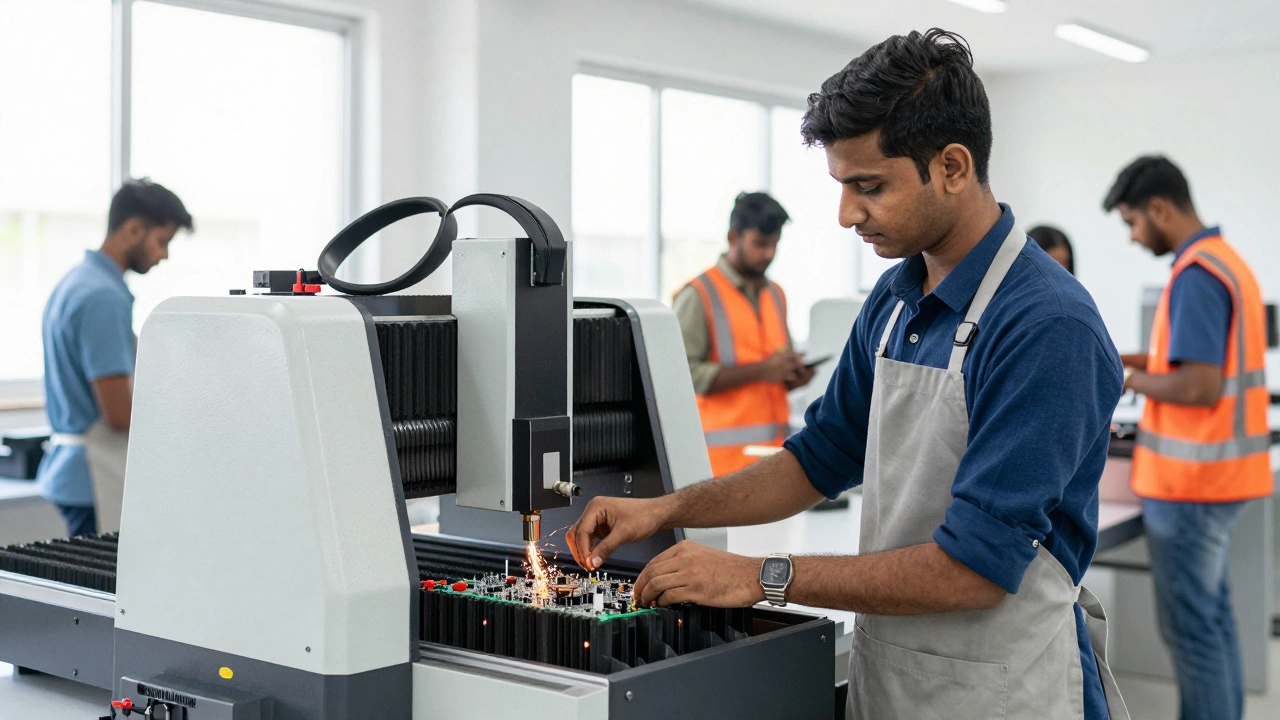
The biggest win with a diploma courses india is the shift from "how it works in theory" to "how to fix it in real life." In a typical degree program, you might spend two years learning the physics of electricity before ever touching a circuit board. In a diploma program, you're usually in the lab or workshop by the second month.
This approach is powered by Vocational Training, which is an education system that focuses on providing students with the practical skills and technical knowledge required for a specific trade. Whether you're studying Mechanical Engineering or Hotel Management, the curriculum is designed by industry needs. You aren't just reading about CNC machines; you're operating them. This creates a massive confidence boost and makes you "industry-ready" the day you graduate.
Fast-Tracking Your Career and Earnings
Time is money, and diplomas save a lot of it. Most Polytechnic courses in India take two to three years. Because these programs focus on specific technical roles, graduates often find employment faster than general degree holders. Companies in the manufacturing and construction sectors are often desperate for "Junior Engineers"-a role perfectly filled by diploma holders.
Consider the cost. Private engineering degrees can cost lakhs of rupees, leading to heavy student debt. Diplomas, especially in government-run institutions, are significantly more affordable. You get the qualification you need to enter the workforce without the crushing financial burden. Plus, starting your career at 19 or 20 instead of 22 gives you a two-year head start in seniority and savings.
| Feature | Diploma Course | Bachelor's Degree |
|---|---|---|
| Duration | 2-3 Years | 3-4 Years |
| Focus | Practical/Technical | Theoretical/Academic |
| Entry Requirement | 10th or 12th Grade | 12th Grade/Entrance Exam |
| Cost | Relatively Low | Moderate to High |
| Job Readiness | Immediate (Technician/JE) | Longer (Management/Eng) |
The Secret Weapon: Lateral Entry
One common fear is that a diploma is a "dead end" for higher education. In reality, it's a shortcut. In India, the Lateral Entry system allows diploma holders to skip the first year of a degree program. This means if you finish a three-year diploma in Civil Engineering, you can jump directly into the second year of a B.Tech program.
Why is this a benefit? Because you've already mastered the basics. While other second-year students are struggling with the practical side of things, you're already comfortable with the tools. You end up with both a diploma and a degree, making you a double threat in the job market-someone who understands the deep theory but also knows how to get their hands dirty.

High-Demand Sectors for Diploma Holders
Where exactly do these graduates go? It's not just about factories anymore. The scope has expanded into several high-growth areas:
- Infrastructure and Construction: With the massive push for highways and smart cities, diploma holders in Civil and Electrical engineering are in huge demand.
- Healthcare: Diploma in Nursing or Pharmacy provides a critical pathway to essential healthcare roles without the decade-long commitment of a full medical degree.
- Information Technology: Short-term diplomas in cloud computing or cybersecurity allow students to pivot into the tech world faster than a four-year CS degree.
- Hospitality: A diploma in Hotel Management is often more valued by recruiters than a degree because it proves the candidate has spent time in actual kitchens and guest services.
These roles are often categorized under Skill Development initiatives, where the government provides incentives to companies that hire certified technical diploma holders. This means more job openings and better starting salaries for those with specialized certifications.
Avoiding the Common Pitfalls
It's not all sunshine and rainbows. If you're considering this path, you need to be aware of a few things. Not all diplomas are created equal. A diploma from a recognized, AICTE-approved institution carries weight; one from an unaccredited "private institute" might be nothing more than a piece of paper.
Another trap is the "comfort zone." Because diploma holders get jobs quickly, some stop learning. In a world where technology changes every six months, a 2026 graduate who doesn't keep up with Industry 4.0 (the trend of automation and data exchange in manufacturing) will find their skills obsolete. The key is to use the diploma as a foundation, not a ceiling.

Making the Choice: Is it Right for You?
Choosing between a diploma and a degree usually comes down to your personality and your goals. Do you hate spending eight hours a day reading textbooks? Do you enjoy taking things apart to see how they work? If yes, a diploma is your best bet. If you are more interested in research, design, or high-level management, a degree is the traditional route.
However, for someone who needs to start earning quickly to support their family or someone who is a kinesthetic learner (learns by doing), the benefits of a diploma in India are unmatched. You get a professional identity, a technical skill set, and a foot in the door of the industry while others are still debating the theoretical implications of a formula.
Can I get a government job with a diploma?
Yes, absolutely. There are thousands of positions for Junior Engineers (JE) in organizations like the Railways, SSC, and various State Public Works Departments (PWD) specifically reserved for diploma holders. These are stable, well-paying government roles.
Is a diploma equivalent to a degree?
No, it is not equivalent in terms of academic level, but it is often equivalent in terms of employability for technical roles. A degree is a higher academic qualification, but a diploma is a specialized professional qualification.
Which is better, a diploma after 10th or after 12th?
Doing a diploma after 10th is great for those who want to enter the workforce as fast as possible. Doing it after 12th (especially in science) often allows you to enter a shorter, more advanced diploma program and provides a stronger academic fallback.
Are diploma salaries lower than degree salaries?
Starting salaries for diploma holders are generally lower than for degree holders. However, because they enter the workforce sooner and gain practical experience faster, many diploma holders reach higher salary brackets through experience and certifications within a few years.
Can I study abroad with an Indian diploma?
Yes, but it depends on the country and the institution. Some universities in Canada or Australia recognize Indian diplomas for advanced diplomas or bridging programs, though most will require you to complete a degree first for full Master's eligibility.
Next Steps for Students
If you're leaning toward a diploma, don't just pick a course because your friend did. Look at the job portals for the current year. See which technical skills are actually being requested. If you see a surge in "Electric Vehicle (EV) Technician" roles, look for a diploma in Electrical or Electronics engineering with a specialization in EV.
Once you enroll, make your goal to be the best in the lab. The prestige of a diploma doesn't come from the name of the college, but from the quality of the projects you build. Build a portfolio of your work, take a few online certifications in emerging tools, and you'll find that the "benefits" of a diploma are much more than just a certificate-they're a shortcut to a successful career.
Leave a comments