Plumber Physical Demand Calculator
How Ready Are You for Plumbing?
This tool estimates your physical risk level based on factors from the article. Answer honestly to see if you're prepared for the physical demands of plumbing.
Your Physical Readiness Assessment
Key Recommendations
Plumbing isn’t just about fixing leaks or installing toilets. It’s a job that bends your back, strains your knees, and wears out your hands-day after day. If you’re thinking about becoming a plumber, you need to know what your body is signing up for. No sugarcoating: plumbing is one of the most physically demanding trades out there. But it’s not just about strength. It’s about endurance, balance, and how well you manage pain over time.
The Daily Physical Toll
Most plumbers start their day before sunrise. By 8 a.m., they’ve already climbed into crawl spaces, hauled 50-pound pipes up three flights of stairs, and spent two hours crouched under sinks in cramped bathrooms. A typical workday involves lifting, twisting, kneeling, and reaching in ways your body wasn’t designed for. You’re not just carrying tools-you’re carrying copper, PVC, cast iron, and water-filled pipes that can weigh over 100 pounds when full.According to the U.S. Bureau of Labor Statistics, plumbers report one of the highest rates of musculoskeletal injuries among skilled trades. Lower back pain affects nearly 70% of experienced plumbers within five years on the job. Shoulder and knee injuries are just as common. One plumber in Chicago told me he’s had two knee surgeries and still works full-time because he can’t afford to stop.
Working in Impossible Spaces
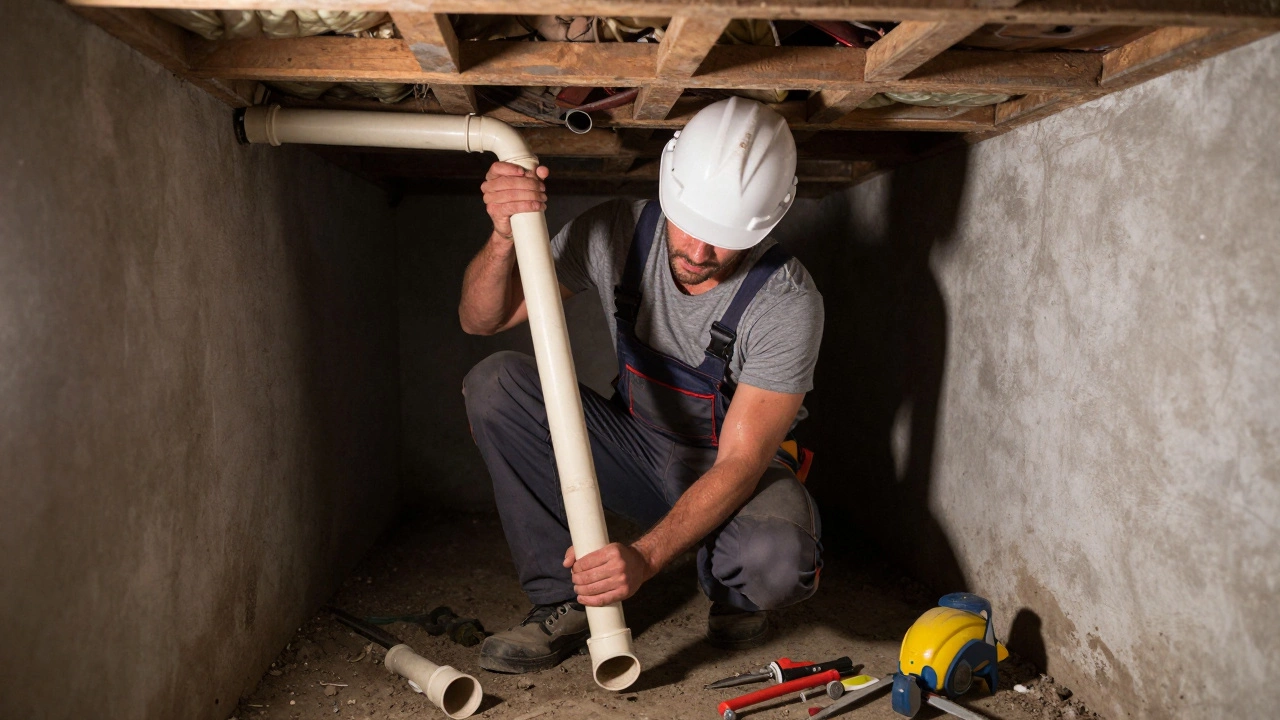
You won’t always be working in clean, open rooms with good lighting. Plumbing jobs often mean crawling under houses with no headroom, squeezing into attic spaces packed with insulation, or climbing into basements flooded with sewage water. You’ll be working in freezing cold in winter and sweltering heat in summer. There’s no AC in a crawl space. No fans in a sewer line.Imagine trying to thread a 10-foot PVC pipe through a 12-inch gap between floor joists while wearing thick gloves and a hard hat. Your arms ache. Your neck cricks. Your lungs burn from dust and mold spores. This isn’t rare-it’s routine. A 2024 survey of 1,200 licensed plumbers found that 82% regularly worked in spaces too small to stand upright. And 68% said they had to adjust their body position mid-task to reach a fitting, often twisting at awkward angles that left them sore for days.
Tools That Break Your Hands
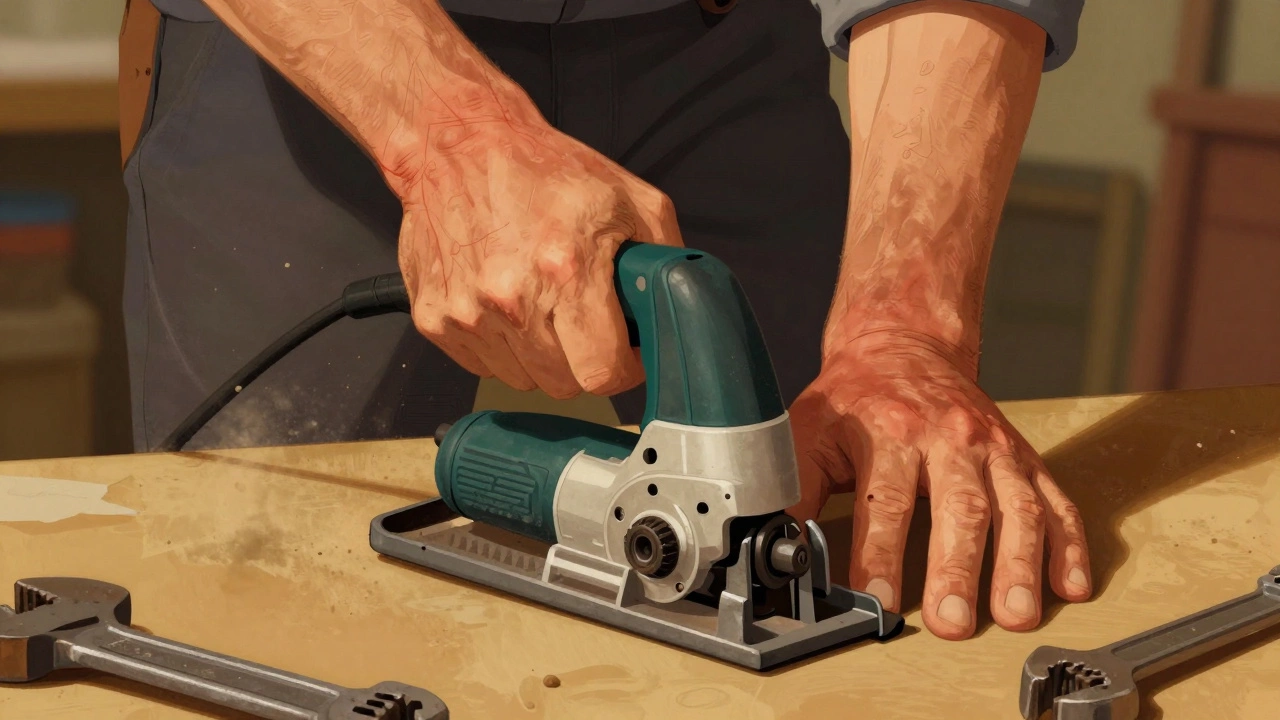
Plumbing tools aren’t designed for comfort. Pipe wrenches have metal jaws that dig into your palms. Tubing cutters require two hands and serious torque. A reciprocating saw used to cut through cast iron can vibrate so hard it numbs your fingers. Over time, this leads to carpal tunnel syndrome, tendonitis, and permanent nerve damage.One apprentice in Denver described how his right hand went numb after six months. He thought it was just fatigue. Six months later, he was diagnosed with early-stage carpal tunnel. He had to take three weeks off and wear a splint every night. He went back to work, but now he stretches every hour and uses padded gloves. He says it’s the only reason he’s still in the trade after ten years.
Physical Fitness Isn’t Optional
You don’t need to be a bodybuilder to be a plumber. But you do need to be strong enough to lift 75 pounds without help, stable enough to balance on a ladder while holding a wrench, and flexible enough to twist into positions most people can’t even imagine. If you’re out of shape when you start, you’ll burn out fast.Plumbing schools that actually prepare students for real work now include basic fitness modules. They teach squats, core strengthening, and proper lifting techniques-not just how to solder copper. One program in Ohio requires applicants to pass a physical test: lift and carry a 60-pound bag of cement 50 feet, climb a 12-foot ladder with tools, and hold a kneeling position for five minutes. Only 40% of applicants pass on the first try.
Recovery Is Part of the Job
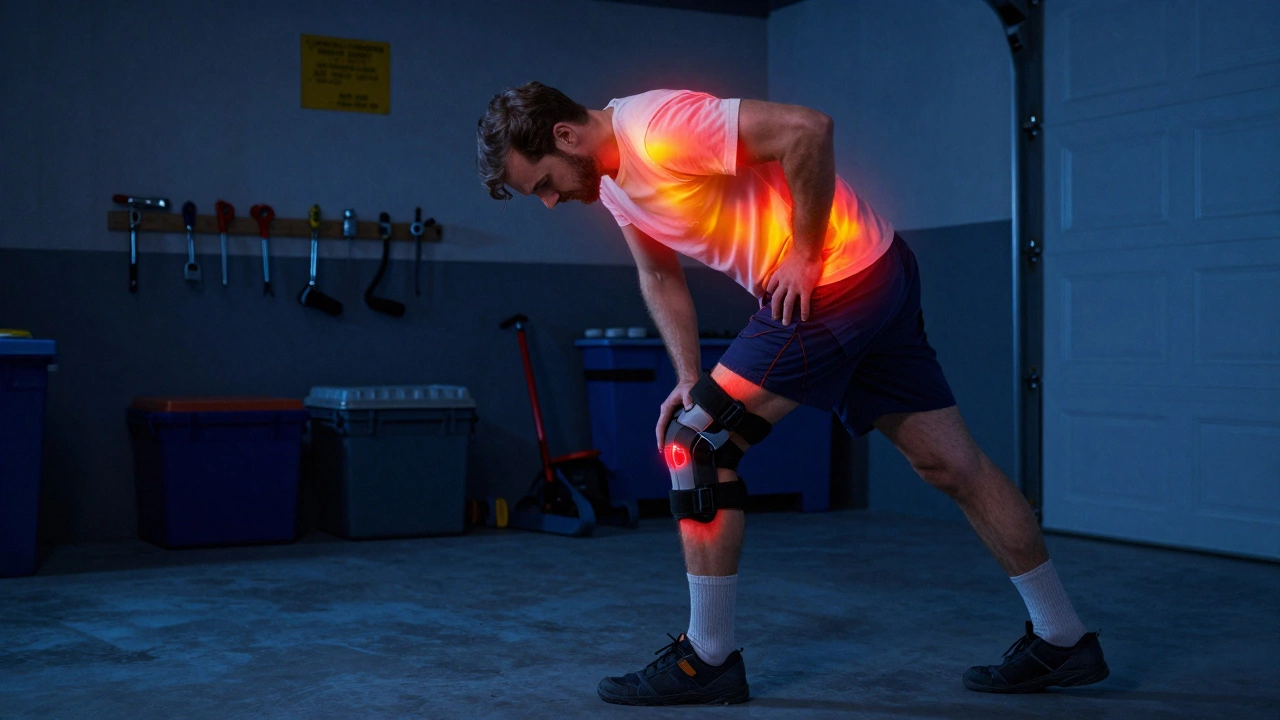
There’s no such thing as “off” when you’re a plumber. Even weekends are spent icing knees, rolling out tight hamstrings, or doing physical therapy exercises. Many plumbers use compression socks, knee braces, and back supports daily. Some take anti-inflammatories regularly. Others rely on massage therapy or chiropractic care.One veteran plumber in Atlanta said he spends $400 a month on recovery-more than he spends on gas. “If I didn’t do this, I’d be on disability by 40,” he told me. “This job doesn’t care if you’re tired. The leak doesn’t wait.”
Who Should Avoid Plumbing?
If you have existing back, knee, or joint issues, plumbing will make them worse. If you’re not willing to invest in your body-through stretching, strength training, or medical care-you won’t last. If you hate being dirty, sweaty, and sore every day, this isn’t the job for you.Plumbing isn’t a career you fall into. It’s a career you choose with your whole body. You need to be honest with yourself: Can you handle waking up stiff every morning? Can you keep going when your hands are shaking from fatigue? Can you accept that your body will change because of this job?
Who Thrives in Plumbing?
The plumbers who stick around are the ones who treat their bodies like equipment. They warm up before work. They hydrate constantly. They take rest days seriously. They don’t push through pain-they listen to it. And they know that the best tool in their truck isn’t a pipe wrench-it’s their own resilience.Many of them started with no experience. Some were construction workers, some were athletes, others were just tired of office life. What they had in common? They didn’t expect it to be easy. They expected it to be hard-and they prepared for it.
Training That Prepares You for the Real Thing
Most plumbing training programs focus on technical skills: how to cut threads, solder joints, read blueprints. But the best ones now include physical conditioning. They teach you how to lift safely, how to use your legs instead of your back, how to brace your core when twisting. They show you how to stretch between jobs and recognize early signs of injury.Look for programs that offer hands-on training in real-world conditions-crawl spaces, basements, attics-not just clean classrooms. Ask if they include injury prevention modules. If they don’t, keep looking. Your body will thank you.
Is It Worth It?
Yes-if you’re ready for the cost. The pay is good. The demand is high. You’ll never be out of work. But you’ll pay for it in aching muscles, worn-out joints, and sleepless nights. The trade-off isn’t money versus time. It’s money versus your body.Plumbing doesn’t reward the strongest. It rewards the smartest. The ones who know when to rest. Who stretch before they lift. Who replace worn-out tools before they hurt themselves. Who know that the job doesn’t end when the clock does-it ends when your body says so.
If you’re willing to treat your body like your most important asset, plumbing can give you a lifetime of work. If you’re not? You’ll burn out before you hit 35.
Is plumbing harder on the body than being an electrician?
Yes, generally. Plumbers deal with heavier materials, more awkward positions, and more exposure to water, mold, and sewage. Electricians lift tools and climb ladders, but they rarely crawl under flooded homes or carry 100-pound pipes. Both jobs are physically tough, but plumbing has higher rates of back and joint injuries according to OSHA data.
Can you be a plumber if you’re not strong?
You don’t need to be a powerlifter, but you do need to be strong enough to lift 60-75 pounds safely and hold awkward positions for long periods. If you’re not strong now, you can build that strength over time with training. Most plumbing apprenticeships include physical conditioning. The key is consistency-not how much you can lift on day one.
Do plumbers get arthritis from their work?
Many do. Repeated kneeling, twisting, and gripping tools increases the risk of osteoarthritis in knees, hands, and shoulders. A 2023 study in the Journal of Occupational Health found plumbers were 2.3 times more likely to develop hand arthritis than office workers. Using padded kneepads, taking breaks, and doing joint-strengthening exercises can help slow it down.
How long does it take to recover from a plumbing job?
Most plumbers feel sore for 24-48 hours after a heavy day. Chronic pain builds up over years. Some recover quickly with stretching and ice. Others need physical therapy or even surgery. Recovery isn’t just about rest-it’s about daily habits: hydration, sleep, movement, and avoiding overuse.
Is there an age limit for becoming a plumber?
No, but starting after 40 means you have less time to build up physical resilience. Many people switch to plumbing later in life and succeed-but they start with a focus on fitness and injury prevention. The trade doesn’t care how old you are. Your body does.
Leave a comments