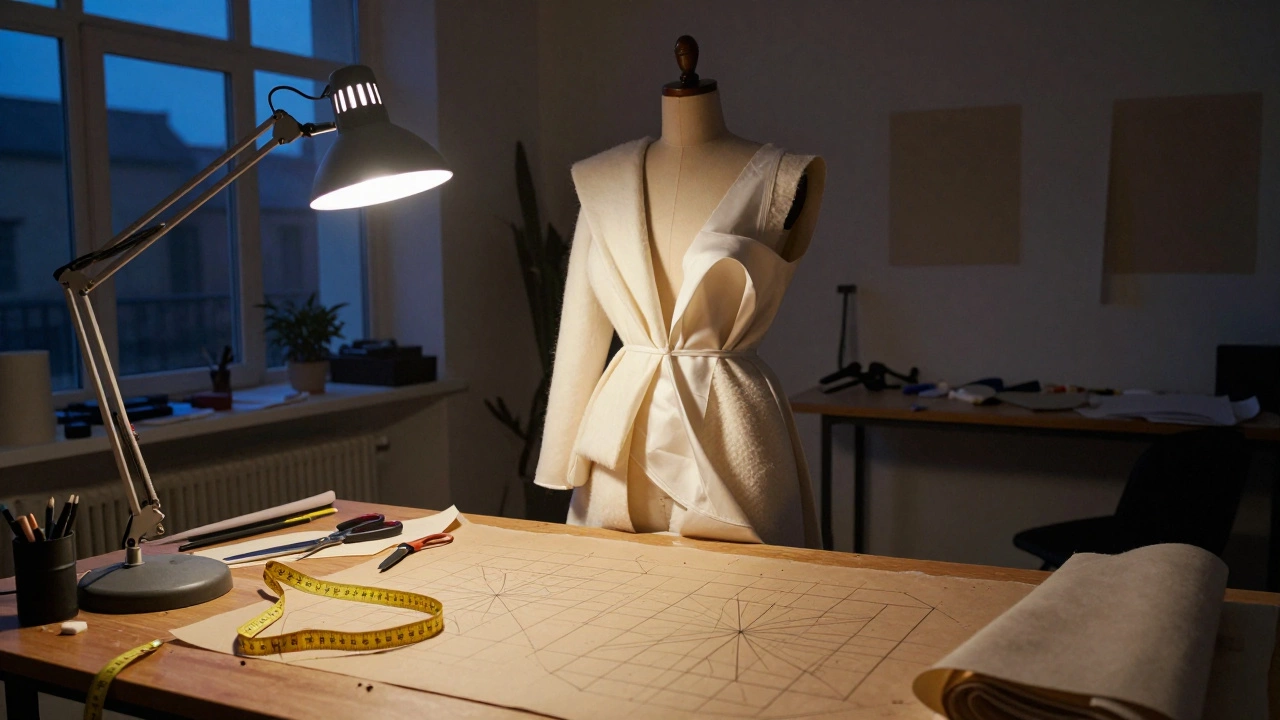
Let's be real: if you think studying fashion is just sketching pretty dresses and picking out fabrics, you're in for a rude awakening. Many people assume it's a 'soft' degree, but in reality, it's one of the most grueling combinations of artistic passion and technical precision you can tackle. It's not 'hard' in the way that organic chemistry is hard, but it's exhausting in a way that requires you to be a mathematician, an architect, and a seamstress all at once.
Quick Takeaways: What to Expect
- Technical Learning Curve: You'll move from basic sewing to complex pattern making and 3D draping.
- Time Commitment: Expect sleepless nights; the volume of physical work often outweighs the lecture hours.
- Mental Toll: Constant critique is part of the process; you have to detach your ego from your art.
- Skill Set: It requires a mix of manual dexterity, spatial awareness, and business sense.
The Steep Climb: Technical Skills and the Learning Curve
The biggest shock for most students in a fashion designing course is the technicality. You don't just draw a picture; you have to translate a 2D sketch into a 3D garment that actually fits a human body. This involves Pattern Making, which is essentially the engineering phase of fashion. If your calculations are off by half an inch, the entire sleeve of a jacket might twist or the waist might buckle.
Then there is Draping. This is where you pin fabric directly onto a dress form to create a shape. It's an intuitive process, but it takes hours of trial and error to understand how fabric grains behave. You'll find yourself fighting with a piece of silk that refuses to lay flat or a heavy wool that won't curve. It's physically demanding work that requires a level of patience most people don't realize they need until they're staring at a ruined piece of expensive fabric at 3 AM.
The 'Hidden' Difficulty: The Mental Game
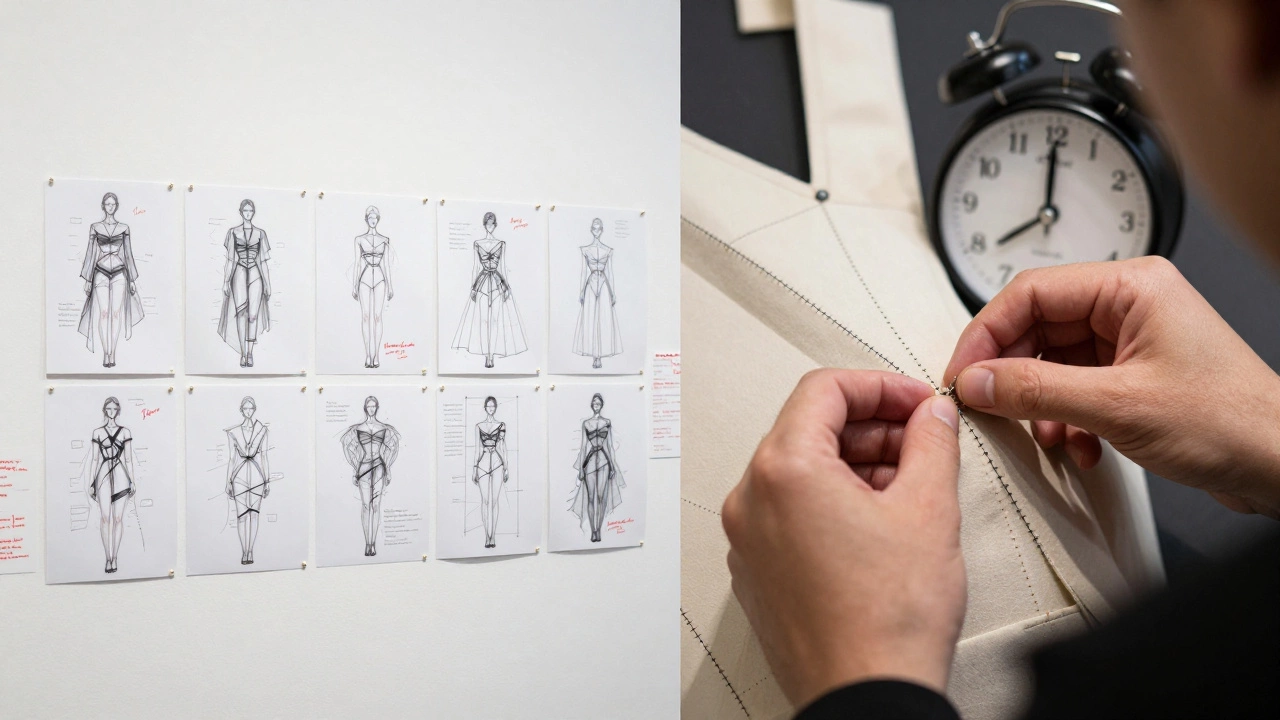
Studying fashion isn't just about the hands; it's about the head. You will enter a world of relentless critique. In a design studio, your work is pinned to a wall for everyone, including your professors and peers, to tear apart. This isn't to be mean-it's how the Fashion Industry works. If a garment doesn't work on the runway, it's a failure. Learning to take a 'this looks like a potato sack' comment and turning it into a better design is the hardest part of the psychological journey.
There is also the crushing weight of deadlines. Unlike a history paper that you can finish the night before, a garment takes time to construct. You can't 'cram' a hand-stitched bodice. The stress comes from the intersection of artistic perfectionism and a hard clock. If your sewing machine jams two days before a final presentation, you don't just lose marks; you lose a piece of work you've spent a month building.
The Toolbelt: Essential Skills You'll Need to Master
To survive the course, you have to become proficient in a variety of tools. It's not just about the sewing machine. You'll need to dive into CAD Software (Computer-Aided Design) like CLO 3D or Adobe Illustrator. Modern fashion is increasingly digital, and if you can't create a digital tech pack, you can't communicate with factories.
You also have to study Textile Science. You need to know why a polyester blend behaves differently than a 100% linen. Understanding the chemical properties of dyes and the weave of a fabric is what separates a hobbyist from a professional designer. If you choose a fabric that's too stiff for a draped silhouette, the design fails, regardless of how good the sketch was.
| Skill Area | What it involves | Difficulty Level | Why it's hard |
|---|---|---|---|
| Illustration | Sketching and mood boards | Moderate | Requires a specific 'fashion' proportion (9-head croquis). |
| Pattern Making | Geometry and measurements | High | Purely technical; zero room for error in measurements. |
| Garment Construction | Sewing and assembly | Moderate to High | Requires immense manual dexterity and precision. |
| Textile Study | Fabric properties and chemistry | Moderate | Requires memorizing vast amounts of material data. |
Is It Actually 'Harder' Than Other Degrees?
It depends on where your strengths lie. If you're a natural at math and logic, the pattern making will feel like a puzzle. If you're a creative soul who hates rules, the technical constraints will feel like a cage. The 'hardness' of fashion design comes from the fact that it demands both. You cannot be just an artist, and you cannot be just a tailor. You have to be both.
Compared to a traditional business degree, the physical toll is much higher. You'll spend days on your feet, leaning over cutting tables and sewing machines. However, the reward is tangible. There is a specific kind of rush that comes from seeing a sketch move from a piece of paper to a physical garment worn by a person. That's the fuel that keeps students going through the exhaustion.

How to Prepare So You Don't Burn Out
If you're planning to enroll, don't go in blind. Start by learning a basic sewing machine. You don't need to be an expert, but knowing how to thread a needle and sew a straight line will save you weeks of frustration in your first semester. Also, start building a visual library. Look at Vogue archives or visit museums to understand how clothes are actually constructed, not just how they look in photos.
Manage your time ruthlessly. The biggest mistake students make is spending too much time on the 'idea' phase and not enough on the 'execution' phase. A mediocre design that is perfectly sewn is almost always graded higher than a genius design that is falling apart at the seams. Focus on the finish.
Do I need to be amazing at drawing to start?
Not necessarily. While sketching is important, many courses teach you 'fashion illustration' from scratch. The goal isn't to create a masterpiece of art, but to communicate a design clearly so a pattern maker can understand it. Your technical ability to build the garment is far more important than your ability to shade a drawing.
Is it expensive to study fashion design?
Yes, it can be. Beyond tuition, you'll spend a lot on 'consumables'-fabric, threads, needles, and high-quality shears. A single project can cost hundreds of dollars depending on the fabric choice. Most students find that budgeting for materials is as stressful as the coursework itself.
Can I learn fashion design without a formal degree?
Yes, but it's significantly harder. A degree provides the structured critique and access to industrial machinery (like heavy-duty steam irons and industrial sergers) that are hard to afford at home. However, many successful designers are self-taught through apprenticeships and online specialized courses.
How long does it take to become proficient?
Generally, a diploma or bachelor's degree takes 3 to 4 years. The first year is usually basic skills, the second is about exploration and technique, and the final years are about developing a personal brand and a graduation collection. True proficiency comes with years of industry experience after the degree.
What happens if I struggle with the math part?
Don't panic. The math in fashion isn't calculus; it's mostly basic arithmetic and geometry (adding, subtracting, and dividing measurements). Most schools provide templates and guides. If you can handle a ruler and a calculator, you can handle the technical side of pattern making.
Next Steps for Aspiring Designers
If you're still on the fence, try a 'mini-challenge.' Find an old piece of clothing, take it apart at the seams, and try to put it back together or change the shape. This will give you a taste of the deconstruction and reconstruction process that defines a professional course. If you find that process exciting rather than frustrating, you'll likely thrive in a formal fashion program.
For those already enrolled, the best advice is to find a 'studio buddy.' Having someone to help you zip up a garment for fitting or to keep you awake during a 20-hour sewing marathon makes the experience not only bearable but enjoyable. Fashion is a collaborative industry; start networking with your classmates now, as they will be your future colleagues, suppliers, and critics.
Leave a comments