Foreign Trade Scenario Analyzer
Select a trade type below to explore its characteristics, benefits, and real-world examples.
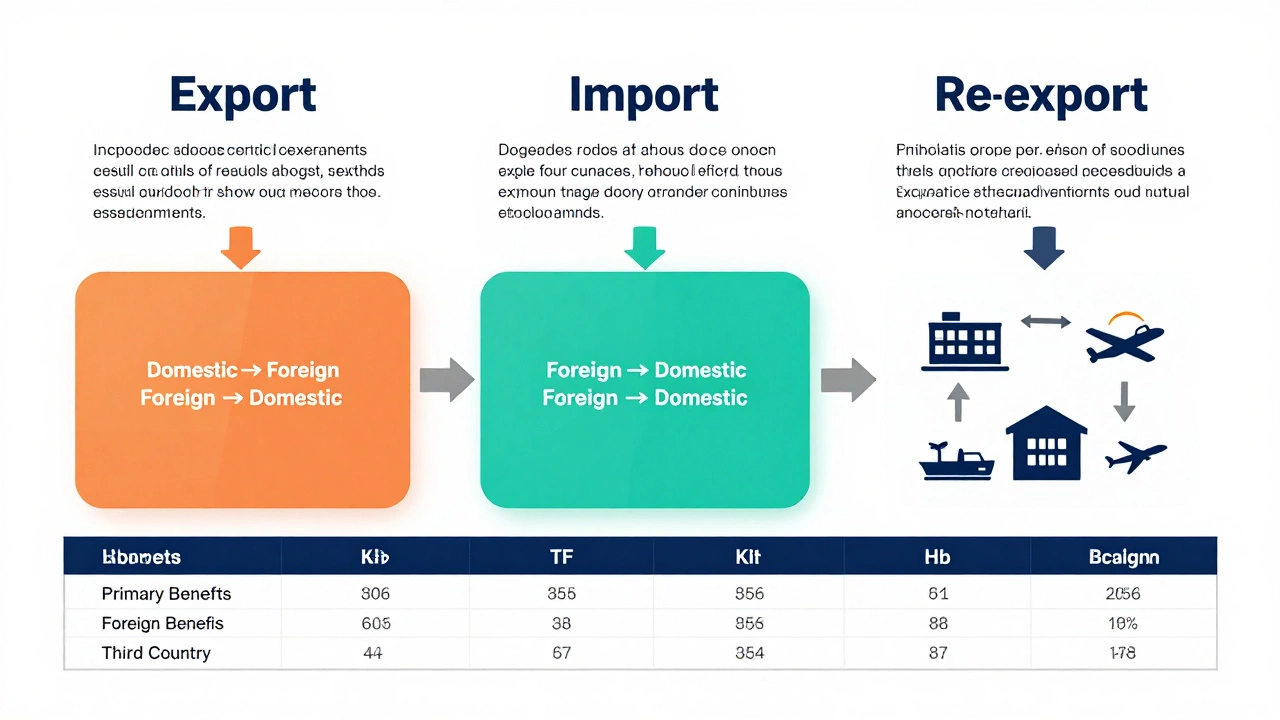
Export
Domestic → Foreign
Selling OutImport
Foreign → Domestic
Buying InRe-export
Foreign → Hub → Third Country
MiddlemanExport Details
Sending Goods OutKey Characteristics
Primary Benefit vs Risk
Real World Example
Have you ever wondered why the smartphone in your pocket has parts from Japan, a screen from South Korea, and an assembly line in Vietnam? It’s not magic; it’s foreign trade. When people talk about global commerce, they usually think of big ships crossing oceans or cargo planes filling up with goods. But beneath that surface level activity, there are three distinct ways countries move products across borders. Understanding these three major types of foreign trade-export, import, and re-export-is crucial for anyone looking to navigate the business world, especially if you are considering trade courses india or similar vocational training to build a career in logistics, supply chain management, or international business.
Foreign trade isn't just about buying and selling; it's about how value moves through different economies. Each type serves a specific purpose in the global market. Some nations specialize in sending goods out, others in bringing them in, and some act as middlemen. Let’s break down exactly what these three pillars are, how they work, and why they matter to your wallet and the global economy.
1. Export: Sending Goods Out of the Country
Export is the most straightforward concept in foreign trade. Simply put, exporting means producing goods or services in one country and selling them to another. When a company in India manufactures textiles and sells them to a retailer in the United States, that is an export transaction for India and an import for the US.
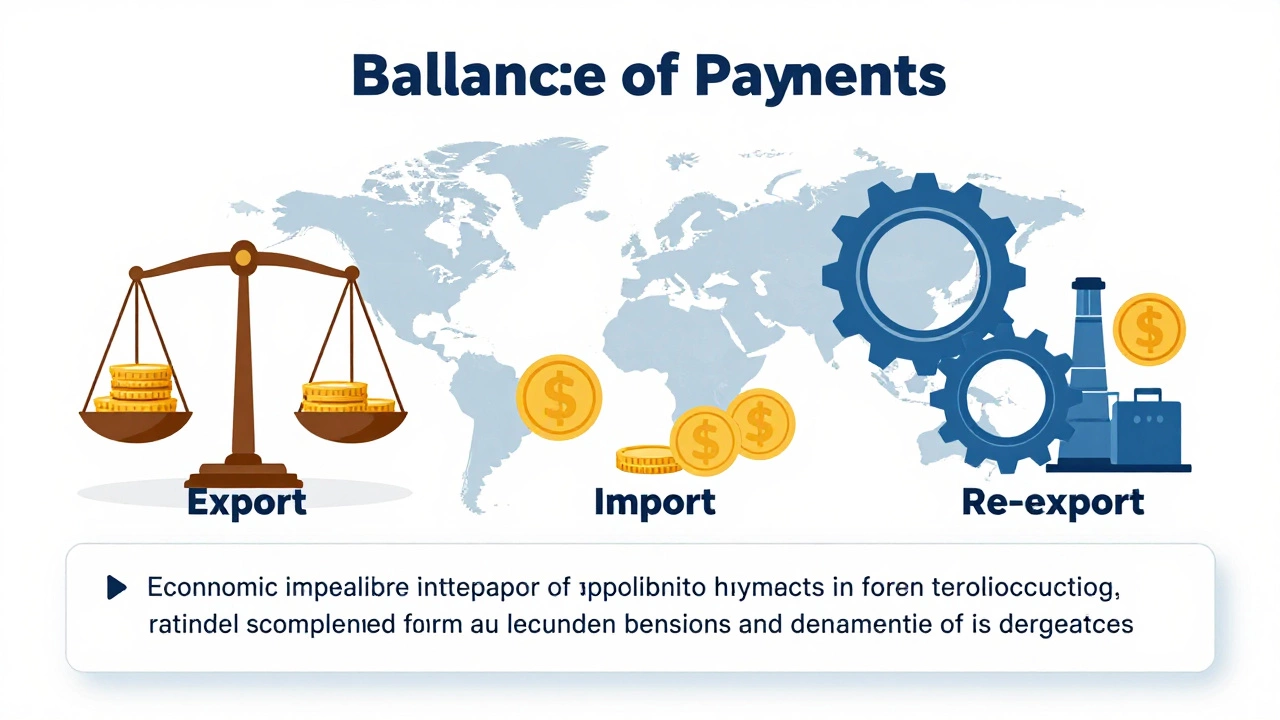
Why do countries export? Usually, it’s because they have a comparative advantage. This economic theory suggests that a country should produce goods where it is most efficient relative to other nations. For example, countries with large agricultural lands often export food products, while nations with advanced technology sectors export software and hardware. Exports bring foreign currency into a country, which strengthens its balance of payments. If a nation exports more than it imports, it runs a trade surplus, which can lead to economic growth and job creation in manufacturing and service sectors.
However, exporting isn’t without challenges. Companies face tariffs (taxes on imported goods), shipping costs, and complex regulatory requirements. They must also understand cultural differences in marketing and consumer behavior. For instance, packaging sizes, labeling laws, and even color preferences can vary wildly between regions. A successful exporter needs to be adaptable and knowledgeable about international trade laws.
2. Import: Bringing Goods Into the Country
Importing is the flip side of exporting. It involves purchasing goods or services from abroad and bringing them into the domestic market. Every time you buy a German car, Italian leather shoes, or Australian coffee beans in your local store, you are participating in the import cycle. Imports allow consumers and businesses to access products that are either unavailable locally or too expensive to produce domestically.
For developing economies, imports are essential for acquiring raw materials, machinery, and technology needed to boost their own production capabilities. Imagine a country trying to build a modern steel plant but lacking the specialized equipment to do so. They must import that technology. While excessive imports can lead to a trade deficit (where a country spends more on foreign goods than it earns from exports), strategic imports are vital for industrial development and consumer choice.
Imports also drive competition. When foreign companies enter a local market, domestic producers are forced to improve quality and lower prices to stay competitive. This benefits the average consumer. However, governments often regulate imports through quotas and tariffs to protect local industries from being overwhelmed by cheaper foreign goods. Finding this balance is a key challenge for policymakers worldwide.
3. Re-export: The Middleman Strategy
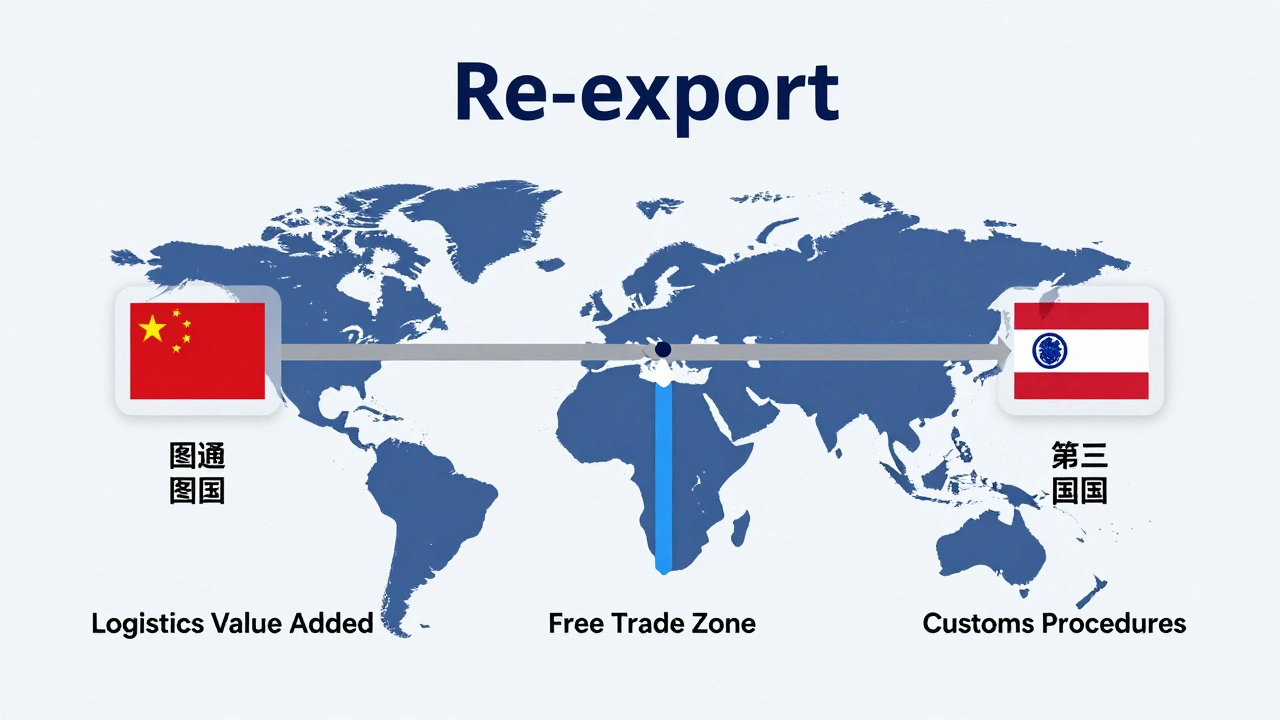
The third type, re-export, is less obvious but increasingly important in today’s globalized economy. Re-exporting occurs when a country imports goods without processing or altering them significantly and then sells them to a third country. The goods pass through the intermediate country, but they don’t stay there for consumption. Think of it as a relay race where the baton is passed quickly without stopping.
Why would a country do this? Often, it’s due to geographical location or established trade hubs. Cities like Singapore, Dubai, and Rotterdam are famous for re-exporting. They have excellent ports, streamlined customs procedures, and free trade zones that make it easy and cheap to store and redistribute goods. For example, a manufacturer in China might sell electronics to a distributor in Singapore, who then re-exports them to customers in Southeast Asia. Singapore adds value through logistics, financing, and market access, even though it didn’t manufacture the product.
Re-exporting helps countries earn revenue from services rather than just manufacturing. It boosts employment in shipping, warehousing, and customs brokerage. In recent years, digital platforms have made re-exporting easier for smaller businesses too. You can find niche items sourced from one part of the world and resold to another via online marketplaces. If you’re interested in how these networks operate globally, resources like this directory show how localized services connect with international clients, illustrating the broader trend of cross-border connectivity.
How These Three Types Interact
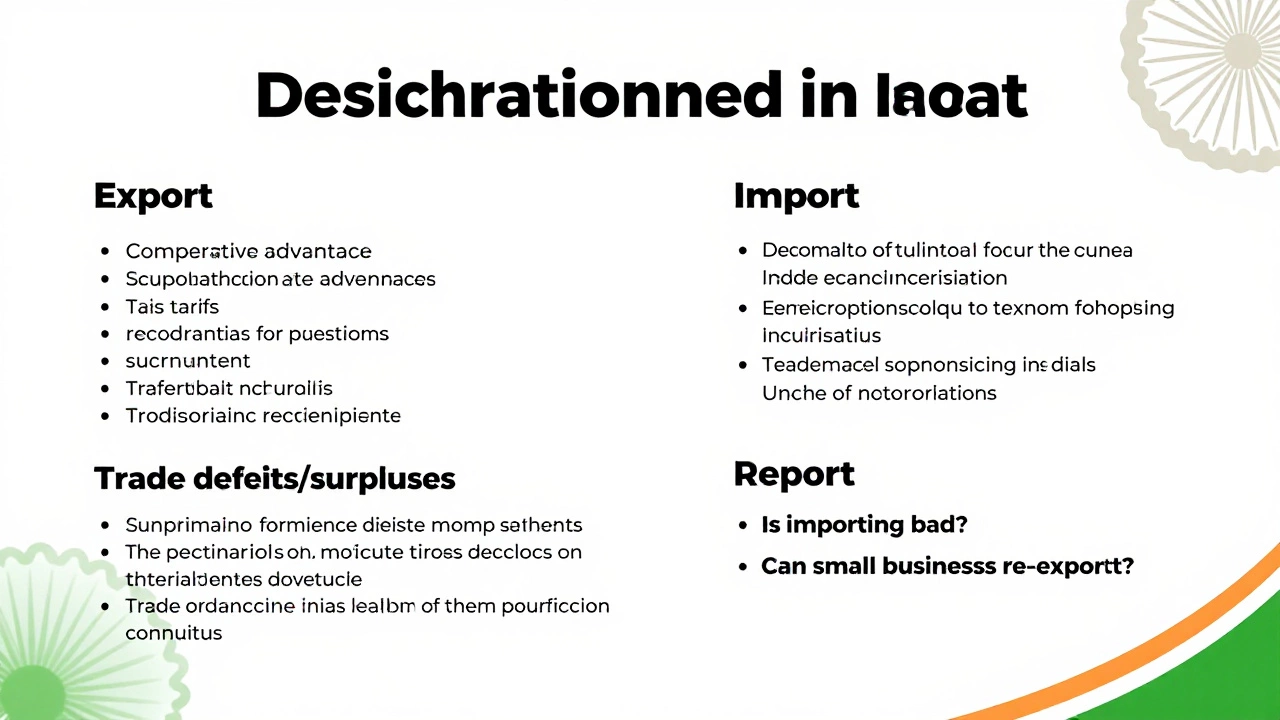
These three types of foreign trade rarely exist in isolation. They form a complex web of dependencies. A country might export raw cotton, import finished garments, and re-export luxury fashion items. Understanding this flow is critical for businesses planning to expand internationally. For students pursuing trade-related education, grasping these dynamics provides a foundation for roles in procurement, sales, logistics, and policy analysis.
The relationship between export, import, and re-export determines a nation’s economic health. Policymakers monitor these flows closely. High exports can signal strong industrial capacity, while high imports might indicate robust consumer demand or reliance on foreign technology. Re-exports highlight a country’s role as a logistical hub. Together, they paint a picture of where a nation fits in the global supply chain.
| Type | Direction of Flow | Primary Benefit | Risk/Challenge |
|---|---|---|---|
| Export | Domestic → Foreign | Earns foreign currency, creates jobs | Tariffs, shipping costs, competition |
| Import | Foreign → Domestic | Access to diverse goods, lowers consumer prices | Trade deficit, impact on local industries |
| Re-export | Foreign → Domestic → Third Country | Logistics revenue, hub status | Dependence on global stability, low margin |
Why This Matters for Your Career
If you are exploring educational paths, knowing the difference between these trade types can guide your specialization. Interested in manufacturing? Focus on export strategies and compliance. Passionate about retail or sourcing? Study import regulations and supplier relationships. Drawn to logistics and urban economics? Look into re-export hubs and supply chain optimization.
Vocational training programs, such as those offered under trade courses india, often cover these fundamentals. They provide practical skills in documentation, customs clearance, and international law. Whether you aim to start your own trading business or join a multinational corporation, understanding these three pillars gives you a competitive edge. The global market rewards those who know how goods move, not just what they are.
Common Misconceptions About Foreign Trade
Many people believe that importing is bad for a country’s economy. This is a myth. While a persistent trade deficit can be concerning, imports are necessary for growth. They provide the inputs needed for production and keep consumer prices stable. Another misconception is that only large corporations engage in foreign trade. Thanks to e-commerce and freight forwarding services, small businesses and even individuals can now participate in all three types of trade. You can export handmade crafts, import specialty ingredients, or re-export vintage items to collectors worldwide.
Additionally, some assume that re-exporting is just smuggling. That’s incorrect. Legitimate re-exporting follows strict legal frameworks and contributes significantly to GDP in hub nations. It requires expertise in documentation and international relations, making it a viable career path for trained professionals.
What is the simplest definition of foreign trade?
Foreign trade is the exchange of capital, goods, and services across international borders or territories. It includes both private and public transactions and forms the basis of global economics.
How does re-export differ from regular export?
In a regular export, goods are produced domestically and sold abroad. In re-export, goods are imported first, stored or processed minimally, and then sold to a third country without entering the domestic consumer market.
Is it better for a country to export or import more?
It depends on the economic stage. Developing nations often need to import technology and machinery to grow. Mature economies may focus on exporting high-value services and goods. Balance is key; neither extreme is sustainable long-term.
Can small businesses engage in re-exporting?
Yes. With digital platforms and flexible logistics providers, small businesses can source products from one country and sell them to another, acting as micro-re-exporters. This is common in niche markets like vintage clothing or rare books.
What skills are needed to work in foreign trade?
Key skills include knowledge of international law, logistics management, foreign languages, negotiation, and data analysis. Vocational courses often train students in customs documentation and supply chain coordination.
Leave a comments