Scenery Personality Quiz
Answer these questions to discover which country's visual landscape resonates more with your soul.
Your Scenery Profile
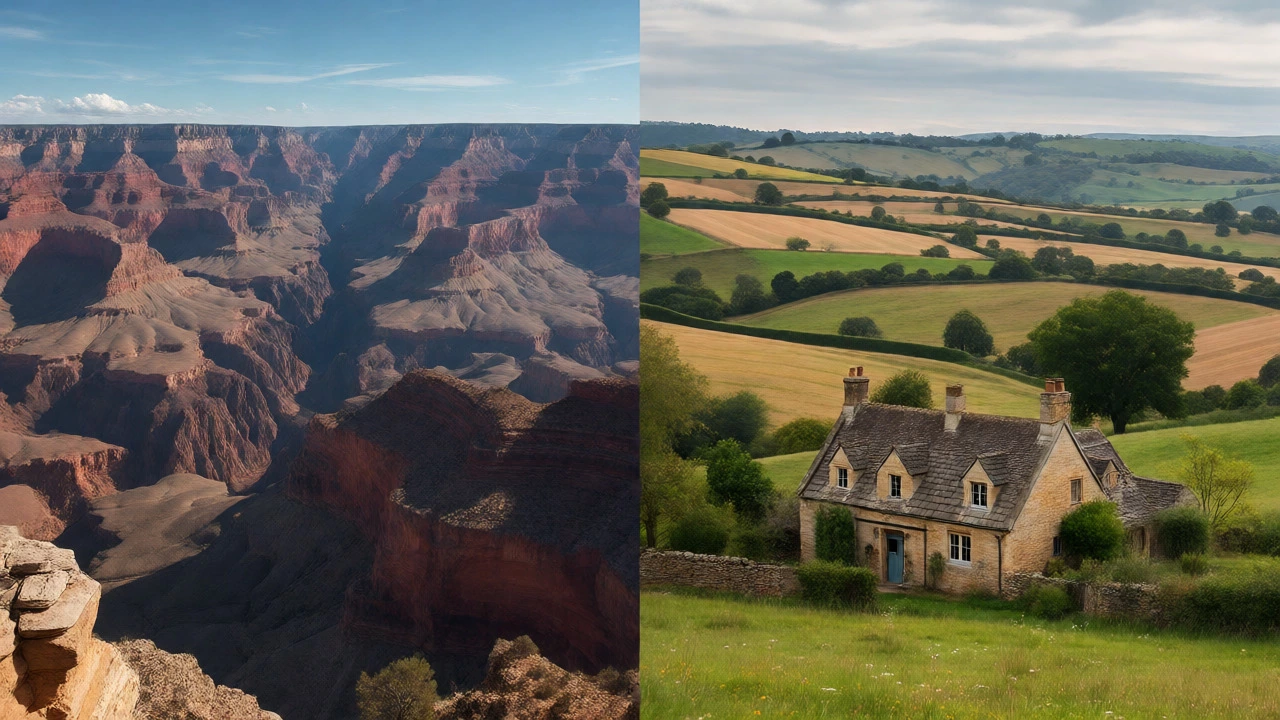
You’ve probably seen the memes. One side shows rolling green hills and stone cottages; the other, vast deserts and skyscrapers piercing the clouds. The debate over which country is more beautiful-the United States or the United Kingdom-isn’t just about picking a vacation spot. It’s about understanding two fundamentally different relationships with land, history, and space.
If you’re an English learner in India looking to study abroad, this question matters. Your choice of destination shapes your daily visual experience, your cultural immersion, and even how you perceive language nuances tied to place. But there’s no objective winner here. Beauty is subjective, but patterns exist. Let’s break down what makes each nation visually distinct so you can decide which aesthetic speaks to you.
The Scale Factor: Wilderness vs. Manicured History
The most immediate difference is scale. The US is massive. We’re talking about a continent-spanning nation where you can drive from humid swamps to arid deserts in a day. This vastness creates a type of beauty that feels overwhelming, almost sublime. Think of the Grand Canyon in Arizona. It’s not just pretty; it’s terrifyingly large. The sheer depth and width challenge your brain’s ability to process distance.
| Feature | United States | United Kingdom |
|---|---|---|
| Dominant Terrain | Vast wilderness, mountains, deserts, plains | Rolling hills, coastlines, moors, farmland |
| Human Footprint | Sparse in many areas; nature dominates | Dense; landscape shaped by centuries of agriculture |
| Architectural Style | Modern glass, suburban sprawl, national parks lodges | Medieval castles, Tudor houses, Victorian brick |
| Color Palette | Browns, greens, blues, stark whites (snow/sand) | Muted greens, greys, stone beiges, floral accents |
In contrast, the UK is compact. You can cross the entire country in under six hours by train. Because of this small size, every inch of land has been touched by humans for thousands of years. There are few truly "wild" places left. Instead, you get pastoral beauty. The Cotswolds in England aren’t wild forests; they’re honey-colored villages nestled into gentle slopes, surrounded by fields that have been plowed since Roman times. This isn’t less beautiful-it’s curated beauty. It feels intimate, cozy, and deeply historical.
Nature’s Drama: Raw Power vs. Gentle Charm
America offers dramatic natural spectacles. If you love raw power, the US wins hands down. Visit Yosemite National Park in California, and you’ll see granite cliffs rising nearly a mile above valley floors. Waterfalls plunge hundreds of feet. The air smells like pine and dust. These landscapes feel untouched, primal. They inspire awe because they remind you how small you are.
The UK’s nature is gentler, but don’t mistake gentle for boring. The Scottish Highlands offer rugged beauty that rivals any mountain range, though on a smaller scale. Ben Nevis might not dwarf Everest, but its mist-shrouded peaks create a moody, atmospheric vibe that photographers adore. In Wales, the Snowdonia National Park features jagged ridges and dark lakes that look straight out of a fantasy novel. Meanwhile, the Jurassic Coast in Dorset reveals millions of years of geological history in its cliffs, offering a quieter, intellectual kind of wonder.
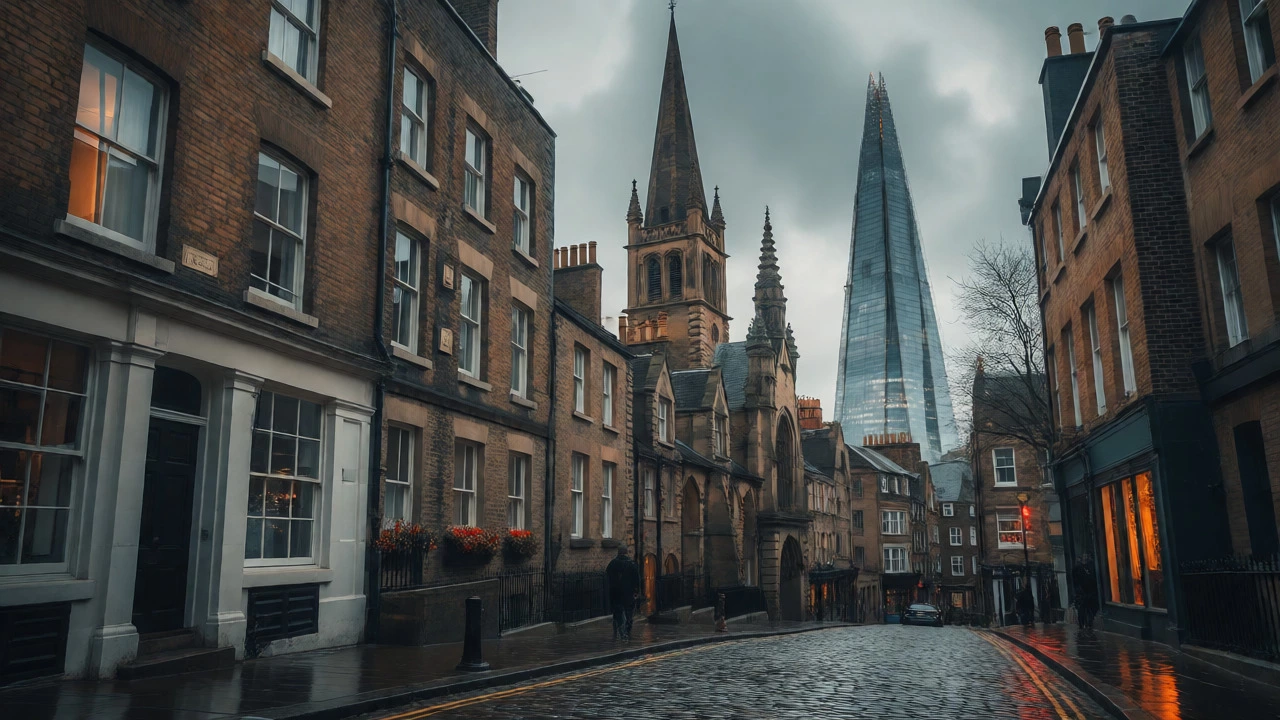
Consider the weather’s role here. The UK’s famous grey skies and frequent rain aren’t flaws-they’re part of the charm. That soft, diffused light makes colors pop in gardens and historic sites. A rainy afternoon in London, with wet pavement reflecting neon signs, has a cinematic quality Americans rarely experience. In the US, sunshine is often assumed, especially in the Southwest. Clear blue skies make colors vibrant but can also flatten the mood. Neither is better; they just evoke different emotions.
Urban Aesthetics: Skyline vs. Streetscape
Cities tell another story. American cities prioritize verticality and car-centric design. New York City’s skyline is iconic for a reason. Skyscrapers like the Empire State Building pierce the sky, creating a silhouette that defines modern ambition. Los Angeles spreads horizontally, blending palm trees with concrete sprawl. These cities feel energetic, fast-paced, and futuristic. Walking through Manhattan, you feel dwarfed by human achievement.
British cities feel layered. London mixes medieval churches with glass shards like the Shard. Parisian-style boulevards coexist with narrow, winding streets in old towns. Edinburgh’s Old Town climbs a volcanic rock, dominated by a castle that’s stood for centuries. The beauty here comes from juxtaposition. You might walk past a 17th-century pub next to a sleek tech office. This density of history creates a textured visual experience. Every corner holds a story, whereas American cities often reset their visual narrative every few decades.
For students studying English, this urban environment impacts daily life. In the UK, you’re likely walking everywhere, noticing details in architecture and street art. In the US, depending on the city, you might rely on cars or subways, seeing less detail up close. If you value immersive, slow-paced observation, British cities offer richer street-level aesthetics.
Cultural Beauty: How People Shape the View
Beauty isn’t just rocks and trees. It’s people, too. The UK’s cultural heritage adds layers to its scenery. Historic universities like Oxford and Cambridge feature Gothic spires and manicured quadrangles that feel timeless. Watching punts glide along the River Cam under willow trees is a quintessentially British scene. It’s peaceful, scholarly, and steeped in tradition.
American culture brings diversity to the visual landscape. From the colorful murals of Miami’s Wynwood District to the rustic charm of Nashville’s music venues, US cities reflect a melting pot of influences. Native American petroglyphs in Utah add ancient cultural markers to desert vistas. This variety means you never know exactly what you’ll see next. One town might feel European, the next distinctly Asian, the next purely American. This unpredictability is part of the US’s visual appeal.
Language ties into this. British English often carries connotations of elegance or tradition, reflected in their preserved landscapes. American English feels dynamic, innovative, matching their ever-changing skylines. When you choose a study destination, you’re choosing which linguistic and visual atmosphere you want to absorb.

Practical Considerations for Travelers and Students
Let’s get practical. Cost and accessibility matter when deciding which beauty you can actually enjoy. Traveling within the US is expensive if you fly between distant states. A trip from New York to San Francisco costs as much as flying to Europe. However, road trips are cheap and rewarding. Renting a car lets you stop at roadside attractions, national parks, and quirky diners whenever you please.
The UK is easier to navigate. Trains connect major cities quickly and affordably. You can visit London, Bath, and Liverpool in one week without breaking the bank. Public transport is reliable, reducing stress. For students, this ease of movement means you can explore more during short breaks. Plus, proximity to Europe allows weekend trips to France or Belgium, adding continental beauty to your experience.
Seasonality plays a huge role. The US has extreme seasons. Winter in the Midwest can be brutal but stunning with snow-covered fields. Summer in the South is hot but perfect for beach visits. The UK’s weather is milder but unpredictable. Spring brings blooming daffodils; autumn paints forests gold. Both countries offer year-round beauty, but you need to plan around their climatic quirks.
Which Beauty Fits You?
So, who wins? If you crave grandeur, space, and diverse ecosystems, the US takes the crown. Its landscapes make you feel small in the best way possible. If you prefer intimacy, historical depth, and cohesive charm, the UK shines. Its beauty invites you to linger, observe, and appreciate details.
Think about your personal preferences. Do you find peace in endless horizons or comfort in familiar cobblestones? Are you drawn to modern innovation or traditional preservation? Your answer reveals more than just travel tastes-it hints at your learning style and cultural comfort zone.
Remember, neither country is objectively "more beautiful." They’re different artists painting with different palettes. The US uses bold strokes and wide canvases. The UK uses fine brushes and intricate details. Both masterpieces deserve attention.
Is the US or UK better for photography enthusiasts?
It depends on your subject. The US offers dramatic landscapes, wildlife, and architectural scale, ideal for wide-angle shots. The UK excels in portraits, street photography, and capturing mood through weather and historic textures. Many pros carry gear for both styles.
Which country has more accessible national parks?
The US has a well-established National Park Service system with extensive infrastructure, including visitor centers and campgrounds. The UK’s national parks are integrated into communities, making them easily accessible by public transport but lacking some of the remote wilderness facilities found in America.
Does weather affect perceived beauty significantly?
Absolutely. The UK’s overcast skies provide soft lighting that enhances colors in gardens and stone buildings. The US’s clear skies highlight contrasts and distances. Photographers often wait for specific weather conditions to capture the essence of each location.
Are there hidden gems in either country worth visiting?
Yes. In the US, try Sedona, Arizona, for red rock formations or Acadia, Maine, for coastal drama. In the UK, explore the Isle of Skye for surreal landscapes or the Lake District for literary-inspired tranquility. These spots offer unique perspectives away from tourist crowds.
How does cost impact experiencing these beauties?
Travel within the US can be costly due to distances, requiring flights or long drives. The UK’s compact size makes train travel affordable and efficient. Budget travelers might find exploring multiple UK regions easier than covering similar distances in the US.
Leave a comments