India Trade Balance Calculator
How India's Trade Works
India's merchandise trade deficit is offset by $200 billion in services exports (software, IT services).
Calculate your scenario using 2024 data:
• Exports: Refined petroleum ($100B), Gemstones ($42B), Textiles ($38B)
• Imports: Crude oil ($130B), Gold ($45B), Electronics ($42B)
• Services: $200B (fixed value)
India doesn’t just make textiles or software-it moves billions of dollars in goods every year across the globe. If you’re wondering what India mainly trades, the answer isn’t one thing. It’s a mix of raw materials, manufactured products, and services that keep its economy running. And understanding this isn’t just useful for economists-it matters if you’re thinking about trade courses in India, looking to export, or trying to figure out where the country’s real economic power lies.
What India Exports the Most
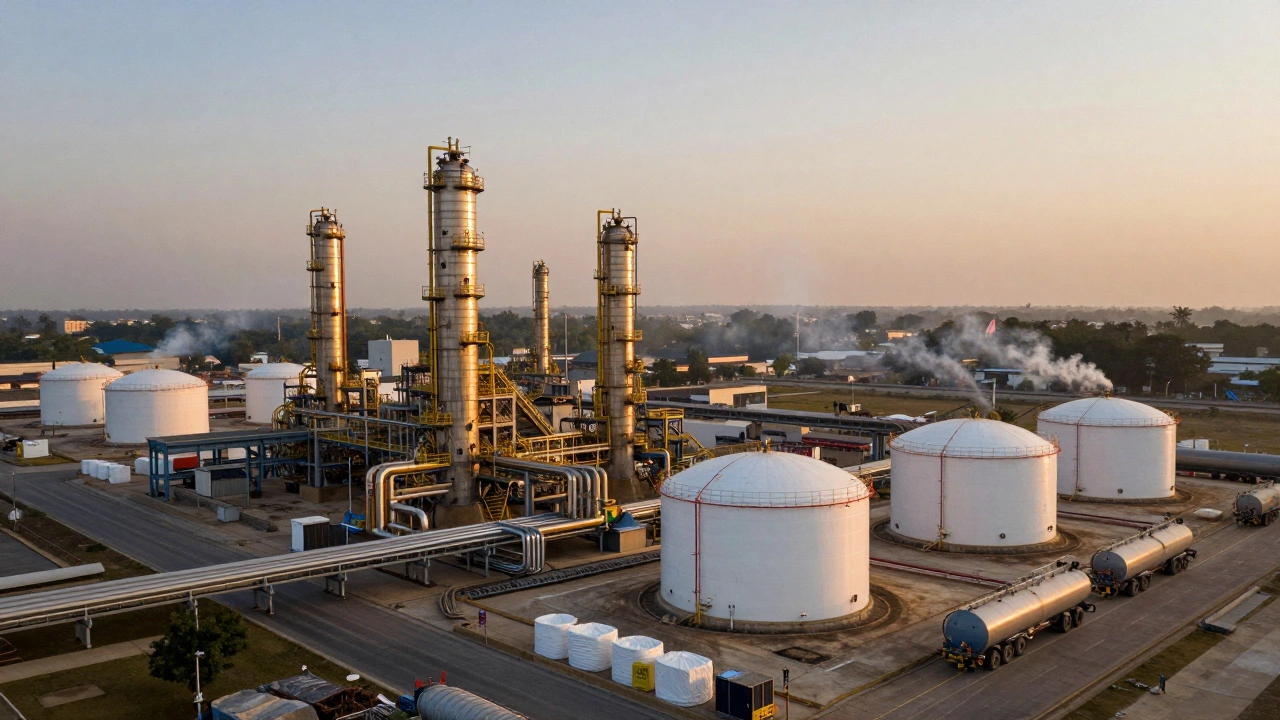
India’s top export is refined petroleum. Yes, oil. But not crude-refined. India imports crude oil from the Middle East, processes it in its massive refineries in Gujarat and Maharashtra, and then ships out gasoline, diesel, and jet fuel. In 2024, this single product made up nearly 20% of India’s total exports, worth over $100 billion. That’s more than the entire GDP of many small countries.
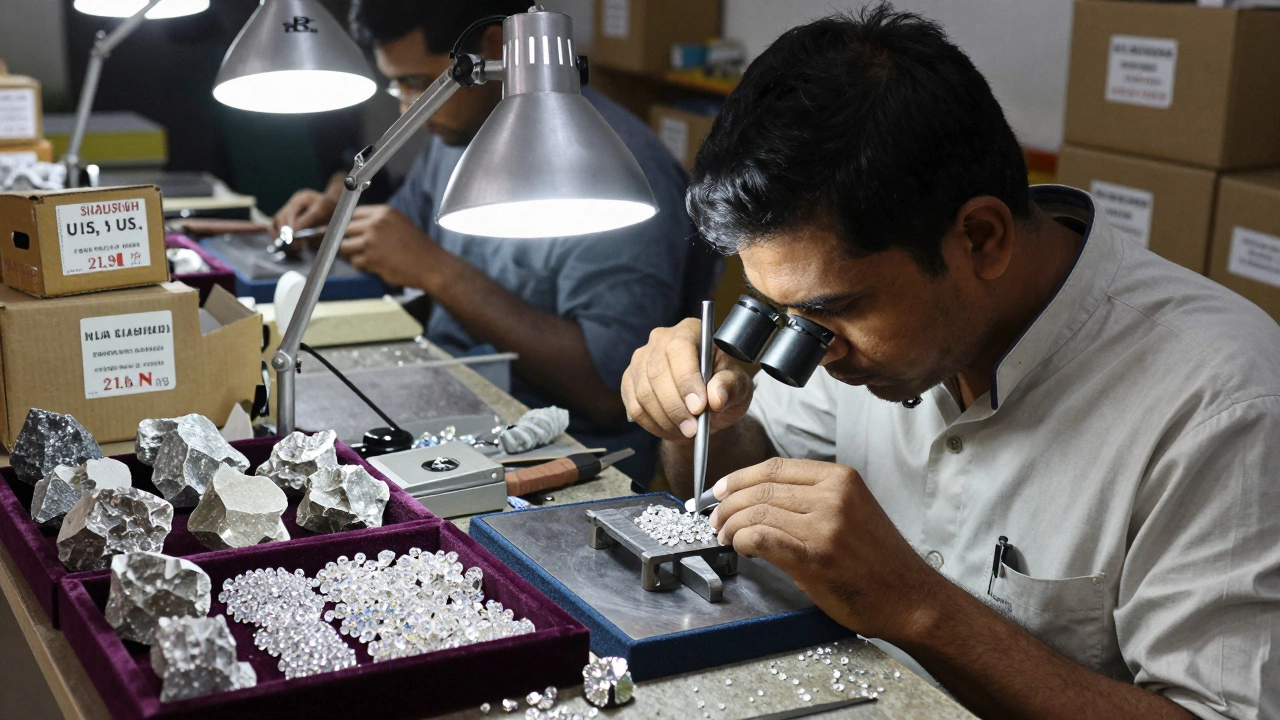
After petroleum, the biggest export is gemstones and jewelry. India cuts and polishes more than 90% of the world’s diamonds. Surat, a city in Gujarat, is the global hub for this trade. Diamonds from Russia, Australia, and Canada come here, get polished, and are sent to the U.S., Europe, and China. Jewelry exports hit $42 billion in 2024, making it the second-largest export category.
Textiles and apparel come third. Cotton, silk, and synthetic fabrics are woven, dyed, and stitched into clothing for global brands. India’s advantage? Low labor costs and decades of experience. In 2024, textile exports totaled $38 billion. That includes everything from bed sheets to designer sarees.
Pharmaceuticals are another powerhouse. India is called the “pharmacy of the world” because it supplies 20% of global generic drugs. Companies like Sun Pharma and Dr. Reddy’s export medicines to the U.S., Africa, and Southeast Asia. In 2024, pharmaceutical exports reached $25 billion. These aren’t just pills-they’re lifesavers in countries with limited healthcare access.
Other major exports include machinery, electronic components, organic chemicals, and rice. Basmati rice alone makes up over 70% of India’s rice exports, going to the Middle East, Europe, and the U.S.
What India Imports the Most
While India sells a lot, it also buys a lot. Its biggest import is crude oil. India imports over 85% of the oil it uses. Most comes from Saudi Arabia, Iraq, and the UAE. In 2024, crude oil imports cost $130 billion. That’s more than double what India earns from exporting petroleum. It’s a trade deficit built on energy needs.
Second on the list is gold. Indians buy gold for weddings, festivals, and as savings. In 2024, gold imports hit $45 billion. Most of it comes from Switzerland, the UAE, and Australia. Even though India produces some gold domestically, demand far outpaces supply.
Electronic goods are the third-largest import. Smartphones, laptops, circuit boards, and semiconductors make up the bulk. China is the top supplier, but India is pushing to reduce that dependency. In 2024, electronics imports totaled $42 billion. That’s why companies like Apple and Samsung are now making phones in India-to avoid import taxes.
Other major imports include coal (for power plants), chemicals, fertilizers, and machinery. India still relies on imports for high-tech equipment used in manufacturing, healthcare, and defense.
Who Does India Trade With?
India doesn’t trade evenly across the globe. Its top five trading partners in 2024 were:
- United States - $118 billion in two-way trade. India exports pharmaceuticals, textiles, and software. Imports include aircraft, machinery, and soybeans.
- China - $112 billion. India imports electronics and chemicals. Exports are raw materials like iron ore and cotton.
- United Arab Emirates - $85 billion. Mainly crude oil, gold, and diamonds. India exports rice and textiles.
- Saudi Arabia - $78 billion. Almost all of it is crude oil.
- Singapore - $67 billion. A major hub for re-exports and electronics components.
These five countries account for nearly half of India’s total trade. But India is also expanding ties with countries like Australia (for coal and lithium), Russia (for discounted oil), and Vietnam (for electronics parts).
The Trade Deficit Problem
India’s trade deficit-the gap between what it imports and what it exports-was around $200 billion in 2024. That sounds bad, but it’s not as simple as it seems. The country imports things it can’t make yet: oil, gold, chips. It exports things it’s really good at: labor-intensive goods, generic drugs, software services.
Software services, for example, aren’t counted in the trade numbers above because they’re classified as “invisible exports.” In 2024, India earned $200 billion from IT and business process outsourcing. That’s more than its entire merchandise export value. So while the trade deficit looks big on paper, the overall balance of payments is healthier because of services.
That’s why many trade courses in India now focus on services as much as goods. The future of Indian trade isn’t just about shipping containers-it’s about sending code, consulting, and cloud services.
What’s Changing in India’s Trade?
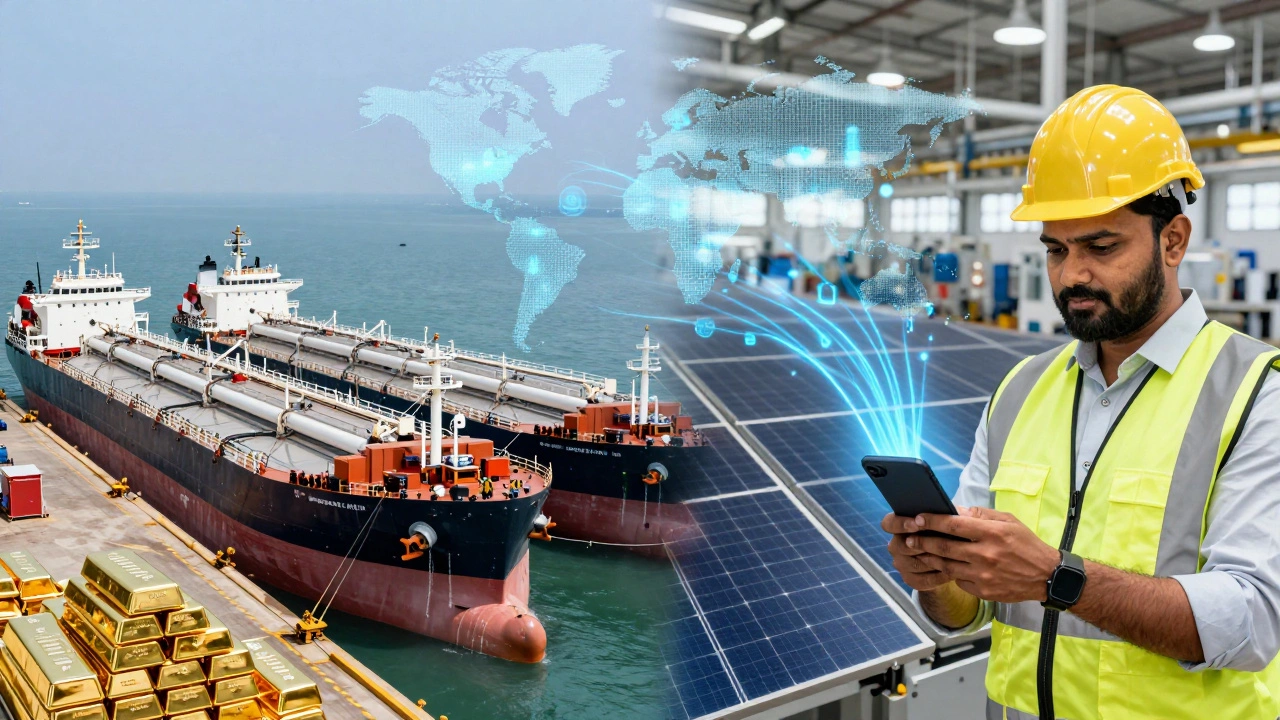
India is trying to shift from being a buyer of finished goods to a maker of them. The government’s Production Linked Incentive (PLI) scheme offers cash rewards to companies that make electronics, solar panels, and pharmaceuticals in India. Apple now makes iPhones here. Xiaomi, Samsung, and Oppo have big factories.
India is also pushing for more exports of high-value goods. It’s building special economic zones near ports. It’s signing trade deals with the EU, Australia, and the UAE. And it’s trying to become a global hub for green hydrogen and battery manufacturing.
One big trend: India is exporting more processed goods and less raw materials. Ten years ago, it exported raw cotton. Now it exports finished fabrics. Ten years ago, it exported iron ore. Now it exports steel. That’s a sign of industrial maturity.
Why This Matters for Trade Courses in India
If you’re considering a trade course in India, this isn’t just theory. It’s real-world data. The skills in demand right now include:
- Understanding international trade regulations (like Incoterms and customs codes)
- Export documentation and compliance
- Logistics and supply chain management
- Market research for emerging economies (Africa, Latin America, Southeast Asia)
- Working with trade finance tools like letters of credit
Many colleges now partner with export houses and logistics firms. Students don’t just learn from books-they work on real export cases. One student from Chennai helped a small jewelry exporter get certified for the U.S. market. Another helped a startup in Pune ship medical devices to Kenya.
The takeaway? Trade isn’t just about buying and selling. It’s about connecting producers with global buyers, navigating rules, and solving problems across borders. And India’s trade landscape is evolving fast. Those who understand the flow of goods, services, and money will have real opportunities.
What’s Next for India’s Trade?
India’s goal is to hit $2 trillion in annual exports by 2030. That’s double what it exported in 2024. To get there, it needs to make more things locally, sell more services, and find new markets.
Green energy products-solar panels, batteries, electrolyzers-are the next big export bet. India has set up a $20 billion fund to support this. If it works, India could become a major player in the global clean energy supply chain.
At the same time, India is trying to reduce its reliance on China for critical imports. It’s stockpiling rare earth minerals and building domestic chip factories. Trade isn’t just about money anymore-it’s about national security.
For anyone thinking about a career in trade, the message is clear: the old model is changing. The future belongs to those who understand not just what India sells, but how it can make more of it-and sell it smarter.
What are India’s top three exports?
India’s top three exports are refined petroleum, gemstones and jewelry, and textiles and apparel. Together, these made up over 50% of India’s total merchandise exports in 2024, worth more than $180 billion.
What does India import the most?
India imports the most crude oil, followed by gold and electronic goods. Crude oil alone cost over $130 billion in 2024, while gold and electronics each added over $40 billion to the import bill.
Is India’s trade deficit a problem?
The merchandise trade deficit is large, but it’s offset by services exports like IT and software, which brought in $200 billion in 2024. So while India buys more physical goods than it sells, it earns more from services than it spends on imports.
Which countries are India’s biggest trade partners?
India’s top trade partners are the United States, China, the United Arab Emirates, Saudi Arabia, and Singapore. These five account for nearly half of India’s total trade volume.
Why are trade courses in India becoming popular?
Trade courses are growing because India’s economy is shifting from low-value exports to high-value manufacturing and services. Skills in export documentation, logistics, compliance, and global market analysis are now in high demand across industries.
Leave a comments