
Career Path Calculator: College vs Vocational Training
Compare the financial and time investment of college versus vocational training based on Canadian data.
Your College Program
Your Vocational Program
Results
College Program
Vocational Program
When you’re deciding what to do after high school, two big options show up: college and vocational training. They both lead to jobs, but they take very different paths. One isn’t better than the other - it just depends on what kind of work you want to do. Many people think college is the only real path to a good career. That’s not true. In fact, more and more employers in Canada are hiring people with hands-on skills over those with four-year degrees - especially in trades, healthcare support, and tech repair.
College: The Academic Route
College in Canada usually means a two- to three-year program that leads to a diploma or sometimes a degree. You’ll take classes in subjects like business, psychology, communications, or computer science. The focus is on theory, critical thinking, and broad knowledge. You’ll write essays, take exams, and work on group projects. Most college programs include some co-op or internship time, but the classroom is still the main setting.
For example, someone studying business administration at a college might learn how to manage budgets, analyze market trends, and write business plans. They’ll spend hours reading case studies and debating management styles. But when they graduate, they often still need to learn how to actually use Excel, manage a team, or handle customer complaints on the job.
Vocational Training: Learn by Doing
Vocational training is all about learning specific job skills. You don’t spend time on abstract theories. You learn how to wire a house, fix a car engine, install HVAC systems, or operate CNC machines. Programs last from a few months to two years. Most are offered through community colleges, private trade schools, or government-funded apprenticeship programs.
In Ontario, for instance, the government supports over 150 skilled trades through its Ontario Youth Apprenticeship Program. Students in welding, plumbing, or electrical training spend 80% of their time in real work environments - not classrooms. They’re paid while they learn. By the time they finish, they’re not just qualified - they’re ready to work full-time.
Time and Cost: Which Is Faster and Cheaper?
Time matters. Most college programs take two to three years. Vocational training? Often six months to two years. Some programs, like certified nursing assistant (CNA) or commercial driver’s license (CDL), can be done in under 12 weeks.
Cost is another big difference. The average cost of a two-year college diploma in Canada is around $10,000 to $15,000 in tuition alone. Add housing, books, and transportation, and you’re looking at $25,000 or more. Vocational training? Many government-subsidized programs cost less than $2,000. Some, like those funded through Employment Ontario, are free for eligible learners. You also avoid student debt - and start earning sooner.
According to Statistics Canada, people who complete skilled trade programs enter the workforce at an average age of 20. College grads? Usually 22 or 23. That’s two years of potential earnings you don’t lose.

Job Outcomes: Who Gets Hired Faster?
Here’s the truth: employers in skilled trades are desperate for workers. Canada has a shortage of electricians, plumbers, welders, heavy equipment operators, and industrial mechanics. The government estimates over 100,000 skilled trade jobs will open up by 2028.
Meanwhile, college grads often compete for roles in admin, marketing, or customer service - fields that are already crowded. Many end up in jobs that don’t require their diploma. A 2024 report from the Canadian Council for Youth Employment found that 41% of recent college grads were working in roles that didn’t require their credential.
On the flip side, 92% of people who finish government-approved vocational programs in skilled trades find jobs within six months. Some even get hired before they graduate.
Flexibility and Career Growth
Some people worry vocational training locks you into one job. That’s a myth. Many tradespeople become supervisors, start their own businesses, or move into training roles. Electricians can become inspectors. Plumbers can design green building systems. Welders can transition into robotics maintenance.
And if you want to go back to school later? Most colleges accept trade credentials as credit toward diplomas or even degrees. A certified auto mechanic can apply for an automotive engineering technology program. A certified dental assistant can move into dental hygiene school. The door stays open.
Who Should Choose What?
If you like solving problems with your hands, enjoy working outdoors or on-site, and want to start earning quickly - vocational training is the smart move. You’ll get paid while you learn. You’ll build real skills that employers need right now.
If you’re drawn to writing, research, management, or abstract thinking - and you’re okay with spending more time and money - then college makes sense. But don’t go just because it’s expected. Ask yourself: Do I want to spend three years studying theories, or two years learning how to fix things that matter?
There’s no shame in choosing a path that gets you into the workforce faster, with less debt, and in a field that’s actually hiring. The old idea that college is the only way to succeed? It’s fading. Real skills are in demand. And vocational training delivers them.
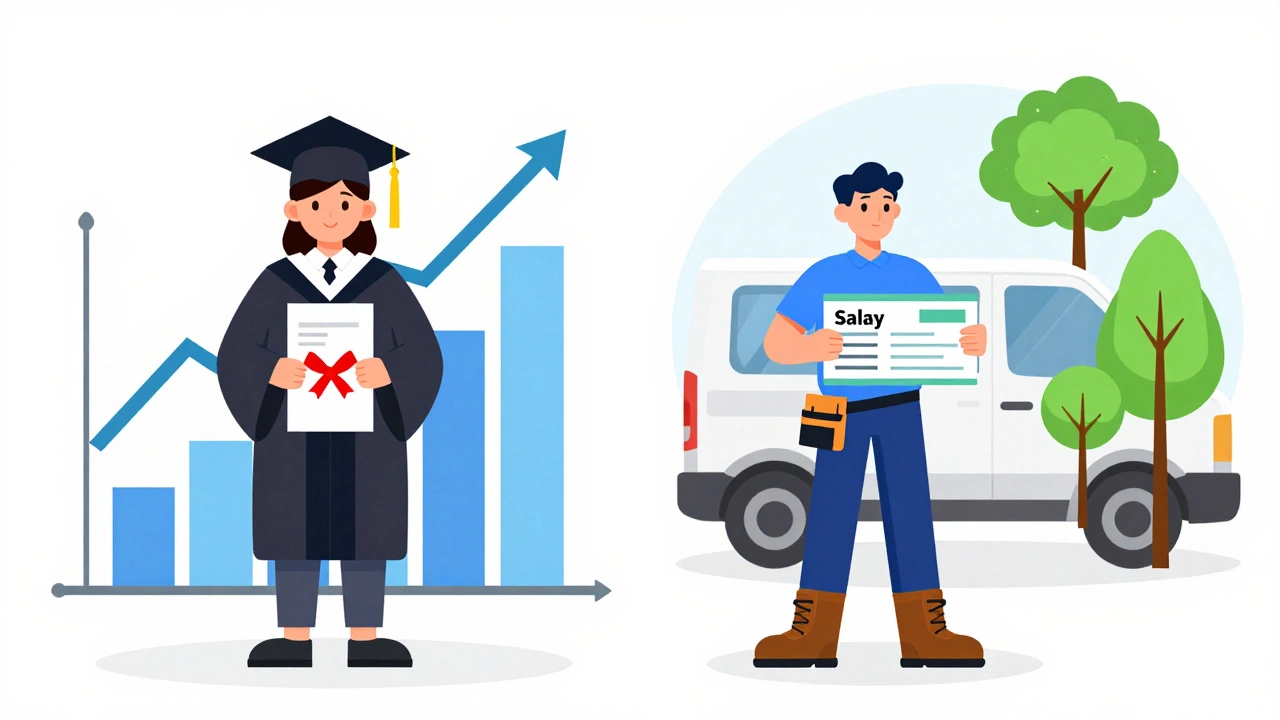
Government Support in Canada
Canada’s federal and provincial governments are pushing hard to expand access to vocational training. Programs like the Canada Job Grant cover up to 66% of training costs for eligible workers. In Ontario, the Skilled Trades Strategy provides funding for tools, apprenticeships, and mentorship. Many programs are even designed for Indigenous communities, newcomers, and people returning to work after a break.
You don’t need to pay out of pocket. If you’re serious about a trade, check with your local employment center. You might qualify for free training, tools, or even a stipend while you learn.
| Factor | College | Vocational Training |
|---|---|---|
| Duration | 2-4 years | 6 months-2 years |
| Cost (avg.) | $10,000-$25,000+ | $0-$5,000 (often subsidized) |
| Primary Focus | Theory, research, critical thinking | Hands-on skills, job-ready training |
| Work Experience | Often optional co-op | 80% on-the-job training |
| Job Placement Rate | 55-65% in related field | 90%+ in skilled trades |
| Starting Salary (avg.) | $40,000-$50,000 | $50,000-$70,000+ in skilled trades |
Common Myths Busted
- Myth: Vocational training is for people who "couldn’t get into college."
Truth: Many top students choose trades because they want to work, not sit in lectures. - Myth: Trade jobs are dirty or low-status.
Truth: Modern trades use advanced tech - drones for inspections, 3D printing for parts, smart diagnostics. These are high-tech jobs. - Myth: You can’t earn a good living in a trade.
Truth: Experienced electricians in Ontario earn $80,000-$120,000. Unionized plumbers make over $100,000. You don’t need a degree to make six figures.
Can I switch from vocational training to college later?
Yes, absolutely. Many colleges in Canada give credit for completed trade certifications. For example, a certified welder can enter an engineering technology program with up to one year of credit already applied. This lets you earn a diploma faster and with less cost. The system is built to let you move between paths - you’re not locked in.
Are vocational training programs really free?
Many are - especially if you’re a Canadian citizen, permanent resident, or eligible newcomer. Programs funded through Employment Ontario, Skills Development Canada, or provincial apprenticeship boards often cover tuition, tools, and sometimes even transportation or living expenses. You’ll need to apply and meet basic eligibility rules, but there’s no hidden catch. Check with your local employment office - they’ll tell you exactly what’s available.
Do employers value vocational training as much as college?
In skilled trades? More than ever. Companies in construction, manufacturing, and skilled services are actively recruiting trade-trained workers. They know these people can start working day one. Even tech companies now hire certified network technicians and industrial automation specialists over general IT grads. Real skills beat theoretical knowledge when the job is hands-on.
What if I change my mind after starting vocational training?
It happens - and it’s okay. Many vocational programs are modular. You can complete one certification, like HVAC basics, then pause and explore other options. You don’t lose what you’ve learned. In fact, having a trade credential opens doors even if you later decide to study business, project management, or safety compliance. Your experience becomes a strength, not a dead end.
Is vocational training only for people who didn’t do well in school?
No. Many top students choose vocational paths because they learn better by doing. You need strong math, reading, and problem-solving skills to be a good electrician or medical lab technician. These aren’t "easy" jobs - they’re demanding, skilled professions. The difference is the teaching style: hands-on, not lecture-based.
Next Steps: What Should You Do?
If you’re unsure, start with this: visit your local employment center. Ask about government-funded trade programs. Attend an open house at a trade school. Talk to a plumber, electrician, or mechanic - ask them how they got started. You’ll hear stories that surprise you.
Don’t let tradition or pressure guide you. Look at the facts: skilled trades pay well, have low unemployment, and are growing fast. College isn’t the only path to success - and for many, it’s not even the best one.
Leave a comments