
Trade Difficulty Comparison Tool
Compare the most challenging vocational trades in India to understand which paths have the highest entry barriers. Use this tool to see how different trades stack up against each other.
Select Trades to Compare
Trade Comparison
| Factor | Elevator Mechanic | Industrial Electrician | HVAC Technician | Welder | Plumber |
|---|---|---|---|---|---|
| Training Duration | 4-5 Years | 2 Years | 1-2 Years | 1 Year | 1-2 Years |
| Physical Demand | Very High | High | High | Medium | High |
| Exam Difficulty | Very High | High | Medium | High | Medium |
| Certification Body | NCVT / Private | NCVT | ITI / Private | NCVT / AWS | ITI |
The Elevator Mechanic trade consistently ranks as the most difficult to enter due to its long training duration, high physical demands, and very high exam difficulty. This correlates with the highest pay and lowest supply of workers in this field.
Many people assume that vocational paths are easier than university degrees. They think you can just show up, learn a skill, and start working. That is not how it works. Some paths are incredibly demanding, requiring years of study, physical endurance, and rigorous testing. If you are looking at Trade Courses is structured vocational training programs that teach specific technical skills for industries like construction, manufacturing, and utilities. These courses are designed to prepare students for immediate employment in skilled roles. in India, you need to know which ones will test your limits the most.
The question isn't just about which job pays the most. It is about which path has the highest barrier to entry. We are talking about the exams, the physical toll, and the competition for spots. Some trades require you to be in peak physical condition. Others demand complex mathematical understanding. A few combine both. Understanding this helps you prepare before you even apply.
Defining Difficulty in Vocational Training
Before we name the toughest trades, we need to define what makes a trade hard. Is it the classroom time? Is it the apprenticeship? Or is it the final certification exam? In the Indian context, the difficulty often comes from the National Council for Vocational Training (NCVT) standards. These standards ensure that a certificate means something across the country.
There are three main layers of difficulty you will face. First is the academic hurdle. You need to pass theory exams that cover safety, physics, and technical principles. Second is the practical hurdle. You must demonstrate the skill under pressure. Third is the physical hurdle. Some jobs require lifting heavy loads, working at heights, or standing for long hours. If you struggle with one of these, the trade becomes significantly harder.
Many students underestimate the theoretical side. They think they just need to hold a wrench or wire a socket. But modern systems are complex. You need to understand electrical codes, load calculations, and safety regulations. If you fail the written exam, you cannot get certified, no matter how good your hands are. This is where many drop out.
Top Trades with the Highest Entry Barriers
Several trades consistently rank as the most difficult to enter and master. Let's look at the specific challenges for each. These are the ones where the rejection rate is high and the training is intense.
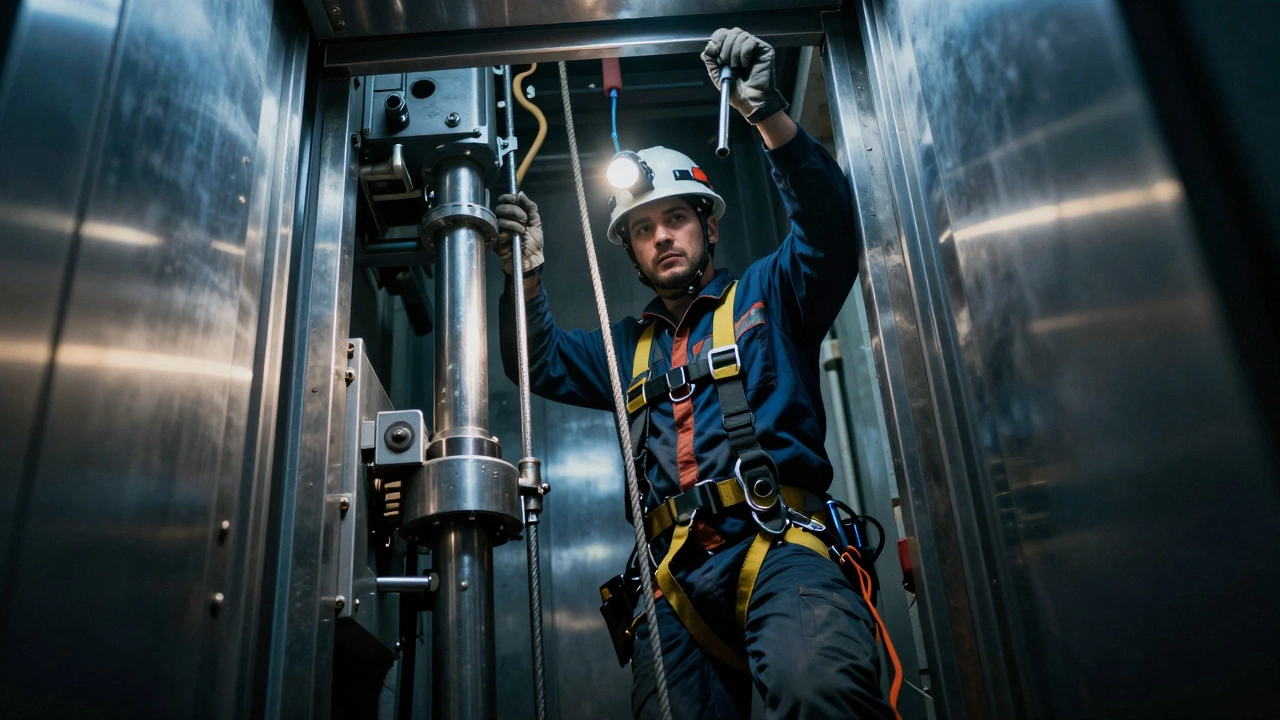
Elevator Mechanic is a specialized trade focused on the installation, maintenance, and repair of elevators, escalators, and moving walkways. This role requires a deep understanding of mechanics, hydraulics, and electrical systems. This is often considered the toughest trade. Why? Because the margin for error is zero. If you make a mistake, people can fall. The training involves complex systems that combine heavy machinery with sensitive electronics. You need to be comfortable working in tight shafts and at heights. The certification process is long, often requiring years of apprenticeship before you can work independently.
Next is the Industrial Electrician. Residential wiring is common, but industrial work is different. You deal with high voltage, three-phase power, and complex control systems. Electrician Certification is an official credential awarded after completing approved training and passing competency exams to legally perform electrical work. In India, this often involves clearing the NCVT All India Trade Test (AITT). The math involved is serious. You must calculate voltage drops, amperage, and circuit loads accurately. One wrong calculation can cause a fire or equipment failure. The physical work is also demanding, involving climbing ladders and working in confined spaces.
Heating, Ventilation, and Air Conditioning (HVAC) technicians face a different kind of challenge. You need to understand thermodynamics, refrigeration cycles, and fluid dynamics. HVAC Technician is a skilled professional who installs, maintains, and repairs heating, ventilation, and air conditioning systems in residential and commercial buildings. The work is physically exhausting. You often work in attics during summer or on rooftops in the rain. You carry heavy units and deal with hazardous refrigerants. The licensing exams test your knowledge of environmental regulations, which change frequently. Keeping up with the technology is a constant struggle.
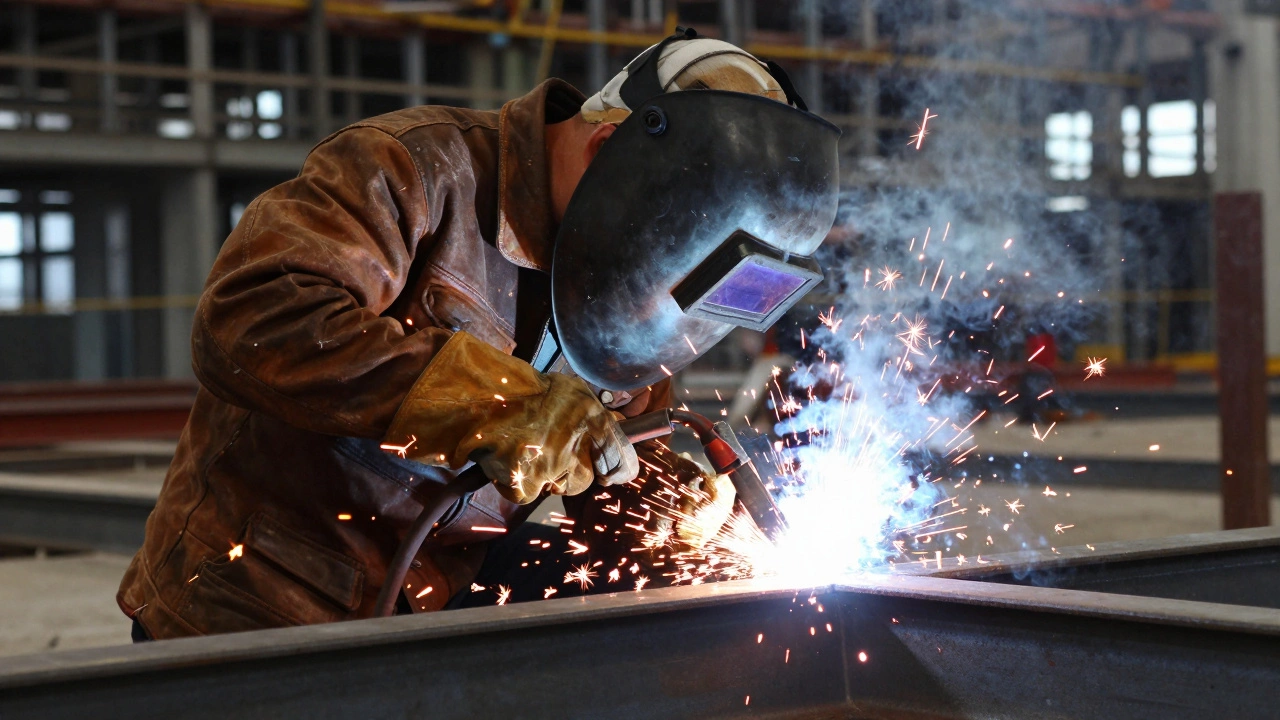
Welding is another contender. It looks simple from the outside, but getting a perfect weld requires steady hands and intense focus. Welder is a tradesperson who joins metal parts together using heat and pressure, often requiring certification in specific welding processes. You deal with extreme heat, bright light, and toxic fumes. The certification requires passing practical tests where your welds are inspected under X-ray or magnification. If there is a tiny crack, you fail. The physical toll includes back strain and eye damage risks if you don't follow safety protocols perfectly.
The Bureaucratic Hurdle: NCVT and ITI
In India, the path to certification is managed through the Industrial Training Institutes (ITI). These institutes offer courses under the NCVT framework. The difficulty here is not just the training, but the process itself. Seats in government ITIs are limited. You often have to compete for admission based on your Class 10 marks. Once you are in, the attendance requirements are strict. Missing too many days can disqualify you from the final exam.
The All India Trade Test (AITT) is the final gatekeeper. It is conducted nationwide, and the standards are uniform. This means you cannot cheat the system by finding an easier local board. The pass percentage varies by trade, but for the harder trades, it can be low. Many students complete the course but fail the external exam. This forces them to wait months or years for the next attempt. That waiting period adds to the difficulty of entering the workforce.
Furthermore, some trades require additional licenses beyond the ITI certificate. For example, working with high-pressure boilers or specific types of electrical installations might need state-level clearances. You have to navigate different government departments. This administrative burden can discourage people who are not organized or patient. It adds a layer of complexity that goes beyond technical skill.
Physical vs. Technical Demands
Some trades are hard because of the body. Others are hard because of the brain. Most difficult trades require both. If you choose a path that ignores your physical limits, you will burn out quickly. For instance, plumbing requires lifting heavy pipes and working in awkward positions. Your back and knees take a beating. If you have pre-existing injuries, this trade might be impossible to sustain long-term.
On the technical side, automation is changing the game. Modern manufacturing trades require you to program robots and understand sensors. A traditional machinist might struggle if they don't learn Computer Numerical Control (CNC). The learning curve is steep because you are constantly updating your skills. You cannot just learn once and retire. You must keep studying new software and machinery.
Safety is also a major factor in difficulty. High-risk trades have strict safety protocols. You must memorize and follow them every single day. One lapse can be fatal. This mental load of constant vigilance is exhausting. You cannot zone out on the job. This level of focus is required for trades like scaffolding or crane operation. It makes the work mentally taxing even if the physical movement is repetitive.
Comparison of Trade Difficulty
To help you visualize the differences, we can compare key factors across the top trades. This table highlights where the friction points lie for each profession.
| Trade | Training Duration | Physical Demand | Exam Difficulty | Certification Body |
|---|---|---|---|---|
| Elevator Mechanic | 4-5 Years | Very High | Very High | NCVT / Private |
| Industrial Electrician | 2 Years | High | High | NCVT / NCVT |
| HVAC Technician | 1-2 Years | High | Medium | ITI / Private |
| Welder | 1 Year | Medium | High | NCVT / AWS |
| Plumber | 1-2 Years | High | Medium | ITI |
Notice how the Elevator Mechanic stands out. It takes the longest to train and has the highest exam difficulty. This correlates with the higher pay and lower supply of workers. If you are looking for the hardest trade to get into, this is usually the answer. However, if you are looking for a balance between difficulty and speed of entry, HVAC or Welding might be better options.
The table also shows that physical demand is high across the board. There is no desk job in these trades. You need to be prepared for manual labor. The certification body column shows that while ITI is common, some trades like Welding have international standards like AWS (American Welding Society) that add extra layers of validation.
Preparation Strategies for Difficult Trades
If you decide to pursue one of these challenging paths, preparation is key. You cannot walk in unprepared. Start by building your physical fitness. Strengthen your back and core. This will help you handle the tools and the long hours. Many students fail not because they are not smart, but because they get injured during training.
Brush up on your math and physics. You don't need a degree, but you need to understand basic algebra and geometry. This helps with measurements and calculations. If you struggle with numbers, take a refresher course before starting the trade. It will save you time during the theory classes.
Research the specific ITI near you. Some institutes have better tools and more experienced instructors. A good teacher can make the difference between passing and failing. Visit the campus if you can. Talk to current students. Ask them about the pass rates and the workload. This insider information is valuable.
Consider the apprenticeship phase carefully. This is where you learn on the job. You need to find a mentor who is willing to teach you. Not all employers are good teachers. Look for companies that have a reputation for training. They might pay less initially, but you will learn faster. This investment pays off when you get certified.
Finally, be ready for the mental challenge. The exams are stressful. Practice time management. Don't leave studying for the last month. Start reviewing your notes weekly. Consistency beats cramming. If you treat the training like a serious career, you will succeed. If you treat it as a backup plan, you will likely struggle to finish.
Next Steps and Troubleshooting
If you are unsure which path to take, start with a general trade course. ITI offers a basic level that allows you to explore different skills. You can switch specializations later if you find one too hard. Do not commit to a four-year program without trying the basics first.
What if you fail the exam? Don't panic. You can retake the AITT. Use the time to identify your weak areas. Did you fail the practical or the theory? Focus your study on that specific section. Many successful technicians failed their first attempt. Persistence is a skill in itself.
If you find the physical work too tough, consider moving into a supervisory role. Once you are certified, you can work as a site manager or inspector. These roles require less manual labor but still use your technical knowledge. It is a way to stay in the industry without the physical strain.
For those interested in the highest difficulty trades, look for specialized private institutes. They might offer more advanced training than government ITIs. This can give you an edge in the job market. However, ensure the institute is recognized by the government so your certificate is valid.
Is becoming an electrician harder than becoming a plumber?
Electrician training often involves more complex theory regarding electricity and safety codes. Plumbing is physically demanding but the theoretical exams are generally considered less complex than electrical engineering principles.
How long does it take to get certified in India?
Most ITI courses take 1 to 2 years. Specialized trades like Elevator Mechanic can take up to 4 years including apprenticeship. The total time depends on the trade and your ability to pass the exams.
Can I get a trade certificate without an ITI?
Yes, some private institutes offer NCVT-affiliated courses. However, government ITIs are the most recognized and often cheaper. Private certificates must be verified for industry acceptance.
What is the pass rate for NCVT exams?
Pass rates vary by trade and year. For difficult trades, it can be around 50-60%. For simpler trades, it can be higher. Consistent attendance and practical practice improve your chances significantly.
Do I need a degree to start a trade course?
No, most ITI courses require a Class 10 pass. Some advanced trades might ask for Class 12. A university degree is not necessary for entry into vocational training.
Leave a comments