
Fashion Career Pathway Planner
Assess Your Profile
Why This Fits You
Key Requirements for Success:
- Education Duration:
- Top Skill Focus:
- Essential Tools:
Quick Tip for 2026
Regardless of your chosen path, the article emphasizes that Digital Fluency (CAD/CLO 3D) and Sustainability Knowledge are non-negotiable skills for modern hiring managers.
You want to build clothes that people actually wear. Maybe you've been sketching designs in notebooks for years, or perhaps you're looking for a serious career shift. The big question remains the same regardless of your starting point: what does the industry actually require from you right now?
In 2026, the fashion landscape has shifted. While creativity remains the spark, technical competence drives the fire. Many aspiring designers think a good eye for style is enough, but hiring managers look at your ability to communicate ideas, understand materials, and work with digital tools.
Fashion Design Qualifications encompass much more than just artistic talent today. These include formal degrees, specialized certifications, practical skills, and a robust portfolio.Formal Education Paths
Most professionals start with structured learning. This doesn't always mean a four-year university stint, but it does mean you have studied the fundamentals rigorously. Let's break down the main routes available to you.
The most common path is the Bachelor of Fine Arts. In cities like Toronto, New York, and London, Bachelor of Fine Arts in Fashion DesignA four-year undergraduate degree focusing on holistic design theory, business, and production. covers everything from concept development to garment construction. You spend time in studios, testing fabrics, and learning how seams behave under stress.
If you are looking for something faster, many colleges offer diplomas. These programs usually run for two to three years. They focus less on art history and philosophy and more on getting you job-ready. You learn pattern drafting and sewing techniques much quicker than in a university setting. For someone who wants to skip the theory and jump straight into the machinery room, this is often the preferred choice.
- University Degrees: Better for long-term creative direction roles.
- College Diplomas: Ideal for technical design and manufacturing roles.
- Online Certificates: Good for specific skill upgrades like CAD or sustainable practices.
The Essential Skill Set
Degrees open doors, but skills keep you employed. The classroom teaches you the basics, but the shop floor demands specific abilities. Whether you learned through a degree or a certificate, you need to prove you can execute the vision.
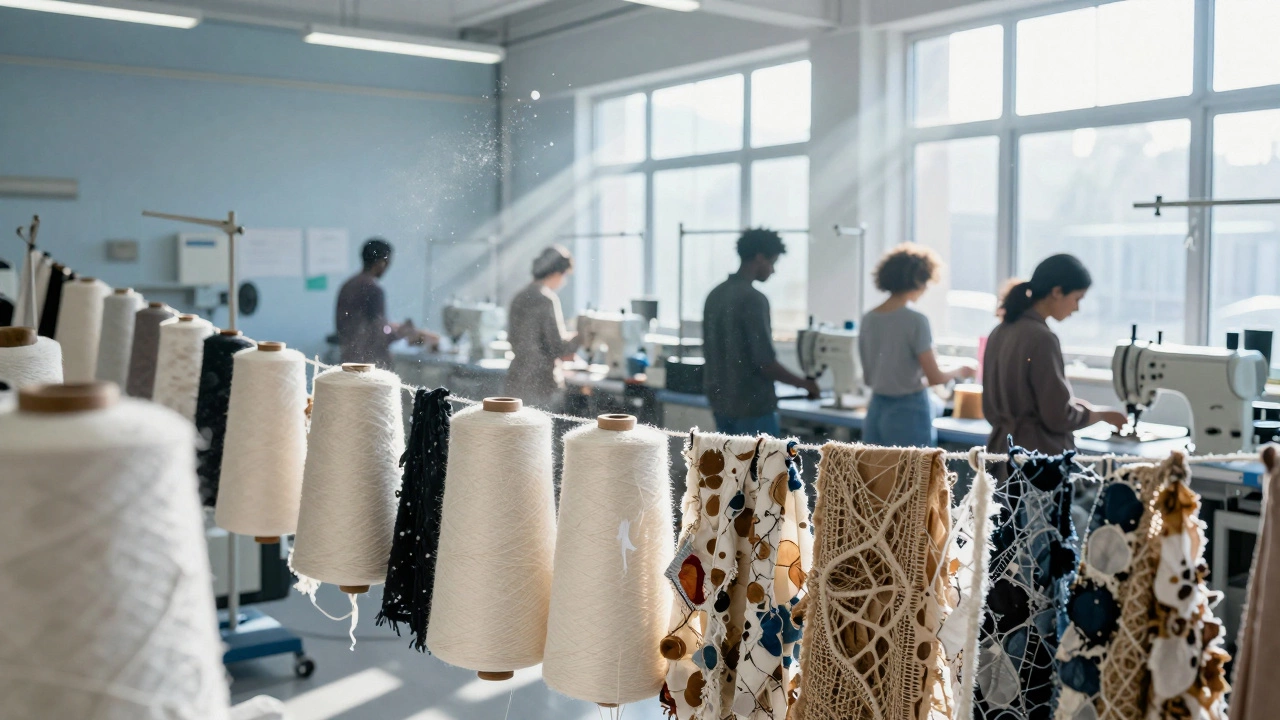
First, you need mastery over pattern making. This is the blueprint of clothing. If you cannot translate a 2D sketch into a 3D form that fits a human body, your designs stay on paper. You must understand how different fabrics drape and move. Wool behaves differently from silk, and synthetic blends react uniquely to heat.
Secondly, digital fluency is non-negotiable in 2026. The days of purely hand-drawn flats are gone for professional submissions. You likely need proficiency in Computer Aided Design (CAD)Software tools used for creating technical drawings, patterns, and 3D simulations of garments.. Tools like Adobe Illustrator are standard, but 3D visualization software like CLO 3D is becoming the baseline expectation for tech packs.
Thirdly, sustainability knowledge is no longer optional. Brands are legally required to report on their carbon footprint in many jurisdictions. Understanding Textile ScienceThe study of fibers, yarns, and fabrics including their mechanical properties and environmental impact. allows you to choose materials that meet regulations and consumer ethics. You need to know which dyes are compliant and which fibers support circular economy goals.
Building Your Portfolio
This is arguably the most critical piece of evidence. You can have the best degree in the world, but if your portfolio looks weak, you won't get hired. Think of this collection as your primary marketing tool. Recruiters might spend less than five minutes reviewing your application, so every image counts.
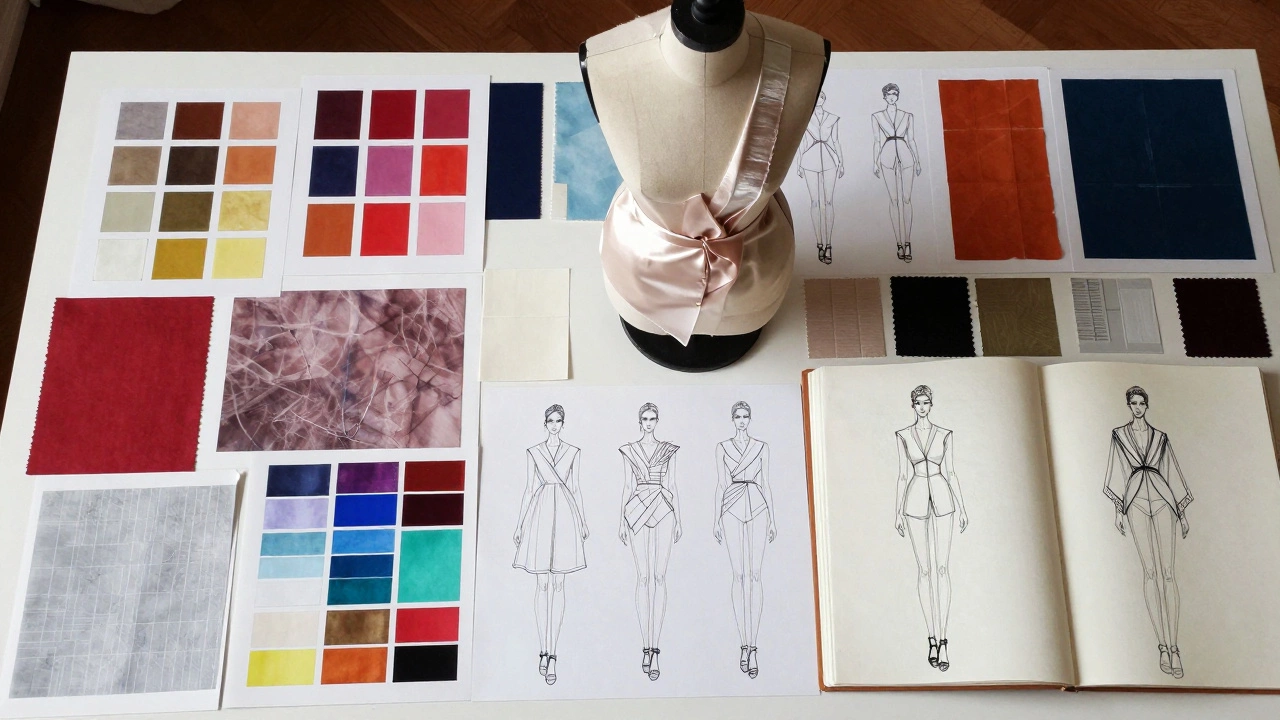
Your portfolio should show range. Don't just upload sketches of t-shirts. Include full collections that tell a story. Show the process: your mood board, the fabric swatches you selected, the flat sketches, and photos of the finished garment on a model. This demonstrates you can take an idea from conception to completion.
Include technical documentation too. Show that you understand construction. If you used 3D modeling software, include screenshots of the digital prototype alongside the physical sample. This proves you are ready to hit the ground running in a modern studio environment. Tailored portfolios stand out more because they target specific brands.
Alternative Routes Without a Degree
Not everyone wants to sit in lectures for four years. The industry still accepts diverse backgrounds, especially for those with a proven track record. Apprenticeships provide direct access to senior mentors. You might start in a cutting room or a sample department. Over time, you move up as you demonstrate reliability and skill.
Another route involves short intensive courses. Some institutes offer six-month boot camps focused purely on design execution. These are great if you already have experience in a related field, like graphic design or textile engineering, and want to pivot quickly.
| Path | Duration | Focus Area | Best For |
|---|---|---|---|
| BA/Fine Arts | 3-4 Years | Creative Theory | Brand Founders |
| College Diploma | 2 Years | Technical Skills | Design Technicians |
| Apprenticeship | Variable | Hands-on Production | Makers |
Soft Skills That Matter
It takes more than knowing how to sew buttonholes to survive in this business. Communication is vital because you will constantly collaborate with merchandisers, manufacturers, and retailers. You need to articulate why a cost-saving change won't ruin the quality of the product.
Time management is another hidden qualification. Deadlines in fashion are brutal. Missing a submission date for a trade show means losing potential revenue. Showing that you can handle pressure during your education or previous jobs sets you apart. Employers want to know you can deliver when the runway show is three days away and the samples haven't arrived yet.
Internships and Networking
Experience is often listed as a requirement even for entry-level positions. This creates a catch-22 situation for new graduates. The solution lies in strategic internships. Even unpaid ones can give you access to the right network. Try to find opportunities with firms that specialize in your niche.
Networking shouldn't feel transactional. Join student chapters of organizations like the Business of Fashion. Attend industry mixers in places like Downtown Toronto or SoHo. Connect with peers who are just as hungry for opportunities as you are. Often, the next job opening comes from a recommendation rather than a cold application portal.
Certifications and Continuous Learning
Education doesn't stop after you graduate. The supply chain changes rapidly, and regulations evolve. Keeping your Professional CertificationOfficial recognition of skills obtained through accredited training programs or industry examinations. updated shows commitment. Look for certificates in sustainable sourcing or ethical manufacturing.
Some designers pursue additional qualifications in branding or digital marketing later in their careers. Since the boundary between designer and marketer blurs, these extra credentials allow for upward mobility into leadership positions.
Do I really need a university degree to be a fashion designer?
While a degree is not strictly mandatory, it provides structured access to resources, networking, and credibility. Many top houses prefer candidates with a BFA, though self-taught designers with exceptional portfolios can succeed.
What computer software skills are essential in 2026?
You should master Adobe Illustrator for 2D graphics. Additionally, 3D prototyping tools like CLO 3D or Style3D are becoming standard requirements for tech packs and virtual sampling.
Is a portfolio more important than grades?
Yes. Grades prove you showed up, but a portfolio proves you can do the work. A stunning portfolio can override average academic performance, whereas good grades cannot compensate for poor design samples.
Can I learn fashion design online effectively?
Online learning works well for theory and CAD skills. However, for sewing and pattern making, in-person hands-on training is highly recommended to develop muscle memory and tactile understanding of fabrics.
What kind of math is involved in fashion design?
You need geometry for pattern drafting and trigonometry for angles in cuts. Basic arithmetic is required for calculating yardage, costs, and budgeting materials efficiently.
Leave a comments