
Fashion Design Course Subject Checker
Use this tool to check if a fashion design program covers the essential subjects you need to learn for a successful career. We've identified 9 core subjects based on industry standards. A good program should cover at least 6 of these subjects.
Core Subjects Checklist
Understanding fabric behavior, composition, and performance
Learning how cultural movements shaped clothing designs over time
Translating designs into wearable garments through technical drafting
Learning how clothes are actually stitched together
Understanding color psychology and creating cohesive collections
Using industry-standard digital tools for tech packs and 3D prototyping
Connecting design to business, retail, and sales strategies
Understanding body proportions and creating inclusive designs
Building a professional portfolio that showcases your design process
Want to become a fashion designer but not sure where to start? You can’t just sketch clothes and call it a career. A solid fashion designing course builds your skills on a foundation of real subjects - not just creativity, but science, history, business, and tech. If you’re thinking about enrolling, here’s exactly what you’ll need to study, and why each part matters.
Textile Science: The Fabric of Your Career
You might think fashion is about colors and cuts, but without understanding fabric, you’re building a house on sand. Textile science teaches you how fibers are made, how they behave under stress, how they react to heat and washing, and how they drape on the body. You’ll learn the difference between cotton grown in Egypt versus India, why silk from Mulberry worms costs more than synthetic satin, and how a 60/40 polyester-cotton blend affects breathability. This isn’t theory - it’s what stops your dress from shrinking in the wash or your jacket from pilling after three wears. Top fashion schools require lab work where you test fabric tensile strength, colorfastness, and shrinkage rates. Skip this, and you’ll end up designing clothes that look great on a mannequin but fall apart on a real person.
Fashion History and Theory: Know Where You’re Coming From
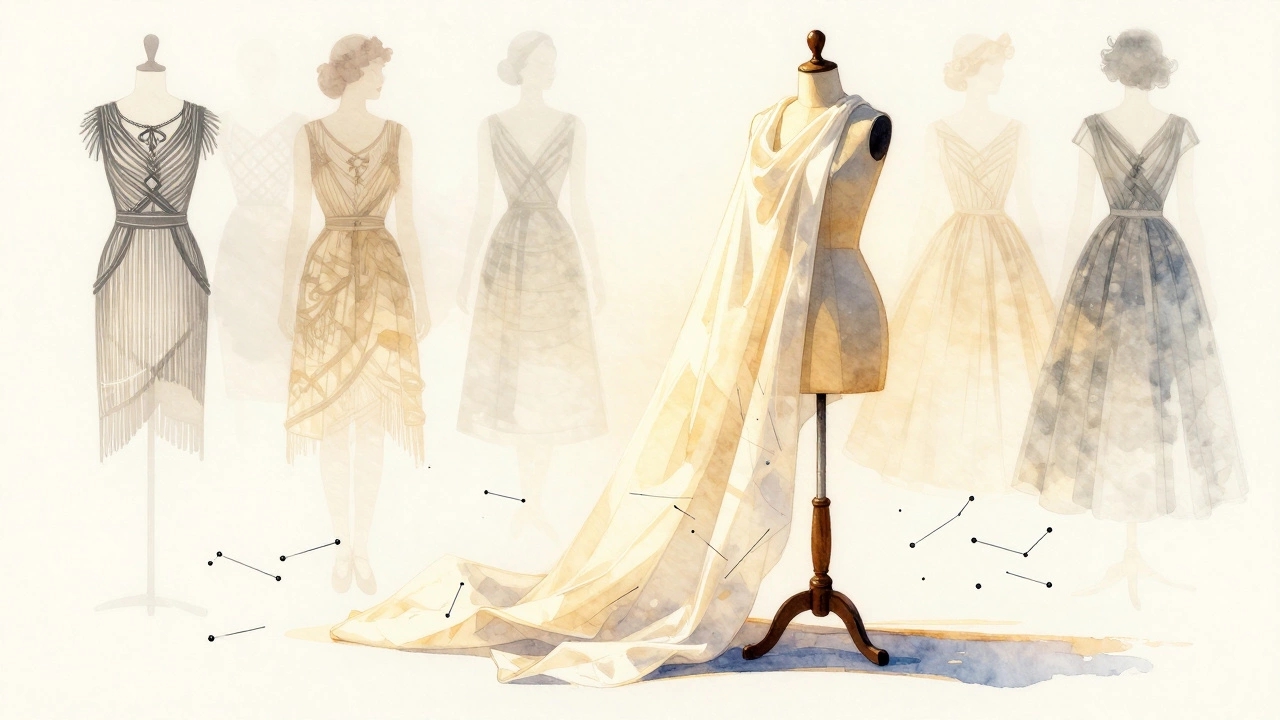
Designing isn’t about inventing something totally new. It’s about reinterpreting what already existed. A good designer knows that the 1920s flapper dress influenced 1990s slip dresses, and that Dior’s 1947 "New Look" still echoes in today’s cinched-waist coats. You’ll study movements like Art Deco, Punk, and Y2K, not for trivia, but to understand how culture, politics, and technology shaped clothing. In class, you’ll analyze how the rise of denim in the 1950s tied to American youth rebellion - and how that same fabric became luxury wear by the 2020s. This knowledge helps you avoid copying and instead create work that’s informed, not derivative. You’ll also learn how body ideals changed over time - from corsets to body positivity - and how those shifts affect pattern drafting today.
Pattern Making and Draping: Turning Ideas into Reality
This is where sketches become garments. Pattern making is the math behind clothing. You’ll learn how to take body measurements and translate them into flat paper patterns - calculating ease, seam allowances, dart placement, and grainlines. Draping is the art of shaping fabric directly on a mannequin to create a silhouette. You’ll use muslin, pins, and rulers to sculpt a dress or suit from scratch. Many beginners think this is just for tailors, but every designer needs to understand it. If you can’t make a pattern that fits a size 8 and a size 14, you’re not designing for real customers. Schools use industry-standard software like Gerber Accumark and Adobe Illustrator for digital pattern drafting. Master this, and you can fix a flawed design before it goes into production.
Garment Construction: Sewing Isn’t Optional
You don’t need to be a sewing machine expert from day one, but you must learn how clothes are stitched together. This includes hand-sewing techniques, machine stitching, hemming, zippers, buttonholes, linings, and interfacing. You’ll build at least 10 garments from scratch - a blouse, a skirt, a tailored jacket, a pair of pants. Each project teaches you something new: how to handle slippery silk, how to stabilize a collar, why you can’t sew knits like wovens. Many students skip this because they think they’ll outsource sewing, but if you don’t understand construction, you won’t know what’s possible - or impossible - to design. You’ll also learn how factories actually make clothes, so you can design for scalability, not just aesthetics.
Color Theory and Print Design
Color isn’t just about what looks pretty. It’s about psychology, seasonality, and market demand. You’ll study the color wheel, complementary contrasts, and how warm vs. cool tones affect perception. In fashion, a "spring collection" uses different hues than a "winter collection" - not because of weather, but because of consumer mood. You’ll also learn how to create prints: repeating patterns, digital printing, screen printing, and how to match motifs to fabric types. A floral print on chiffon reads differently than the same floral on denim. You’ll work with Pantone swatches and digital color systems used by brands like Zara and H&M. This subject teaches you how to create cohesive collections, not just random outfits.
Computer-Aided Design (CAD) and Digital Tools
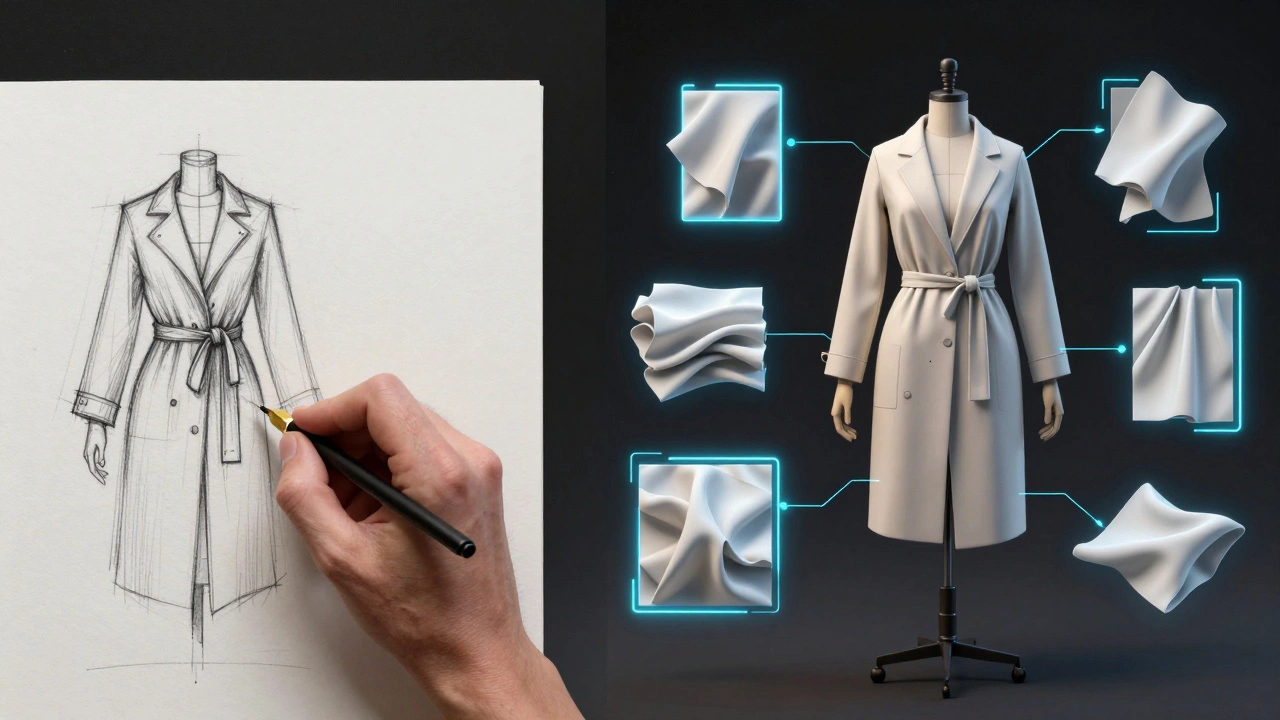
Today’s fashion industry runs on software. You’ll use Adobe Photoshop and Illustrator to create tech packs - the detailed instruction manuals factories use to produce your designs. Tech packs include measurements, stitch types, fabric codes, and even where to place a logo. You’ll also learn to use 3D design tools like CLO3D, which lets you simulate how a garment moves on a digital model. This cuts down on physical samples, saves money, and speeds up production. Brands like Balenciaga and Nike use 3D prototyping to test designs before cutting fabric. If you don’t know how to use these tools, you’re stuck in the 1990s.
Merchandising and Fashion Marketing
Even the most beautiful design fails if no one buys it. You’ll study how fashion seasons work, how retailers plan inventory, and how pricing is set based on cost, brand value, and competition. You’ll learn to read sales data, understand target demographics, and create mood boards for campaigns. This isn’t marketing fluff - it’s survival. A designer who doesn’t understand retail won’t last long. You’ll also explore sustainable fashion models, fast fashion impacts, and how brands like Patagonia and Eileen Fisher built loyalty through transparency. Knowing how to position your collection makes the difference between a student project and a sellable line.
Human Anatomy and Fit
Fashion isn’t one-size-fits-all. You’ll study human body proportions - shoulder-to-waist ratios, hip-to-thigh differences, how posture affects fit, and how weight distribution changes across ages and ethnicities. You’ll learn why a pattern that fits a Canadian woman might not fit a woman from India or Brazil. This subject teaches you how to draft for diverse body types, not just the "standard" size. You’ll work with fit models of different heights, weights, and shapes. Brands that ignore this lose customers. The most successful designers today are the ones who design for real bodies, not just runway ideals.
Professional Portfolio Development
By the end of your course, you need a portfolio that shows more than pretty sketches. It needs to show process: research, fabric tests, pattern drafts, sample garments, photos, and even feedback from clients. You’ll learn how to photograph your work, write design statements, and organize your portfolio for internships or job applications. Employers don’t just look at the final look - they want to see your thinking. A strong portfolio can open doors even if you have no work experience.
What You Don’t Need to Study
Some courses try to cram in unrelated topics. You don’t need advanced calculus. You don’t need to study electrical engineering. You don’t need to become a marketer overnight. Stick to the core subjects above. If a school promises "fashion design in 3 months" without hands-on sewing, pattern making, or textile labs - walk away. Real fashion education takes time. Most accredited diploma programs last 18 to 24 months for good reason.
| Subject | Why It Matters | Real-World Application |
|---|---|---|
| Textile Science | Knowing how fabrics behave prevents costly production mistakes | Choosing the right blend for activewear that wicks sweat |
| Fashion History | Designs are inspired by past trends - not created from nothing | Reviving 1970s flared pants for modern streetwear |
| Pattern Making | Turns sketches into wearable garments | Creating a size-inclusive pattern for a new collection |
| Garment Construction | Teaches how clothes are actually made | Fixing a seam that keeps ripping under stress |
| Color Theory | Ensures collections have visual harmony | Matching seasonal palettes for a brand’s spring line |
| CAD & Digital Tools | Required by modern fashion houses | Creating a tech pack for a factory in Bangladesh |
| Merchandising | Connects design to sales | Pricing a jacket to compete with Zara while keeping profit |
| Human Anatomy | Designs fit real people, not just models | Adapting a dress pattern for pregnant customers |
Where to Start
If you’re just beginning, look for a diploma program that includes at least six of these subjects. Avoid schools that only teach sketching or Photoshop. Ask to see student portfolios - do they show finished garments? Fabric tests? Pattern drafts? If not, the program isn’t preparing you for real work. In Toronto, schools like George Brown College and Ryerson University offer accredited fashion design diplomas with industry partnerships. You can also find online programs from institutions like the Fashion Institute of Technology (FIT) in New York, which offer flexible schedules for working students.
Can I become a fashion designer without a degree?
Yes, but it’s harder. Many successful designers started without formal education - but they spent years apprenticing, building portfolios, and learning on their own. Without structured training, you’ll miss critical skills like pattern making, textile science, and garment construction. Most employers and buyers expect a diploma or certificate. If you’re self-taught, your portfolio must be exceptional - and you’ll need to prove you understand production, not just aesthetics.
How long does a fashion designing course take?
Most accredited diploma programs take 18 to 24 months. Shorter courses (3-6 months) usually only cover sketching or basic sewing. They’re good for beginners to test interest, but they won’t prepare you for a career. A full program includes internships, portfolio development, and hands-on work with real fabrics and machinery.
Do I need to be good at drawing?
You don’t need to be an artist. Most fashion schools teach technical drawing - how to show proportions, seams, and details clearly. You’ll use digital tools to refine designs. What matters more is your ability to communicate ideas visually, not your sketching style. Many top designers use mood boards, fabric swatches, and 3D mockups instead of hand-drawn sketches.
What’s the difference between fashion design and fashion merchandising?
Fashion design is about creating garments - the look, feel, and construction. Fashion merchandising is about selling them - pricing, inventory, marketing, and retail strategy. Some programs combine both, but they’re different careers. If you love making clothes, choose design. If you love organizing sales, trends, and store layouts, go for merchandising.
Is sustainability taught in fashion courses?
Yes, and it’s required. Modern programs include modules on eco-friendly fabrics, zero-waste pattern cutting, ethical labor practices, and circular fashion. Brands now demand designers who can reduce waste and source responsibly. Ignoring sustainability means you’re learning outdated methods.
Next Steps
Start by visiting local schools and asking to see their curriculum. Look for programs that include fabric labs, sewing machines, and industry guest speakers. Don’t just pick the cheapest option - cheap courses often skip the technical skills you’ll need to get hired. Build your skills step by step: learn textiles, then pattern making, then sewing, then CAD. Each step builds on the last. The fashion industry doesn’t reward talent alone - it rewards those who understand the whole system.
Leave a comments