When you’re serious about trading in India, the city you choose can make all the difference. It’s not just about where the markets are open-it’s about where the learning happens, the mentors are, the networks form, and the real-world experience sticks. Some cities buzz with trader energy. Others feel like quiet backwaters, even if they’re technically on the map. So which city actually gives you the best shot at becoming a skilled, confident trader?
Mumbai: The Undisputed Hub
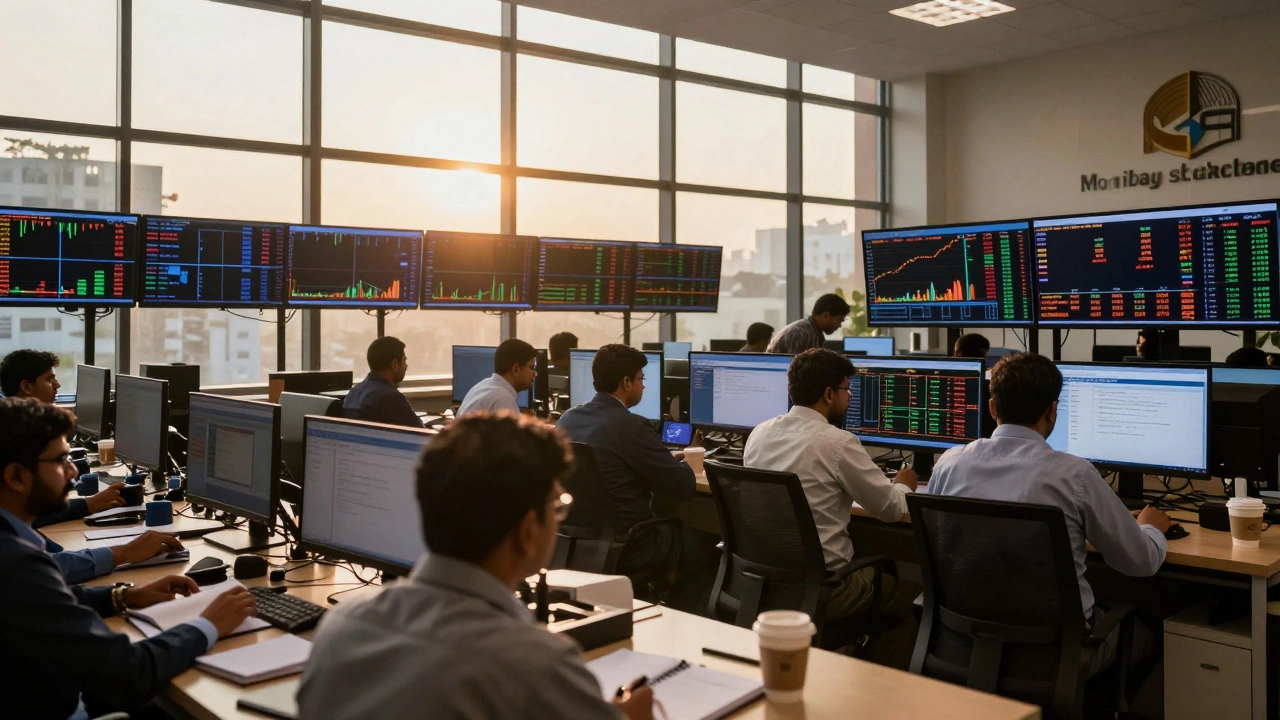
Mumbai isn’t just India’s financial capital-it’s the beating heart of its trading scene. Over 70% of India’s stock trading volume flows through the Bombay Stock Exchange (BSE) and National Stock Exchange (NSE), both headquartered here. If you want to learn trading, this is where the pros train, where internships at hedge funds and brokerages are easiest to land, and where you’ll find the densest concentration of trading academies.
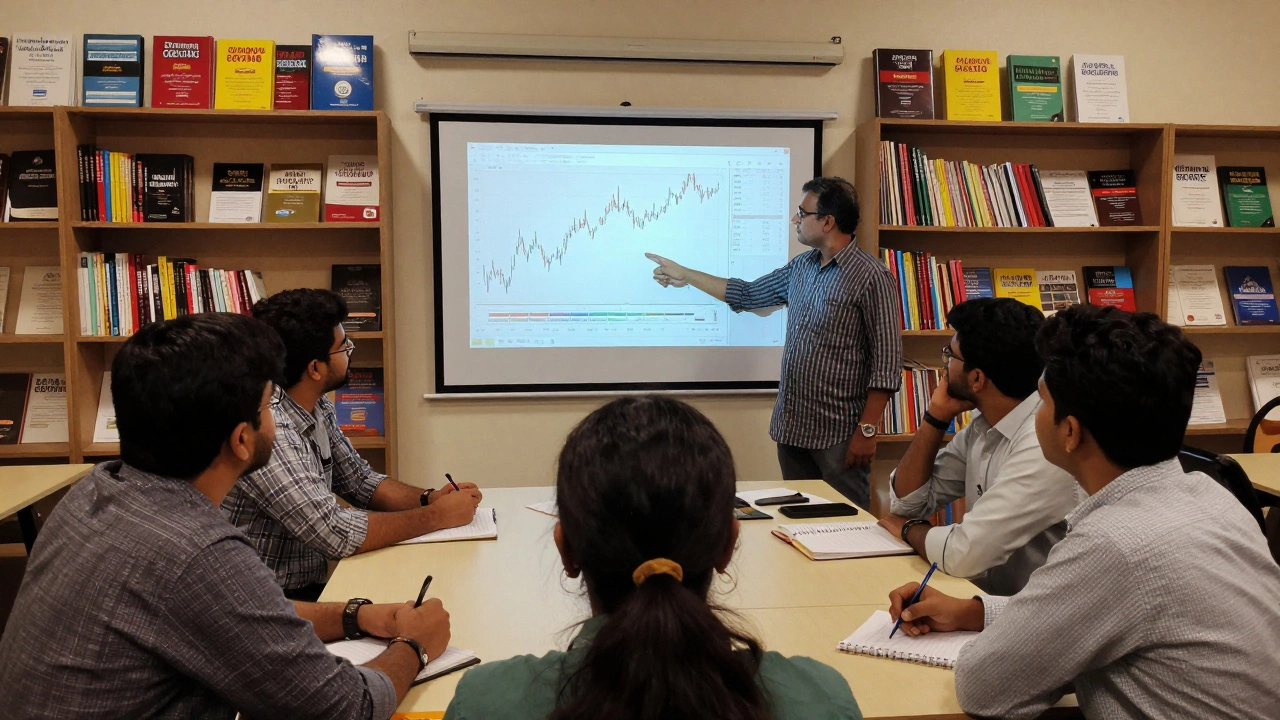
Places like Indian Institute of Financial Markets a leading institution offering certified trading programs in derivatives, algorithmic trading, and technical analysis and NSE Academy the official training arm of the National Stock Exchange, offering structured courses recognized by SEBI are based here. You can walk into a café near Bandra and overhear someone discussing RSI divergence or candlestick patterns. That kind of immersion? It’s priceless.
But it’s not just about courses. Mumbai’s ecosystem includes weekly trader meetups, live market analysis sessions at brokerage offices, and access to real-time data feeds from firms like Bloomberg and Reuters. If you’re serious, being here means you’re not just learning theory-you’re surrounded by the rhythm of the market.
Bangalore: The Tech-Driven Edge
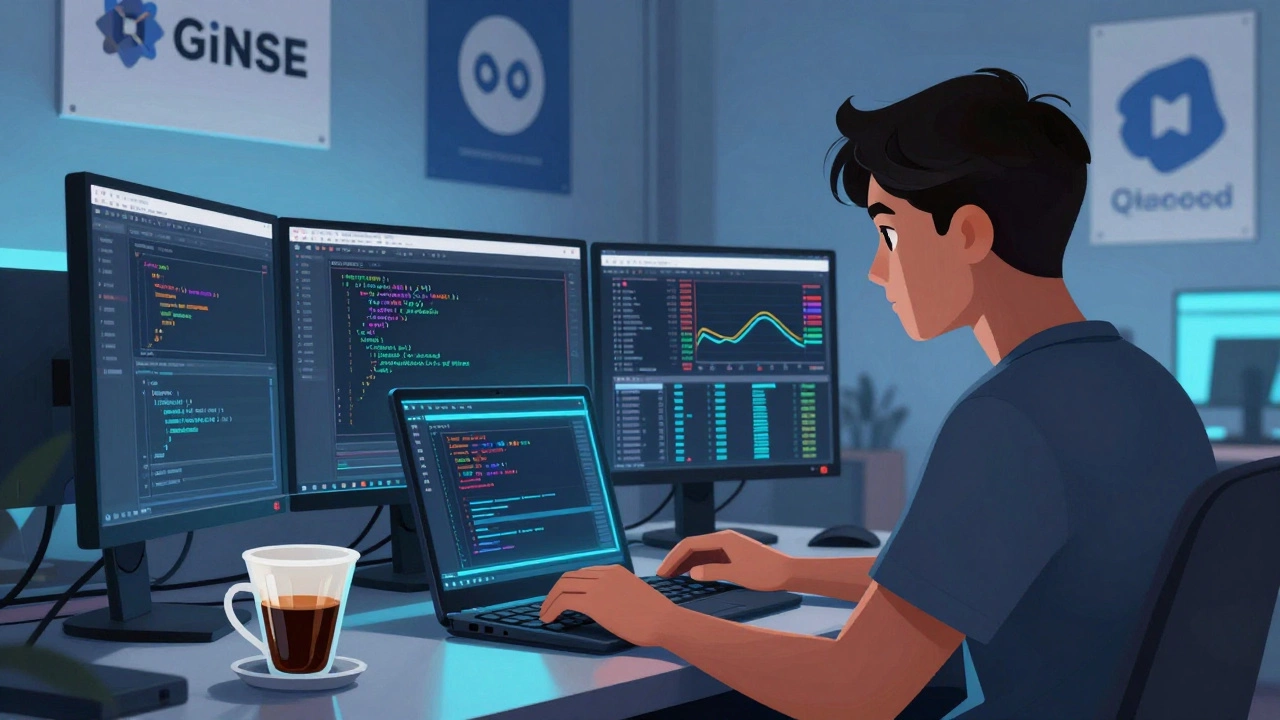
If you’re more into algorithms, automation, and data-driven trading, Bangalore is your playground. Known as India’s Silicon Valley, this city has become a hotspot for quantitative trading and algo strategies. Many young traders here start by coding their own bots using Python, backtesting on historical NSE data, and deploying strategies through platforms like Zerodha’s Kite API or Upstox’s developer tools.
Several Python for Trading workshops and bootcamps focused on building trading algorithms using pandas, NumPy, and backtrader libraries are offered by local co-working spaces and fintech startups. Companies like AlgoTraders India a Bangalore-based firm offering mentorship in automated trading systems and risk modeling regularly host open sessions for beginners.
The city also has a strong culture of peer learning. Discord groups, Reddit threads, and Telegram channels for Indian algo traders are mostly run out of Bangalore. You’ll find people sharing code snippets, discussing backtest results, and even collaborating on open-source trading tools. If you’re the type who prefers building over listening, this is where you’ll thrive.
Delhi-NCR: The Accessible Alternative
Delhi and its surrounding areas (Gurgaon, Noida, Faridabad) offer a balanced mix of accessibility and opportunity. It’s not as intense as Mumbai, but it’s far more connected than most Tier-2 cities. Many regional branches of top trading institutes have opened here because of the large student population and growing middle-class interest in investing.
You’ll find certified courses from NSE Academy offering online and in-person modules on equity, commodity, and currency trading and Indian Institute of Technical Education a recognized provider of diploma-level trading programs with live market simulations. These programs are often more affordable than Mumbai’s, and many offer weekend batches for working professionals.
Delhi-NCR also has strong ties to government financial institutions and SEBI-registered advisory firms. That means more chances to attend free investor seminars, regulatory workshops, and guest lectures from ex-bankers and fund managers. If you’re balancing a job or family while learning to trade, this region gives you structure without the chaos of Mumbai.
Hyderabad and Pune: Rising Contenders
Hyderabad and Pune are two cities that used to fly under the radar-but not anymore. Both have seen a surge in fintech startups and trading education centers over the last three years. Hyderabad’s HITEC City hosts several fintech incubators, and Pune’s proximity to Mumbai makes it a smart second home for traders who want lower living costs.
In Pune, Pune Stock Traders Association a community-driven group offering weekly market reviews, chart analysis workshops, and mentorship from experienced retail traders has grown to over 1,200 active members. Hyderabad’s Hyderabad Institute of Financial Markets a newer but rapidly expanding institution offering certified courses in technical analysis and options trading has partnered with Zerodha to provide free demo accounts to students.
These cities don’t have the scale of Mumbai or the tech vibe of Bangalore-but they offer something just as valuable: lower pressure, fewer distractions, and a tight-knit community of learners. If you’re introverted, budget-conscious, or just want to learn without the noise, these places are quietly becoming top choices.
What You Should Actually Look For
Here’s the truth: no city will make you a good trader. Only practice will. But the right city can accelerate your learning curve dramatically. So what should you prioritize?
- Access to live market sessions-Can you watch real-time trading analysis with mentors?
- Course accreditation-Is the program recognized by SEBI or linked to NSE/BSE?
- Peer network-Are there active trader groups, Discord servers, or meetups?
- Cost of living-Can you afford to focus for 6-12 months without a full-time job?
- Technology support-Do local institutes offer API access, backtesting tools, or paper trading accounts?
If you’re starting from scratch and can relocate, Mumbai still gives you the most advantages. But if you’re already in Delhi or Pune, don’t wait. The tools are available everywhere now-online courses, free webinars, YouTube tutorials from top Indian traders. The biggest barrier isn’t location. It’s consistency.
Real Stories, Not Just Stats
One trader I know moved from Jaipur to Mumbai just to join a 6-month trading diploma. He slept in a shared apartment, ate instant noodles, and spent 10 hours a day analyzing charts. Six months later, he started trading his own capital-and made his first profit in November. He didn’t get rich. But he got confident.
Another trader in Bangalore coded a simple moving average crossover bot. He tested it on 10 years of NSE data. It worked 68% of the time on intraday trades. He started with ₹5,000. Within a year, he was consistently making ₹20,000-₹30,000/month. He never went to a classroom. He learned from GitHub, YouTube, and Reddit.
Location helps. But your discipline? That’s what matters.
Is it necessary to move to Mumbai to become a successful trader in India?
No, it’s not necessary. While Mumbai offers the densest network of training centers, mentors, and market activity, many successful traders have built their skills remotely. With access to online courses from NSE Academy, Zerodha Varsity, and YouTube channels like "The Financial Express," you can learn the same material from anywhere. The key is consistent practice, not geography. That said, if you can relocate, Mumbai gives you faster access to real-time feedback and peer learning.
Which city has the best trading courses for beginners?
For beginners, Mumbai and Delhi-NCR lead in structured, certified programs. NSE Academy and the Indian Institute of Financial Markets offer beginner-friendly modules that cover basics like candlestick patterns, support/resistance, and risk management. These courses are SEBI-recognized and include live simulations. Bangalore is better for those already familiar with basics who want to dive into algorithmic trading. Hyderabad and Pune have emerging options with smaller class sizes and lower fees.
Are online trading courses as good as in-person ones?
Yes, for most beginners, online courses are just as effective-sometimes better. Platforms like Zerodha Varsity offer free, comprehensive modules with quizzes and real chart examples. In-person courses add value only if they include live market analysis, mentor Q&A, or peer group trading sessions. If the in-person class is just lectures with slides, you’re better off with a well-structured online course and a demo trading account.
Can I start trading while working a full-time job?
Absolutely. Many successful retail traders in India trade part-time-focusing on swing trading or end-of-day strategies. You don’t need to watch the market all day. Learning technical analysis, setting alerts, and reviewing your trades weekly can fit into a 10-hour-per-week schedule. Cities like Delhi-NCR and Pune are ideal for this because of flexible course timings and strong online support communities.
What’s the minimum investment needed to start trading in India?
You can start with as little as ₹500-₹1,000. Most discount brokers like Zerodha, Upstox, and Groww allow you to open a trading account with zero minimum balance. The real cost isn’t the account-it’s the learning. Invest in a good course first. Many offer ₹1,500-₹5,000 programs that teach you how to avoid losing money. That’s far more valuable than risking your savings without a strategy.
Final Thought: It’s Not About the City-It’s About the Routine
The best city for trading in India is the one where you’ll show up every day. Whether that’s a Mumbai café, a Bangalore co-working space, or your own bedroom in Lucknow, what matters is the habit. Open your trading journal. Review your trades. Study one chart every morning. Talk to one other trader every week. That’s how you build skill-not by moving to a fancy city, but by showing up, again and again.
Leave a comments