
Women in Trades Calculator
Women in Trades Calculator
Calculate historical percentages of women in vocational training across different regions and time periods
Results
Note: This is an estimation based on historical data. Actual percentages may vary.
For most of history, women weren’t allowed to learn trades. If you wanted to be a carpenter, electrician, or mechanic, you were expected to be a man. But that changed - not because of a single law, but because of quiet, stubborn women and the allies who backed them. Who actually pushed for vocational education for women? It wasn’t one person. It was a movement built by teachers, activists, factory owners, and even politicians who saw something others ignored: women could do skilled work, and the economy needed them to.
Clara Zetkin and the Early Push for Women’s Work Skills
One of the earliest voices came from Germany. Clara Zetkin, a socialist and women’s rights activist, didn’t just fight for the vote - she fought for the right to learn a trade. In the 1890s, she wrote that women shouldn’t be stuck in low-paying domestic jobs when they had the same capacity for technical work as men. She pushed the German Social Democratic Party to include vocational training for women in their platform. Her argument was simple: economic independence meant real freedom. By 1900, Germany had started state-supported vocational schools for women in sewing, typing, and later, machine operation.
The U.S. Morrill Act and the Hidden Role of Women
The Morrill Act of 1862 gave land to states to build colleges focused on agriculture and mechanical arts. At first, it was meant for men. But women didn’t wait for permission. In the 1870s, women’s groups in Massachusetts, Ohio, and Iowa lobbied state legislatures to let them enroll in these new land-grant schools. By 1890, nearly 20% of students in agricultural extension programs were women. They weren’t just learning to grow crops - they were learning to run farm machinery, manage livestock, and design irrigation systems. These weren’t "home economics" classes. These were hands-on technical training.
During the World Wars, Women Took Over the Factories
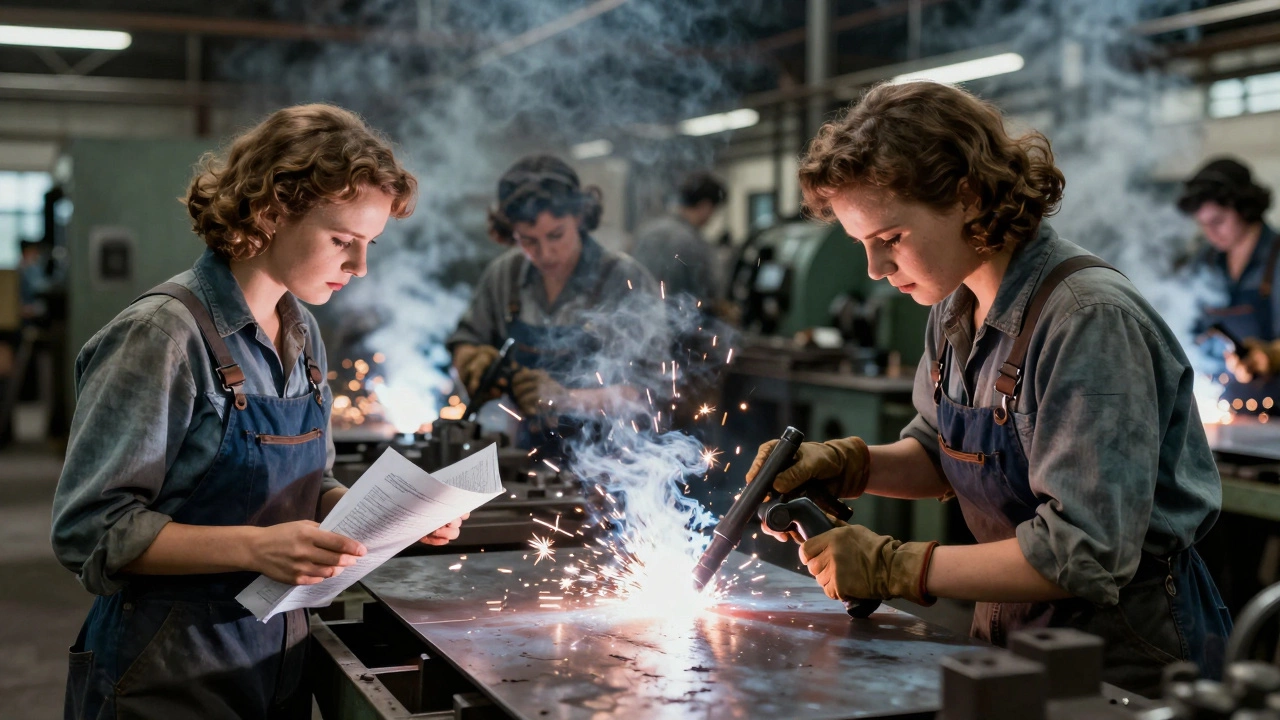
When men went off to fight in World War I and II, factories needed workers. Women stepped in - by the millions. In the U.S., over 6 million women worked in defense plants. In Britain, women built planes, fixed tanks, and operated heavy machinery. The government didn’t train them out of kindness. They did it because they had no choice. The War Manpower Commission in the U.S. launched vocational programs to train women as welders, riveters, and radio technicians. By 1943, the U.S. had trained over 250,000 women in industrial skills. After the war, many were told to go home. But they didn’t forget how to weld. Or how to read blueprints. Or how to lead a team.
Norma Rae and the Union Movement That Backed Women
Union leaders played a bigger role than most people realize. In the 1950s and 60s, labor unions like the United Auto Workers and the International Ladies’ Garment Workers’ Union started offering apprenticeships to women. They didn’t do it because it was popular. They did it because they needed skilled workers. Unions knew that training women meant a stronger workforce and more dues-paying members. In 1973, the UAW created one of the first formal apprenticeship programs for women in auto manufacturing. By 1980, over 12,000 women had completed it. These weren’t token hires. These were women who passed the same tests as men, worked the same hours, and earned the same pay.
Canada’s Quiet Revolution in Skilled Trades
Canada didn’t make headlines like the U.S. or Germany, but it quietly built one of the most inclusive vocational systems. In the 1970s, Ontario launched the Women in Skilled Trades Program. It offered paid apprenticeships, childcare support, and mentorship. By 1985, over 1,200 women were in apprenticeships in plumbing, electrical work, and sheet metal. The program didn’t just train women - it changed how employers saw them. A 1987 survey by the Canadian Labour Congress found that 78% of employers who hired women through the program said they performed as well as or better than male apprentices.
The Role of Teachers and Community Colleges
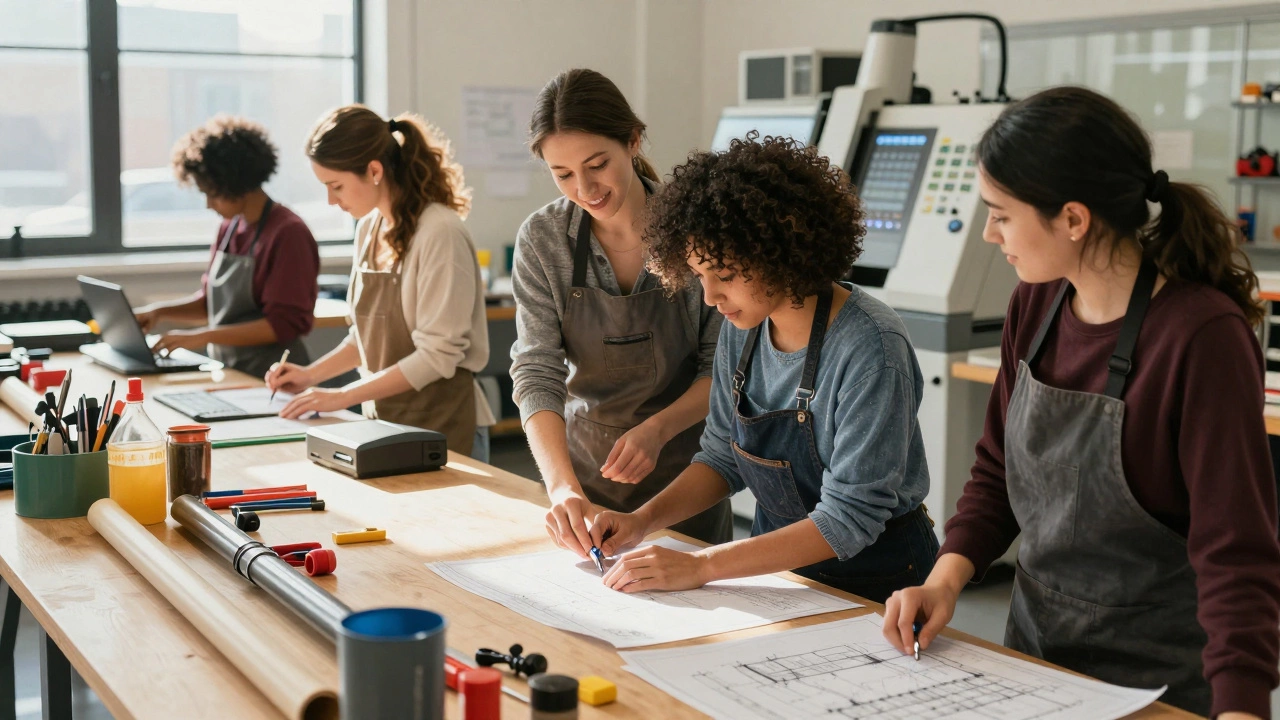
Behind every woman who became a welder or a network technician was a teacher who believed in her. Community colleges became the hidden engines of change. In the 1980s, when four-year universities focused on white-collar degrees, community colleges offered short, affordable, hands-on training. In places like Detroit, Chicago, and Toronto, instructors in vocational schools started reaching out to single mothers, immigrant women, and women leaving abusive homes. They didn’t wait for policy changes. They just opened the doors. One instructor in Vancouver told a reporter in 1992: "I didn’t ask if they were ready. I asked if they wanted to learn. They all said yes."
Why This Matters Today
Today, nearly 30% of apprentices in Canada and the U.S. are women - up from under 5% in the 1980s. That’s not luck. It’s the result of decades of work by people who refused to accept the old rules. Women in vocational training aren’t a niche group anymore. They’re electricians fixing power grids, plumbers installing green water systems, and CNC machinists building parts for electric cars. The people who made this possible didn’t have millions of dollars or TV cameras. They had persistence, a classroom, and a belief that skill doesn’t have a gender.
Who Still Needs to Step Up?
Progress hasn’t been even. Black, Indigenous, and immigrant women still face higher barriers to entry. Many programs still don’t offer childcare. Some employers still assume women can’t handle heavy tools. The next wave of change won’t come from speeches. It will come from employers who hire without bias, from schools that fund transportation for single moms, and from mentors who say, "You belong here," not just when it’s trendy, but when it’s hard.
Who was the first person to promote vocational education for women?
There wasn’t one single person. Clara Zetkin in Germany and women’s groups in the U.S. were among the earliest organized advocates, but real change came from thousands of teachers, union leaders, and women themselves who demanded access to training. It was a movement, not a single hero.
Did women get paid the same in vocational programs during the wars?
In most cases, no. During World War II, women in factories earned about 60% of what men earned for the same jobs. But unions and government programs began pushing for equal pay by the 1950s. The real shift came later, when women entered apprenticeships under union contracts that required equal wages for equal work.
Are there still barriers for women in vocational training today?
Yes. Many programs still lack childcare support, and some workplaces have hostile cultures. Women in trades often report being ignored, underestimated, or not given the same tools as male coworkers. But programs with mentorship, flexible schedules, and strong support networks have success rates over 80% - proving the barriers are systemic, not about ability.
What types of trades are women most likely to enter today?
Women are most common in fields like cosmetology, nursing, and early childhood education - but growth is fastest in electrical work, plumbing, welding, and IT certifications. In Canada, the number of women in electrical apprenticeships grew by 150% between 2015 and 2025. More women are also entering advanced manufacturing and renewable energy tech roles.
How can someone support women in vocational training?
Employers can offer paid apprenticeships with childcare support. Schools can partner with local women’s shelters and immigrant centers to recruit. Mentors can reach out to women in community colleges. And everyone can stop assuming that skilled trades are "men’s work." The tools don’t care who holds them - the work does.
Today, when you see a woman installing a new HVAC system or coding a robotic assembly line, remember: she didn’t get there by accident. She stood on the shoulders of women who were told "no" - and kept showing up anyway.
Leave a comments