
Hinglish Code-Switching Simulator
Scenario: Loading...
Select the most appropriate way to say this based on the social context provided.
Your choice will be evaluated based on Social Signaling and Cognitive Ease.
The Practicality of the Gap
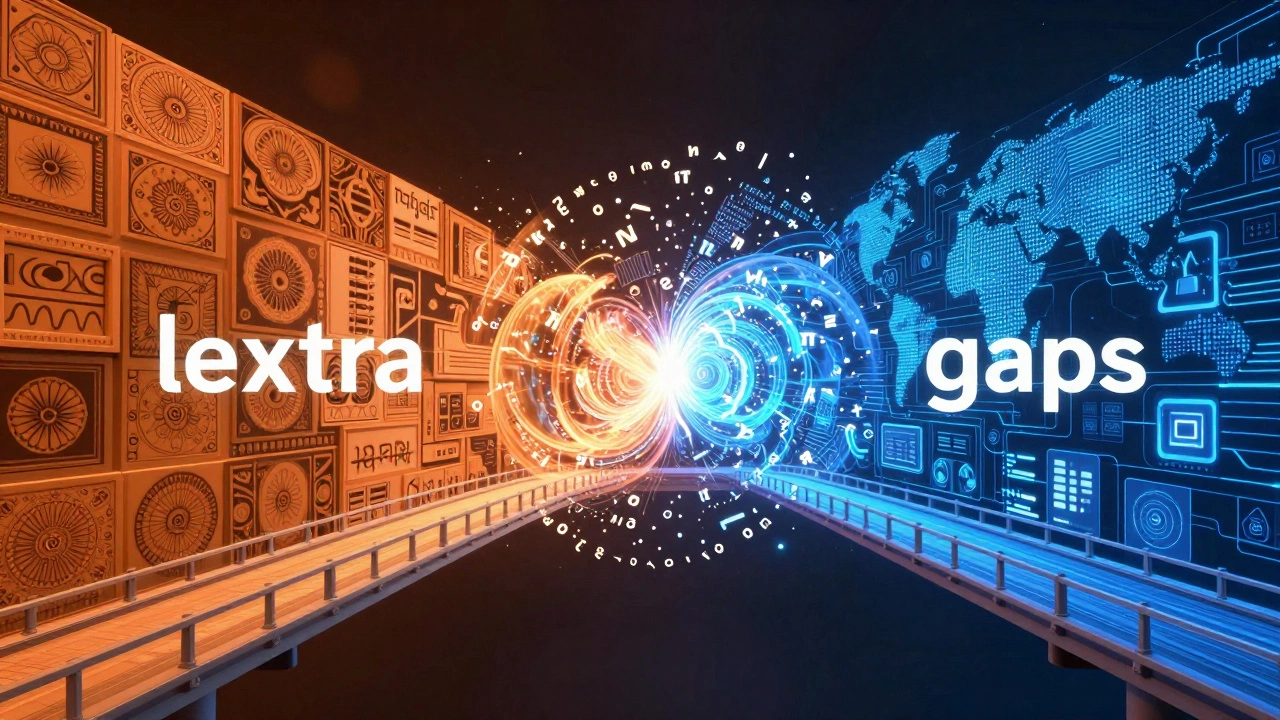
Why bother mixing when you can just speak one language? The answer often lies in the gap between traditional vocabulary and modern life. Think about your smartphone. In pure Hindi, "download" or "upload" would require clunky, formal translations that sound like they belong in a government textbook. Nobody wants to say "adhon-ropan" when "download" takes a fraction of the effort. Lexical Gaps occur when a language lacks a word for a specific new concept. English, as the global language of tech, science, and aviation, fills these gaps. When a young professional in Bangalore talks about their "deadline" or "startup," they use English because those words carry a specific, globally understood weight that a Hindi equivalent simply doesn't provide.Social Signaling and the Status Symbol
Let's be honest: language is about power. In India, English has historically been the language of the elite, the judiciary, and the administration. When people sprinkle English words into their Hindi, it's often a form of Social Signaling . It tells the listener, "I am educated," or "I am part of the modern professional world." However, this has shifted. It's no longer just about looking "posh." It's about versatility. A person might use formal Hindi with their grandparents to show respect, but switch to Hinglish with friends to show they are "cool" or "updated." This fluid movement is known in linguistics as Code-Switching . It allows a speaker to change their social identity in real-time depending on who they are talking to.The Influence of Bollywood and Digital Media
If you watch a modern Bollywood film, you won't hear the poetic, heavy Urdu-Hindi of the 1950s. You'll hear a rhythmic mix of both languages. Pop culture has validated Hinglish, making it the language of the youth. From Netflix shows to Instagram captions, the blend is the default. Mass Media acts as an accelerant. When a celebrity uses a phrase like "vibe check" or "totally sorted" in a Hindi sentence, it enters the local lexicon almost overnight. This isn't just an urban trend; thanks to cheap data and smartphones, rural areas are also adopting these English loanwords to feel connected to the wider global culture.| Scenario | Pure Hindi | Pure English | Hinglish (The Hybrid) |
|---|---|---|---|
| Asking for a meeting | Kya hum mil sakte hain? | Can we schedule a meeting? | Meeting schedule kar lein? |
| Expressing stress | Main bahut tanaav mein hoon. | I am under a lot of stress. | Main bahut stressed hoon. |
| Technology use | Kripya ise prapt karein. | Please download this. | Ise download kar lo. |
The Role of English Courses in India
With the rise of this hybridity, the demand for English courses in India has evolved. People aren't just looking for grammar lessons; they are looking for "functional fluency." They want to know how to transition from the comfortable Hinglish of their home to the professional English required for a job interview at a multinational corporation. Most learners struggle not with the words, but with the confidence to stop mixing. Many ESL (English as a Second Language) programs in India now focus on "code-breaking." They help students identify when it's appropriate to use the hybrid form and when a strict, monolingual approach is necessary. For example, writing an email to a CEO requires a different set of rules than chatting with a colleague on WhatsApp.Cognitive Ease and the Path of Least Resistance
Our brains are essentially lazy. We always look for the shortest path to communicate a thought. Sometimes, an English word is simply shorter or more precise than its Hindi counterpart. Consider the word "Opportunity." In Hindi, you might use "Avsar." While "Avsar" is a beautiful word, "Opportunity" is often more instinctive for someone who spent their school years studying science or commerce in English. When the brain finds a word that is more readily available in the "mental dictionary," it grabs it, regardless of which language it belongs to. This is a natural cognitive process that happens in many bilingual societies, not just in India.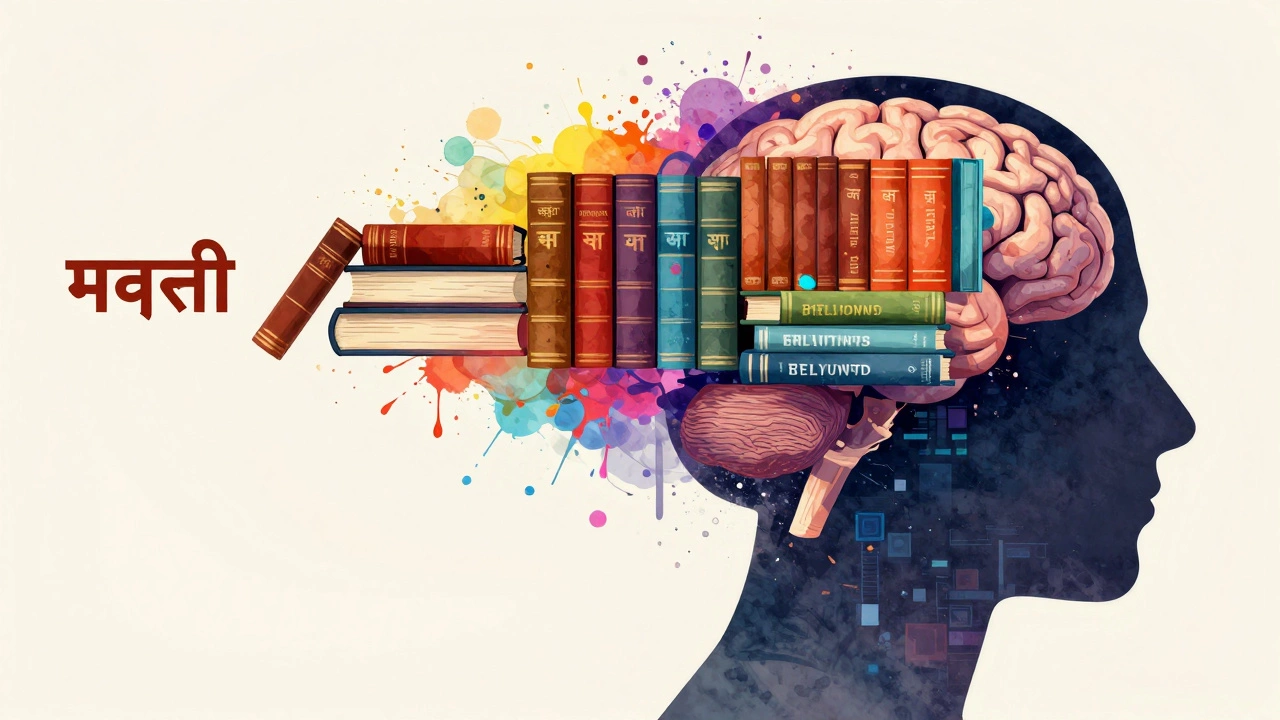
The Future of the Language Blend
Is Hindi dying? Some purists argue that Hinglish is a sign of linguistic decay. But if you look at it from a different angle, it's a sign of evolution. Languages have always borrowed from each other. English itself is a massive collection of loanwords from French, Latin, and Old Norse. Linguistic Evolution suggests that Hinglish isn't a replacement but an expansion. It creates a third space where people can express complex, modern identities. As India continues to integrate with the global economy, the blend will likely become even more seamless, eventually forming a standardized version of its own with its own internal logic and rules.Common Pitfalls in Blending
While Hinglish is useful, it can lead to a phenomenon called "linguistic fossilization." This happens when a speaker relies so heavily on the blend that they lose the ability to be fluent in either language independently. For instance, a student might be perfectly comfortable saying "Please adjust the volume thoda kam kar do," but struggle to write a formal essay in either English or Hindi. This is why structured learning is still vital. The goal is to have the *choice* to blend, rather than the *necessity* to blend because of a lack of vocabulary in one language.Is Hinglish considered a real language?
Linguistically, it is seen as a hybrid or a dialect. While it doesn't have a formal governing body like the Académie Française, it has a consistent structure used by millions, making it a functional sociolinguistic reality.
Why do people switch to English for professional terms even in casual talk?
This is largely due to the educational system in India, where technical and professional subjects are taught in English. Terms like "Quarterly Report" or "Software Update" are learned as single units of meaning in English, making them the default choice.
Does using Hinglish affect a child's ability to learn pure languages?
It can, if it's the only form of communication they encounter. However, if children are exposed to both standard Hindi and standard English through books and school, they can successfully manage both as distinct systems while using the blend for social interaction.
How can I improve my formal English if I'm used to speaking Hinglish?
The best way is to practice "monolingual immersion." Try reading English news or books and writing a journal without using any Hindi words. This forces the brain to find the English equivalent for thoughts that you would normally "shortcut" using Hinglish.
Is this trend limited to India?
Not at all. Similar patterns exist worldwide, such as Spanglish (Spanish and English) in the US and Philippines, or Franglais (French and English) in parts of Canada and Europe.
Leave a comments